
The European Union's greenhouse gas emissions were confirmed to have fallen 17% over a decade. One more measured figure has been added that refutes the long-standing belief that cutting emissions means bringing the economy to a halt. That same week, the second-half Special Committee on the Climate Crisis held its first meeting in Korea's National Assembly. In the week Europe's numbers came out, the domestic legislative clock also began to turn.
The National Assembly's Special Committee on the Climate Crisis held its first meeting on the 18th during the 436th extraordinary session and chose Rep. Kim Jung-ho of the Democratic Party of Korea as its chair. Its term runs to the end of August, a little over two months. Amendment of the Carbon Neutrality Framework Act, improvement of the emissions trading scheme, establishment of a climate budget system, and legislation on climate adaptation and climate finance were placed on the agenda.
The Constitutional Court last year ruled the Carbon Neutrality Framework Act unconstitutional. The problem identified was that the current law marks only two points, the 2030 reduction target and 2050 carbon neutrality, and leaves the reduction path from 2031 to 2049 in between blank. The reasoning was that it does not sufficiently protect the environmental rights and the right to survival of future generations.
The deadline the Constitutional Court set for revising the law has passed, and the first-half committee did not finish legislating a long-term reduction path. That is why, at the first meeting, secretaries Park Ji-hye and Kim So-hee and Reps. Lee So-young and Jung Hye-kyung together pointed to responsibility for the legislative delay and the need to handle it within the deadline. The biggest task facing the second-half committee is setting the 2035 national greenhouse gas reduction target and the long-term reduction path.

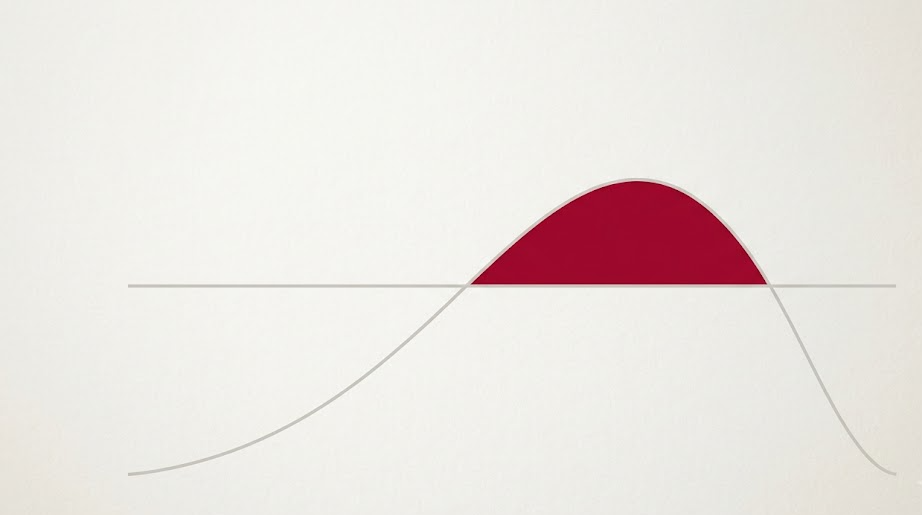
Views are divided over how to draw the path. Those who want to write a "linear reduction path," cutting by the same amount every year until 2050, into the law are set against those who say early reductions should be larger. Neither side denies reduction itself. Because the total is what ultimately remains in the atmosphere, the views split over the fact that the result changes with the shape of the curve even when heading to the same end point.
Ahn Young-hwan, a professor in the Department of Climate, Environment and Energy at Sookmyung Women's University, offered a compromise in an interview on the 22nd. His proposal is to write a linear reduction path to 2050 into the Carbon Neutrality Framework Act as a floor, and to decide the 2040 and 2045 targets before 2030 and 2035 arrive, respectively. It is a design that fixes the floor in law to prevent backsliding, while setting the interim targets in light of the technology and conditions of the time. Prof. Ahn is serving as a civilian member of the Presidential Commission on National Climate Crisis Response.
Outside conditions are also pressing the discussion along. The European Union's Carbon Border Adjustment Mechanism is widening, and carbon regulation across global supply chains is growing stronger. Failure to verify the emissions embedded in a product creates constraints on exports. If the reduction path is written into law, companies can also calculate in advance when to respond.
The reduction rate and base year for the 2035 target have not been fixed, and the meetings left to the committee amount to a single summer. Europe's 17% is not close to a result obtained by pushing a particular industry hard. It is closer to the result of trimming a little across power, transport and buildings. In Korea too, each household's electricity and gas use can be checked by month on meter-reading bills and on each supplier's app.