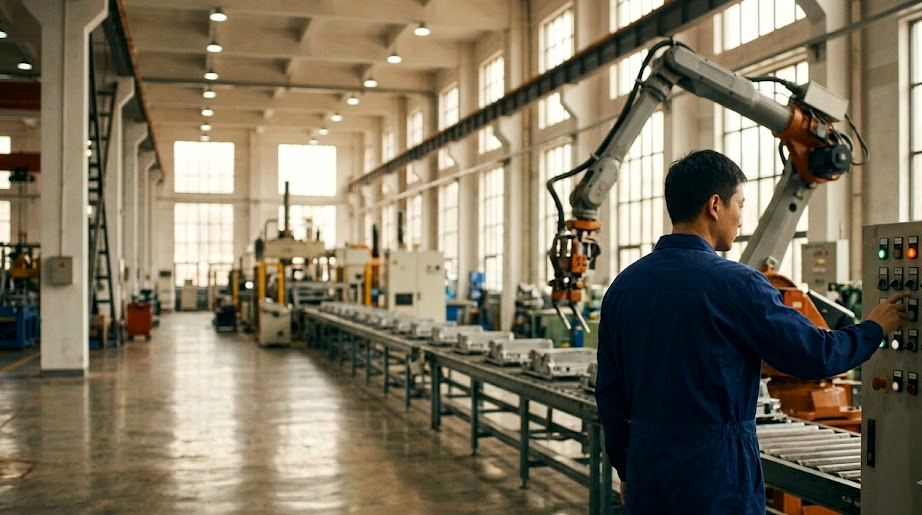
Finance, call centers and entry-level programming. An assessment released on the 3rd found that AI is moving to change or eliminate work in these three areas of office employment. The same assessment also pointed to the other side. In factories, demand for skilled trades workers who can directly operate robots and automated equipment is actually rising.
The assessment, which came from remarks by Ford's chief executive, also mentioned a figure of 10,000 people, but the remarks alone do not make clear whether that number refers to hiring, reassignment or job cuts. With no indication of which way those 10,000 people are moving, it is premature to build an argument around the remarks.
An opinion piece published the same day under the name of Lee Byung-hoon, president of the Human Resources Development Service of Korea (HRD Korea), described the changes on the manufacturing floor in more concrete terms. It states that AI predicts defects and robots carry out the work. The more processes are automated, the more room there is for people who can read and adjust the equipment.
Where AI differs from past industrial revolutions, which handed manual labor over to machines, is the scope of its impact. The piece also stated that this time it reaches into knowledge work. The assumption that desk jobs were a safe zone is being shaken.
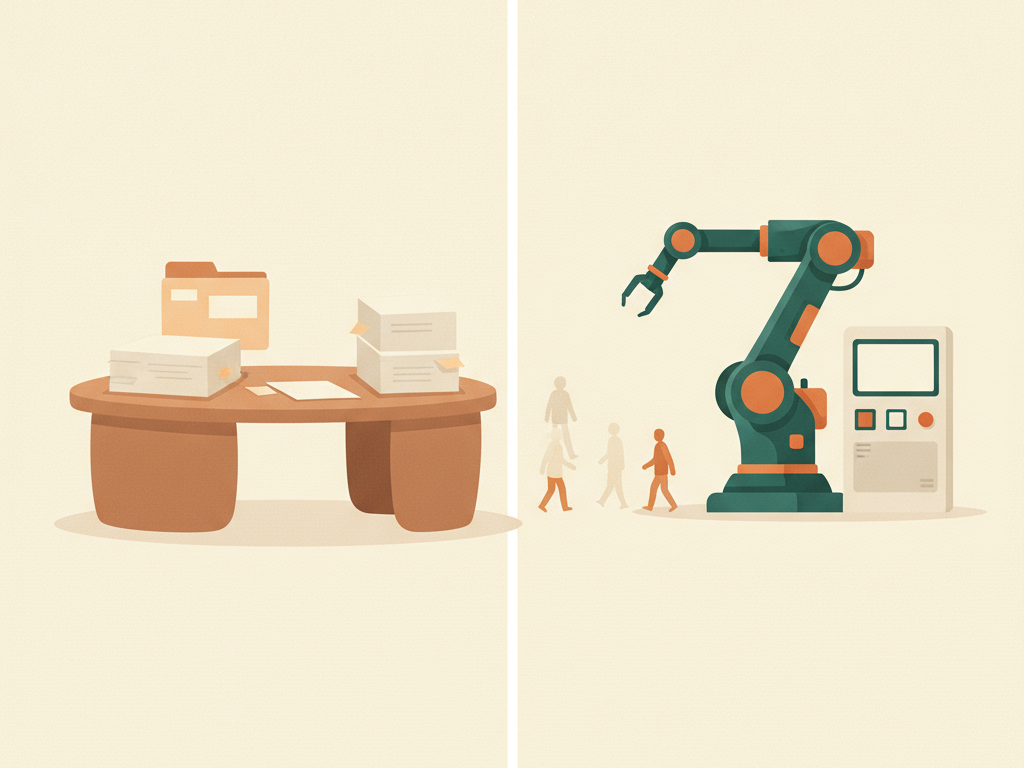
Discussion of how to respond is divided between an approach that assumes this movement and focuses on relocating and training people, and a "human-only jobs" approach that sets aside certain work so it is never handed to AI. The latter remains at the stage where discussion spread following a report on the 1st, so which occupations it would apply to and in what way can only be gauged after those leading the discussion present an outline. Professor Lee Chan of Seoul National University also put forward response measures the same day.
Young people are the most vulnerable in this transition. On the 2nd, concerns were raised that young people are being pushed out of employment even as the economy grows. Considering that the path to a first job has mainly run through entry-level office work, if that path narrows, people standing at the entrance will be hit sooner than those with 10 years of experience.
The government's response is focused on the safety net. Prime Minister Han Duck-soo said on the 3rd that the government will concentrate policy on housing, jobs and financial support for low-income households so that no one is left behind in the AI transition. Supporting income and housing helps people get through the transition, but for someone pushed out of an office job to move into work handling robotic equipment, separate training is needed to bridge the gap.
The stories that emerged last week began with the job insecurity of office workers and young people. For those sitting in offices now, what they need is closer to finding out where and how they can learn to read and maintain automated equipment than measuring how much of their work AI will replace. The outline of the training programs that HRD Korea and universities put forward will determine the answer.