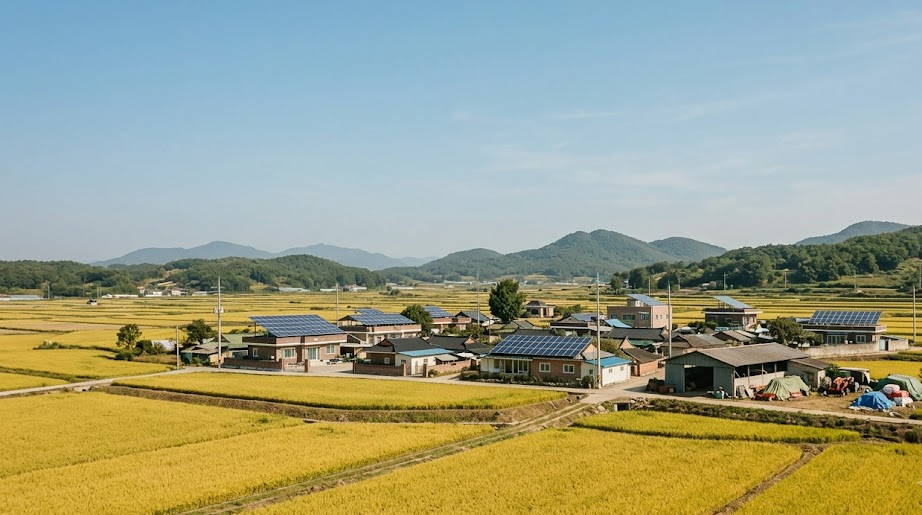
Twenty-three villages in Goheung County, South Jeolla Province, have been selected as 'Sunlight Income Villages' (Haetbit Sodeuk Maeul). In results announced at the same time on the 9th, Damyang County in South Jeolla Province and Gumi City in North Gyeongsang Province also had four villages each selected on a conditional basis. Sunlight Income Village is a program in which residents take part directly in a solar power generation business and the profits go to the village and to residents' income. The government provides financial support covering up to 85% of the cost of installing the generation facilities.
Goheung County is putting 6 billion won of county funds into the program.
The four villages in Gumi passed the second round of the '2026 Sunlight Income Village' open call. All four villages in Damyang County were notified of conditional selection. Together, the two areas have eight villages selected on a conditional basis.
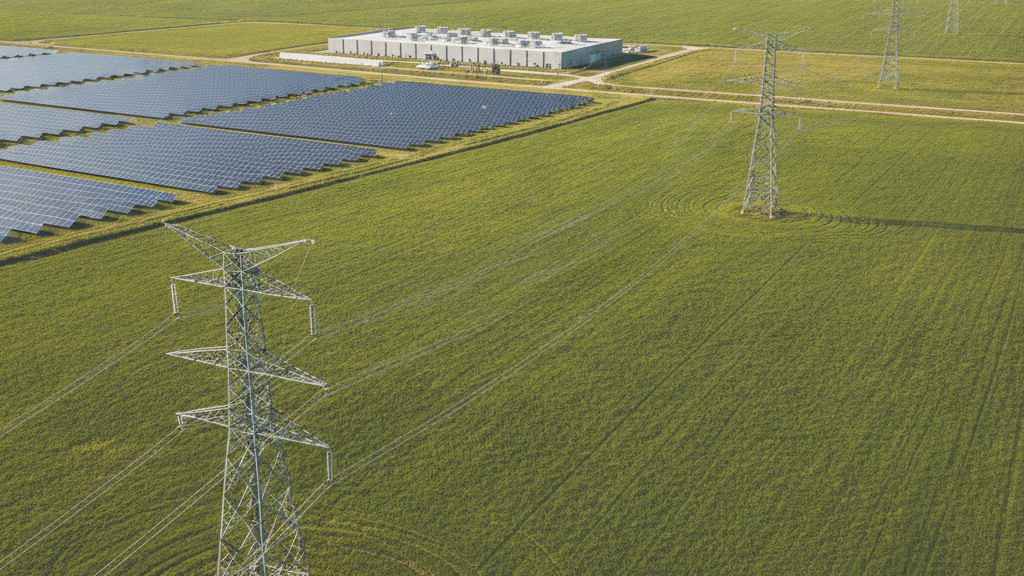
Solar power facilities are built at the village level, and residents share the money earned from selling the electricity. When the village owns the power plant, residents may stop seeing the panels in the fields and on rooftops as simply someone else's facility. The reason is that the profits from building renewable energy facilities go back to the people who live on that land.
The first hurdle for a village that wants to install solar power is the installation cost. Government financial support covers up to 85% of this cost. Whether it is money that has to be borrowed and repaid or a subsidy that does not have to be returned makes a big difference to the finances of a village power plant that will run for more than 20 years. Villages considering an application should first carefully compare interest rates and repayment periods.
The 23 villages in Goheung are a sizable number of selections for a single county. With the 6 billion won in county funds added, generation facilities with resident participation could grow across the county as well. Success depends on how the profits are shared. Whether to pay them out to residents as dividends or set them aside in a village fund is for residents to decide together.
Villages with land for solar facilities can check the open call schedule with the energy department at their city hall or county office.