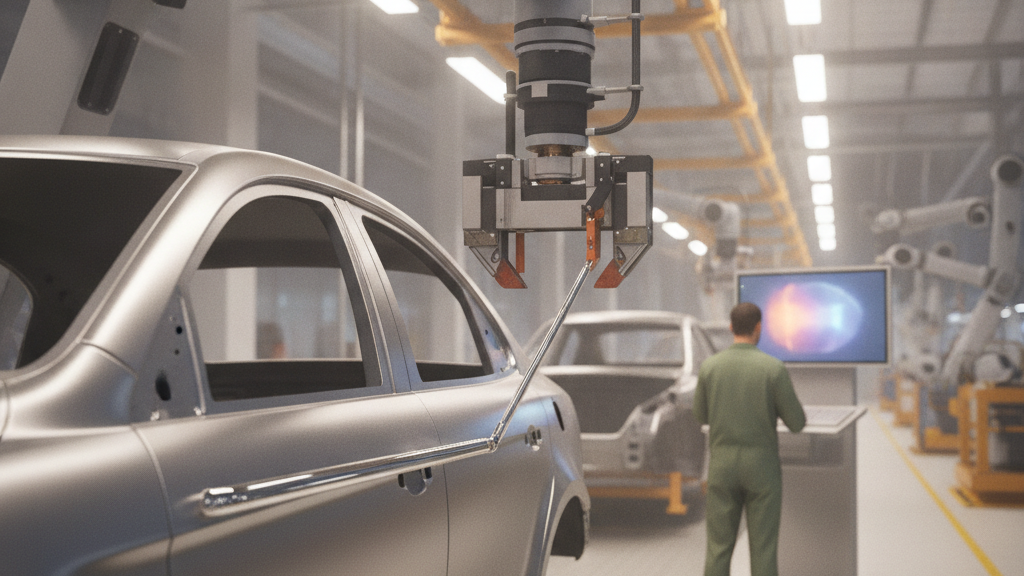
In U.S. manufacturing, more than 500,000 jobs sit vacant because employers cannot find people to fill them. At one manufacturing site, a robot now uses sensors and AI to assemble the vehicle door garnish that workers once bent over to install. A door garnish is a part that covers the lower section of a car door to protect the body and finish its shape. Work once done by hand has passed to a machine.
There are two reasons robots are entering production processes. U.S. factories bring in robots because they cannot find people to work. In organizations where thousands of workers retire but only a few hundred are newly hired, machines take over the work that departing employees used to do. In this case no one receives a layoff notice, but the jobs available to people who would newly join that factory shrink by that much.
Investors have also joined this trend. U.S. robotics company Maven Robotics attracted investment worth 135 billion won about two years after launching its pilot program. The company deploys robots at work sites to automate tasks and improves its operations using data gathered during deployment. It is a business model in which the longer a robot works, the more know-how suited to that site builds up on the machine's side.
The burden does not spread evenly. The work robots take over most easily is a process like door garnish installation, in which set parts are fitted into set positions over and over. Such processes were the path through which young people without experience, or workers who had few chances to build skills, first set foot in a factory. Even if it does not show up in layoff statistics, that path narrows when job postings decline.
In South Korea, statistics showing whether robot adoption and declines in new hiring move together are scarce, making it difficult to gauge how large the impact is.
Young people are also on the move. Some young people have switched their career paths to blue-collar work, that is, jobs done on site using the body, out of anxiety that AI could take their work. It is a choice to rely on the sense of the hand, which machines and programs find hard to imitate.
But as the door garnish process shows, not all field jobs are safe. Robots are eyeing line work with a lot of repetition, and the more a job changes with each situation, the longer human hands hold out.
The 500,000 vacant jobs in the United States and one organization's hiring of a few hundred people arose from different concerns, but both lean toward handing more work to robots. If employment policy stops at measures against layoffs, it will miss this change. The gap that opens between retirement and new hiring needs to be examined separately.
The door garnish installation process has become work done by robots at that factory. This change should be tracked in job postings and the number of new hires rather than in layoff statistics.