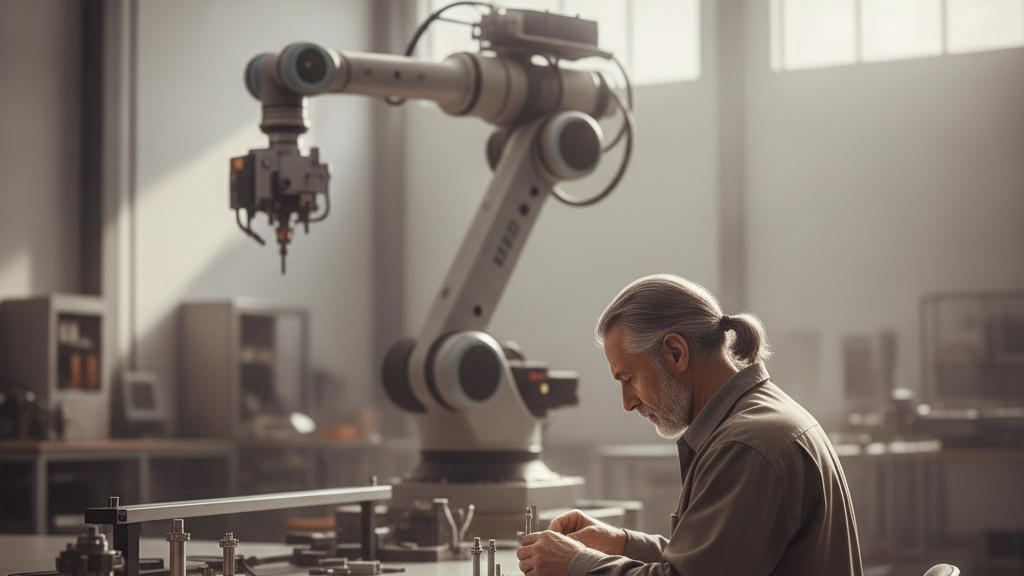
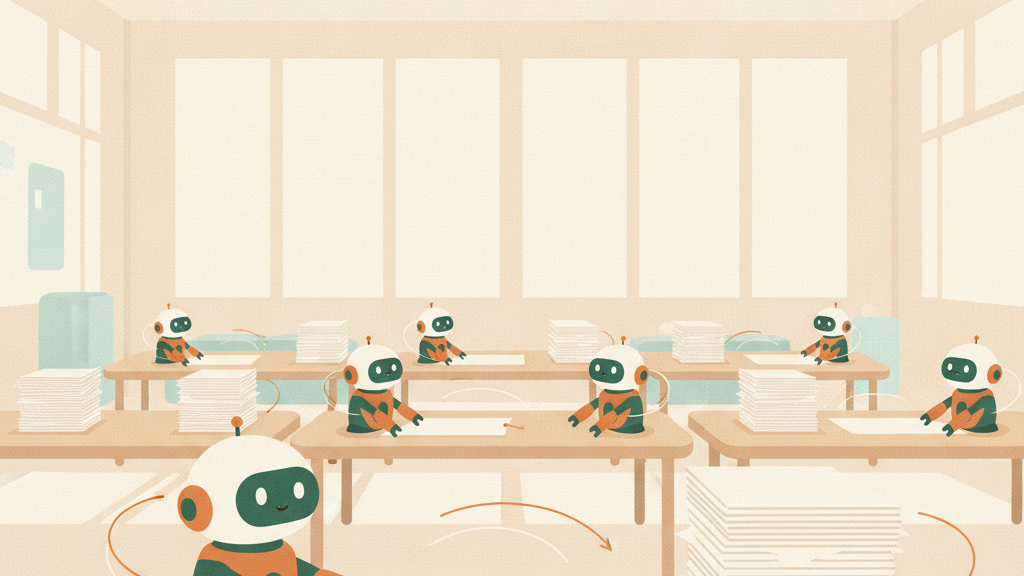
SK ecoplant is pursuing a system that gives each employee one AI agent, according to news reported on November 2, 2026. An AI agent is software that breaks a task assigned by a person into multiple steps and carries them out on its own. The company's agents run on internal work data, and the stated goals are work automation and innovation. The report did not give the number of employees covered.
If one agent per person becomes reality, each employee will also take on the role of a manager who assigns work and checks results, and the question of who is responsible for an agent's errors will come down to a matter of each person's daily work.
There are also attempts to widen the range of what tools handle on their own. DeepSeek's newly released autonomous 'super AI agent' was described as having a feature that fixes bugs, or program errors, on its own when it finds them. How far it actually goes in fixing them can only be gauged by using it. PwC Consulting launched 'AI Agent Navigator,' which helps companies review AI suited to them.
Rob Adamson, senior vice president and chief information officer (CIO) at the healthcare organization RWJBarnabas Health, has a different standard. When evaluating autonomous AI, he tests whether the work done by the tool can be undone. He also expressed doubts about vendors' claims of end-to-end automation, that is, handling a task from start to finish without human hands. Before buying an AI tool, he checks Epic's product roadmap, that is, the company's plans for products it will release.
The standard of one person, CIO Adamson, cannot be regarded as an industry standard, and a healthcare organization and SK ecoplant differ in their lines of business to begin with. Still, it is useful as a yardstick. As agents multiply to match the number of employees, the work that needs to be undone could grow by as much. Nothing has been disclosed on whether SK ecoplant's system includes such a recovery mechanism.
If your company assigns you an agent, borrow CIO Adamson's test and ask the IT staff, "Can this work be undone?" Even when an agent does the work, employees are still left with checking the results and reversing faulty work, and the time this takes varies depending on whether there is a way to undo it.