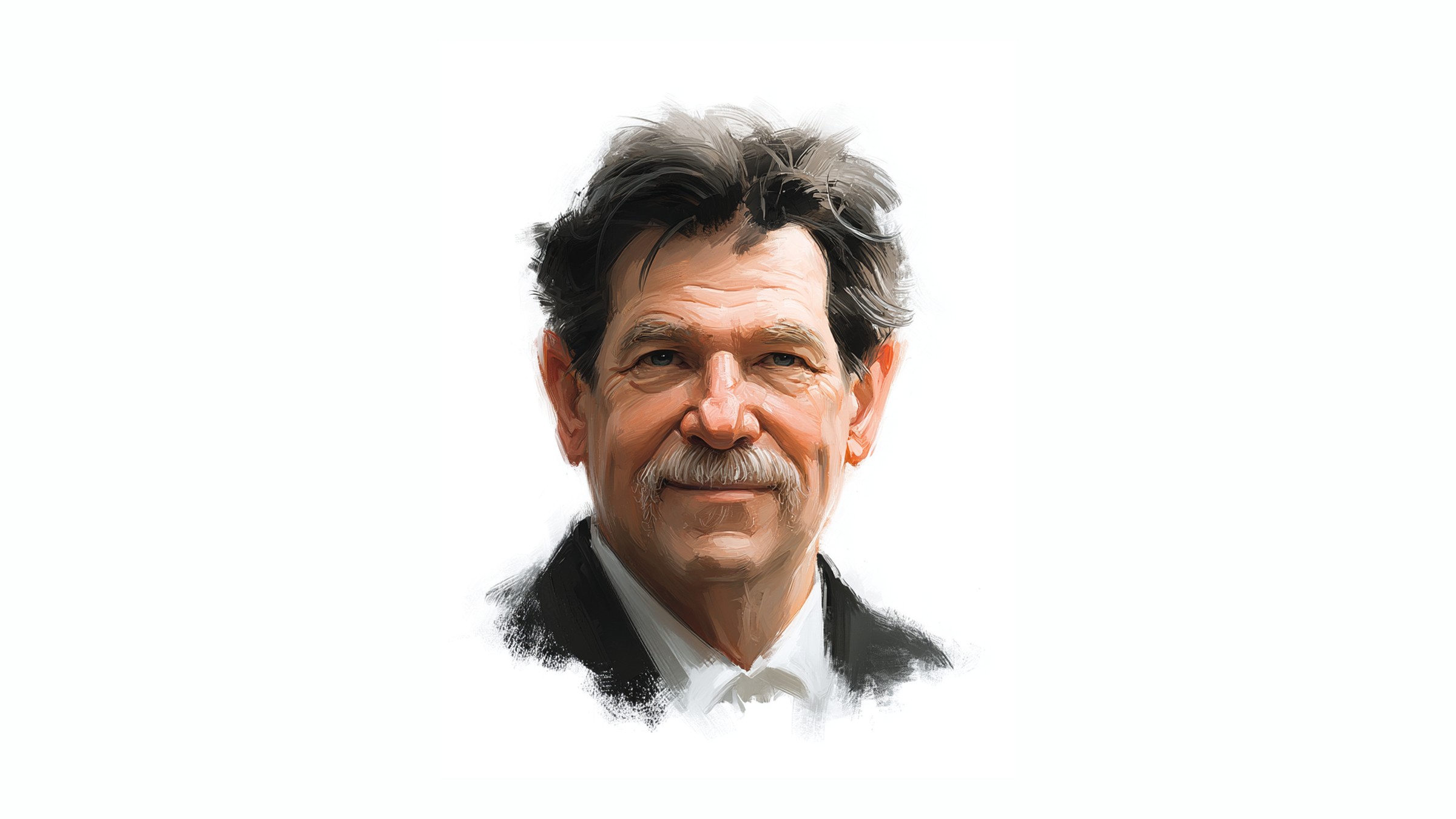
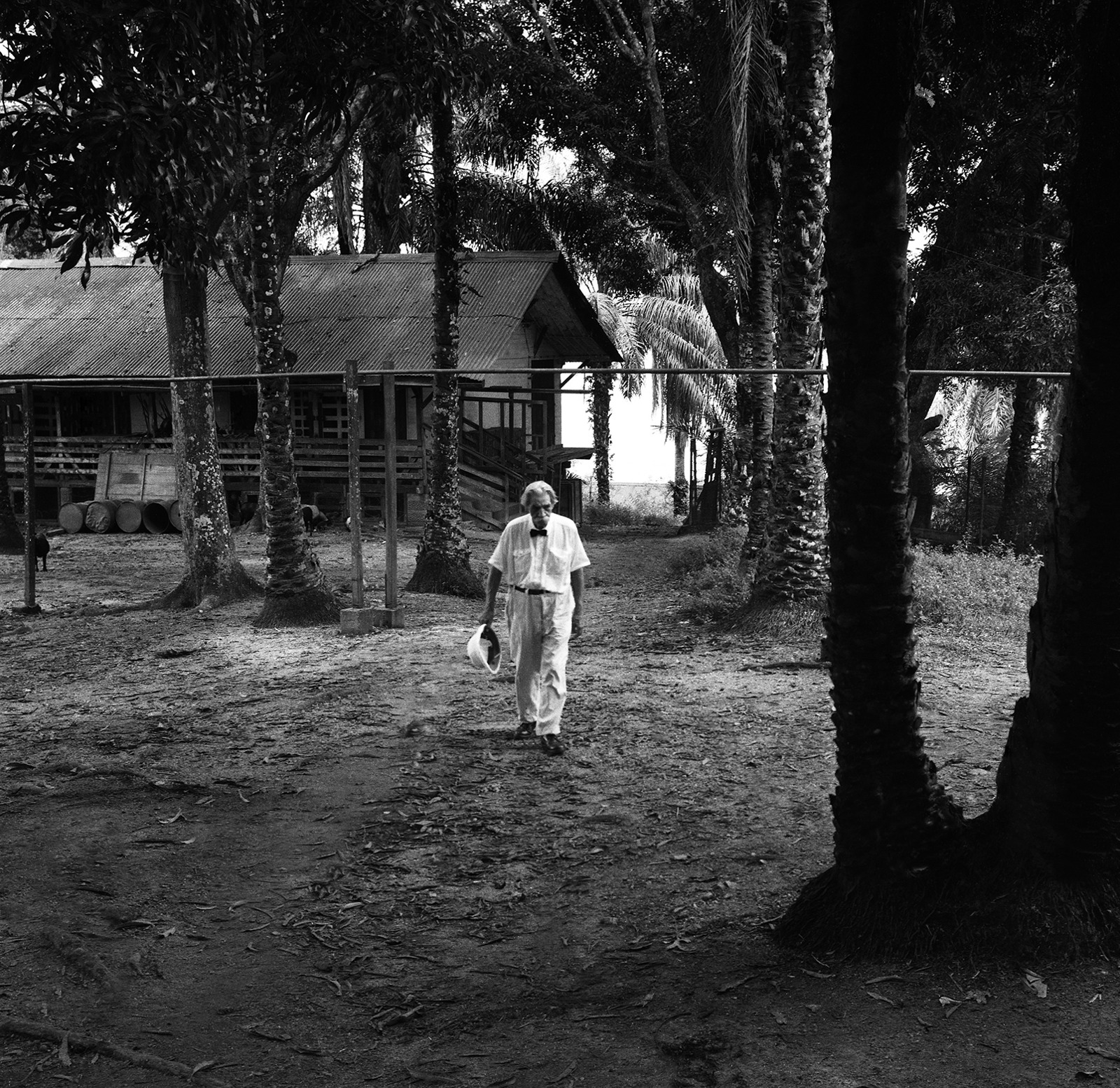
In 1913, the thirty-eight-year-old doctor who arrived in Lambaréné, a village on the river in Gabon, could not put up a new hospital building. He repaired a chicken coop that a missionary had used and made it his consulting room. N'Tcheng, a Black nursing assistant fluent in English and French, relayed what the patients said. A man who had earned doctorates in philosophy and theology in Europe and had made a name as an organist picked up a stethoscope in the tropical damp.
Albert Schweitzer was born in 1875 in Kaysersberg, Alsace, the son of a Lutheran pastor, and died in 1965. In 1899 he received a doctorate in philosophy at the University of Strasbourg for his work on Kant, and the following year a doctorate in theology for his work on Jesus, and he served as a pastor and a lecturer in the theology faculty. In 1905, at the age of thirty, he entered a course in medicine, and in 1913 he left for Africa with his wife Helene Bresslau. He kept the hospital going by his own means through writing and lecturing, organ recitals and record royalties, and in 1952 he received the Nobel Peace Prize.
Q1. At twenty-one you decided to live in scholarship and art until you were thirty and to enter service after that. Nine years passed before you carried out that decision. What sustained you through that time?
The decision itself was made quickly. I was spending my Whitsunday leave from military service at home when the thought came to me: may I alone be this happy? From childhood I grew up in a church whose members were mostly poor farmers, and my father often preached at the communion service about the wretched lives of people in Africa. That feeling simply needed time to harden into an adult's decision.
In 1905 I entered the medical course. There is something laughable about becoming a student again at thirty. My colleagues could not understand why a lecturer in the theology faculty was standing in the anatomy laboratory. But explaining love from the lectern and pressing the abdomen of a man running a fever are both necessary.
Q2. The first hospital in Lambaréné was a building made from a repaired chicken coop. What need led the hospital to grow after that?
Because patients came. There was no plan on paper. I could not send back people who had been carried for days along the river, so I added beds. Taking in people with nowhere to go, the buildings increased.
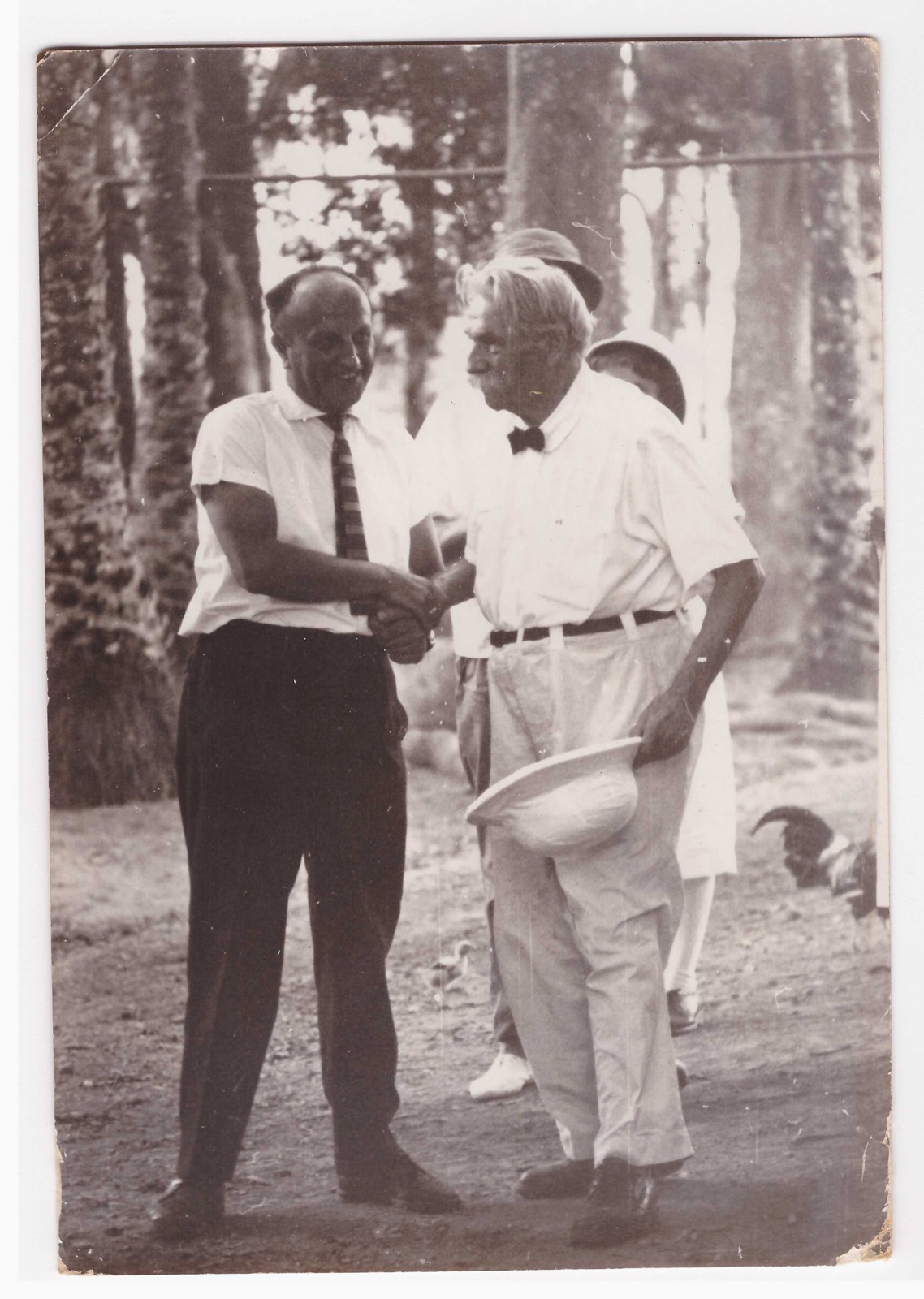
The hospital carries my name, but I did not do it alone. There were medical staff from Europe and local employees whose names rarely appear in the records. Without N'Tcheng, who interpreted for me, I would not even have understood my patients' symptoms in the first year.
I earned the running costs by going back to Europe and giving concerts. I played Bach and bought medicine with the money. When I returned in 1924 the hospital was standing as a bare frame, and Europeans who were themselves in difficulty during the postwar recovery sent donations, so it was built up again.
Q3. There was criticism that the standard of care in Lambaréné was overrated. It was also said that a missionary was merely putting humanitarianism out front. How do you take that charge?
I will not deny what was said about the standard of care. Supplies and medicines were always short, and in some years the shipments were cut off by the effects of the war. Compared with a well-equipped hospital in Europe it must have looked poor. But for a patient, the difference between having no hospital at all and having one poor hospital was not small.
The criticism about religious ambition I find a little unfair. If I had wanted respect, staying at a lectern in Europe would have been far easier. I did not force Christianity on anyone. As a child I saw a Jewish merchant in the neighborhood suffer insults without hating anyone, and I learned then that forgiveness is the only way past conflict.
Q4. In 1916 your mother was killed by the cavalry horses of French soldiers, and in 1917 you yourself were confined in an internment camp. How did you pass through that time?
Alsace is land that Germany and France took in turn. I was born in Germany, but I was detained because my home region was French territory. While I was in the camp the patients of Lambaréné received no treatment.
My mother's death is the deepest wound the war gave me. Horses raised to kill people killed a person. I learned then in my own body what human beings do to human beings.
There was nothing that could be called recovery. In 1924 I simply boarded a ship again. Dr. Wehmann, who taught me how to study in my Mulhouse days, broke down under hunger and mental illness during the war and took his own life. When I thought of him, the only place for me to return to was Lambaréné.
Q5. You are said to have remarked that hanging a hammock from a tree hurts the tree. Is there a reason reverence for life appears in such small actions?
If one starts from large things, a person will certainly make exceptions. A list appears of lives that may be sacrificed, and that list always grows longer. I hold that there is no life that may be sacrificed.
On a hot day, to a man about to string a hammock between trees, I said the trees would hurt. It must have sounded strange, but a hand that does not carelessly break off a branch does not handle a person's body carelessly either.
Q6. Breath Journal deals with breath and rest. The quality of the air, and the time to recover, are given to each person differently. From your experience of receiving patients who had traveled for days on the river, what do you see now?
A person who took three days to reach my hospital and a person who took half a day got different outcomes from the same illness. Distance is itself an illness. Even today, some people receive oxygen within an hour when their breathing grows short, and some do not. Before speaking of the standard of a hospital, one must look at who can reach its door.
It is the same with rest. I went to Europe, gave concerts and came back, but the local staff of the hospital had no such journeys. When time to recover is given only to certain people, it is a privilege.
Q7. What would you like to pass on to young people today?
I will not tell them not to go looking for comfortable places. Everyone has their circumstances. I believe history moves when there is someone who becomes genuinely angry at seeing life treated carelessly.
Outside the window in Lambaréné there was always the river, and in the consulting room patients were waiting. When I listened to Bach in that room, I would recall the first consulting room made from a repaired chicken coop. The roof was low, but the door was always open. Decide first what the one small thing is that you will protect today.
This piece is not an actual interview. It is an imagined interview reconstructed by Breath Journal on the basis of Albert Schweitzer's life, writings and the records he left. The questions were written by our reporter and the answers were drawn from his writings and his actions.