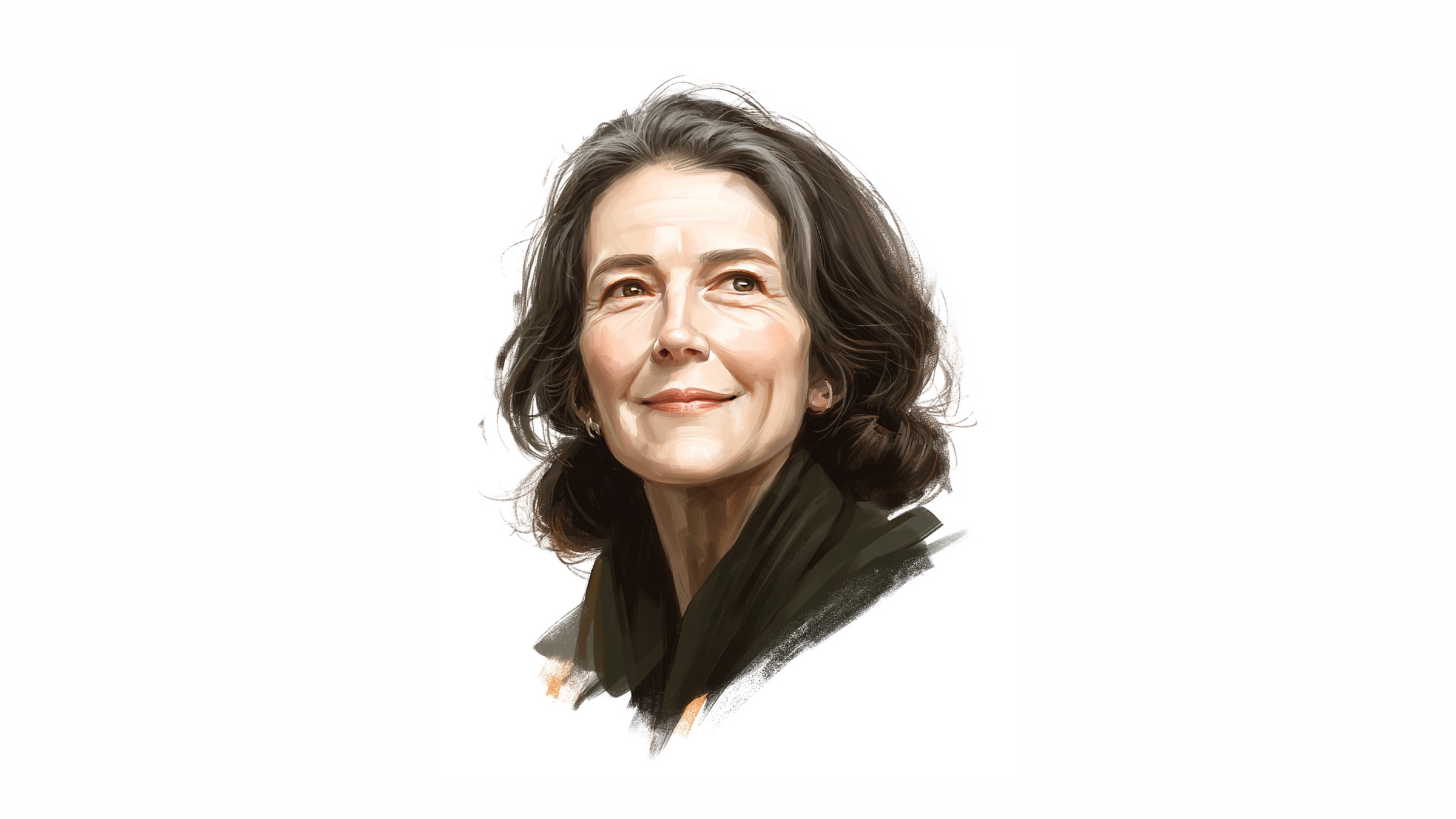
A low grumble comes through the wet bamboo. A woman lowers her body and imitates the same sound. It was a signal that she meant no threat, and the gorillas of Rwanda's mountain forest began to accept the presence of a human.
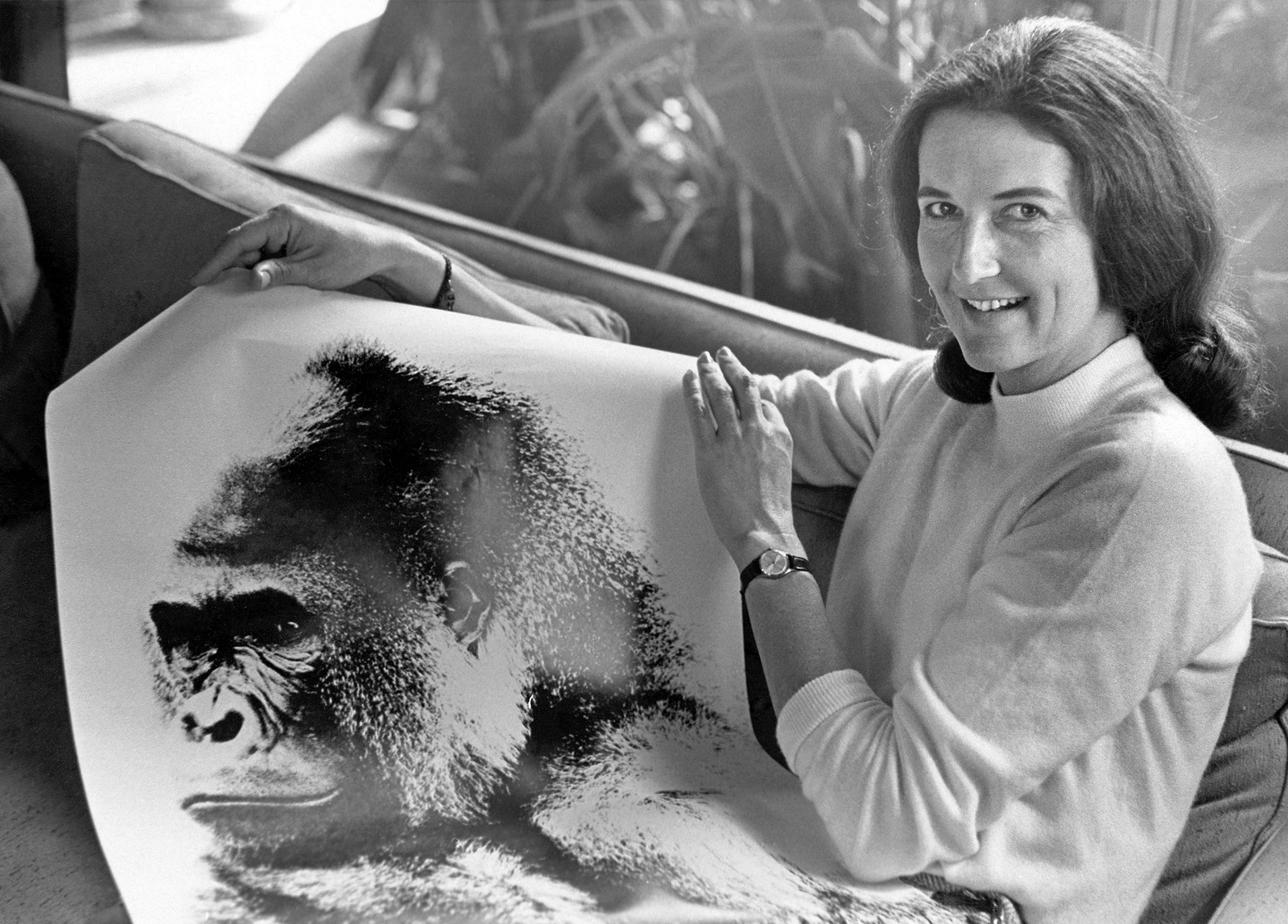
Dian Fossey was born in San Francisco on January 16, 1932. She studied occupational therapy at San Jose State College, received her bachelor's degree in 1954, and worked at a children's hospital in Louisville, Kentucky. Encouraged by the paleoanthropologist Louis Leakey, she left for Africa in 1966 and observed mountain gorillas for 18 years, until she was killed in her cabin at the Karisoke Research Center on December 26, 1985. Two years before her death she published a book about the research at Karisoke, and that record was later made into a film.
Q1. You went from being an occupational therapist at a children's hospital in Louisville to a gorilla researcher. What made that change possible for you?
After I spent the summer of my nineteenth year on a ranch in Montana, it was hard for me to bear being away from animals. My stepfather wanted me to study business, and when I said I would go toward animals, the family's support stopped. I put myself through school by working as a department store clerk, a laboratory assistant, and a factory machinist.
I was in the pre-veterinary program at the University of California, Davis, but chemistry and physics blocked me and I did not pass my second year. I transferred to San Jose State College and finished occupational therapy, and I cared for tuberculosis patients and children. An award I received for horseback riding took me to Kentucky in 1955, and the following year I came to work at the children's hospital in Louisville.
Q2. In the early days you could not even approach the gorilla groups. How did you get past that wall?
I started by discarding human habits. If you approach standing upright, a gorilla reads that as a threat. So I copied what they did, grumbled low, and lowered my body. Then the distance began to close.
The research conditions were plain. I slept in a cabin in the mountains and climbed the same slope at the same hour every day. Even without special equipment, that repetition produced the data.
Q3. You opposed tourism in the habitat, and you are said to have heightened tensions with your direct methods. How do you take that criticism?
It is true that I was not a gentle person. I found poaching tools and destroyed them, and I clashed with people head-on. My methods deepened the conflict, and I bore the consequences myself.
I used the term active conservation. It means patrolling, pulling out snares, and stopping things in the field. That does not mean everyone who opposed me was a bad person. There were people who had to make a living at the foot of the mountain and people who believed tourism revenue helped the region, but I saw that if the population collapsed then, there would be no way back, so there was little room for compromise.
Q4. After Digit died in 1977, you cut back your research time and moved toward protection work. Did that shift come out of grief?
Digit was the individual I cherished most. He died, and several others I had observed closely died one after another. From that period on, I spent more time protecting living individuals than filling in records.
The word recovery is unfamiliar to me. Instead, I made a gorilla graveyard at Karisoke and buried the dead individuals there. I was called sentimental, but naming them and burying them was part of my research. An individual without a name becomes a statistic, and statistics are easily erased.
Q5. You believed mountain gorillas would not survive past the year 2000. Why did you keep climbing the same slope every day anyway?
I thought the species would disappear, but that was not a reason to stop observing. In the end, that research and protection work helped slow the rate of decline.
What I worked at for a long time was making people acknowledge that gorillas are thinking beings. Gorillas move about without knowing national borders. The Earth's problems are mostly like that too. Managing things well within one country alone produces no answer, and the people who share a single mountain have to look at the same ledger.
Q6. In 2026, shrinking habitat and climate change press on species together. Do you see them as having the same roots as the poaching problem you faced?
A snare is visible and can be pulled out by hand, but the mountain's temperature rising little by little cannot be pulled out by hand. I think people today are doing harder work than I did.
Still, I would not want to recommend despair. In my time too the population was close to the bottom, and even in that state there were cases where the trend turned. The one thing you must guard against is using conservation as a promotional slogan. If you do not count how many people went into the mountain and what they carried out, fine words can be produced without limit.
Q7. As someone who spent 18 years at Karisoke, what would you offer a young researcher who wants to begin this work?
You need no great equipment and no great resolve. Choose one individual, give it a name, and write down what it ate today and who it was with. When those pages pile up over a dozen or more years, that becomes evidence.
On a rainy morning, if you sit among the wet bamboo, one black hand slowly comes toward you. I waited toward that hand, doing nothing. To anyone who does not know what to do, I suggest choosing one place, a nearby forest or a stream, and writing down each season what has changed in that same place. When more people hold such records, the mountain becomes a little less lonely.
This piece is not an actual interview. It is an imagined interview reconstructed by Breath Journal on the basis of Dian Fossey's life, her writings, and the records she left. The questions were written by a reporter, and the answers were drawn from her writings and her actions.