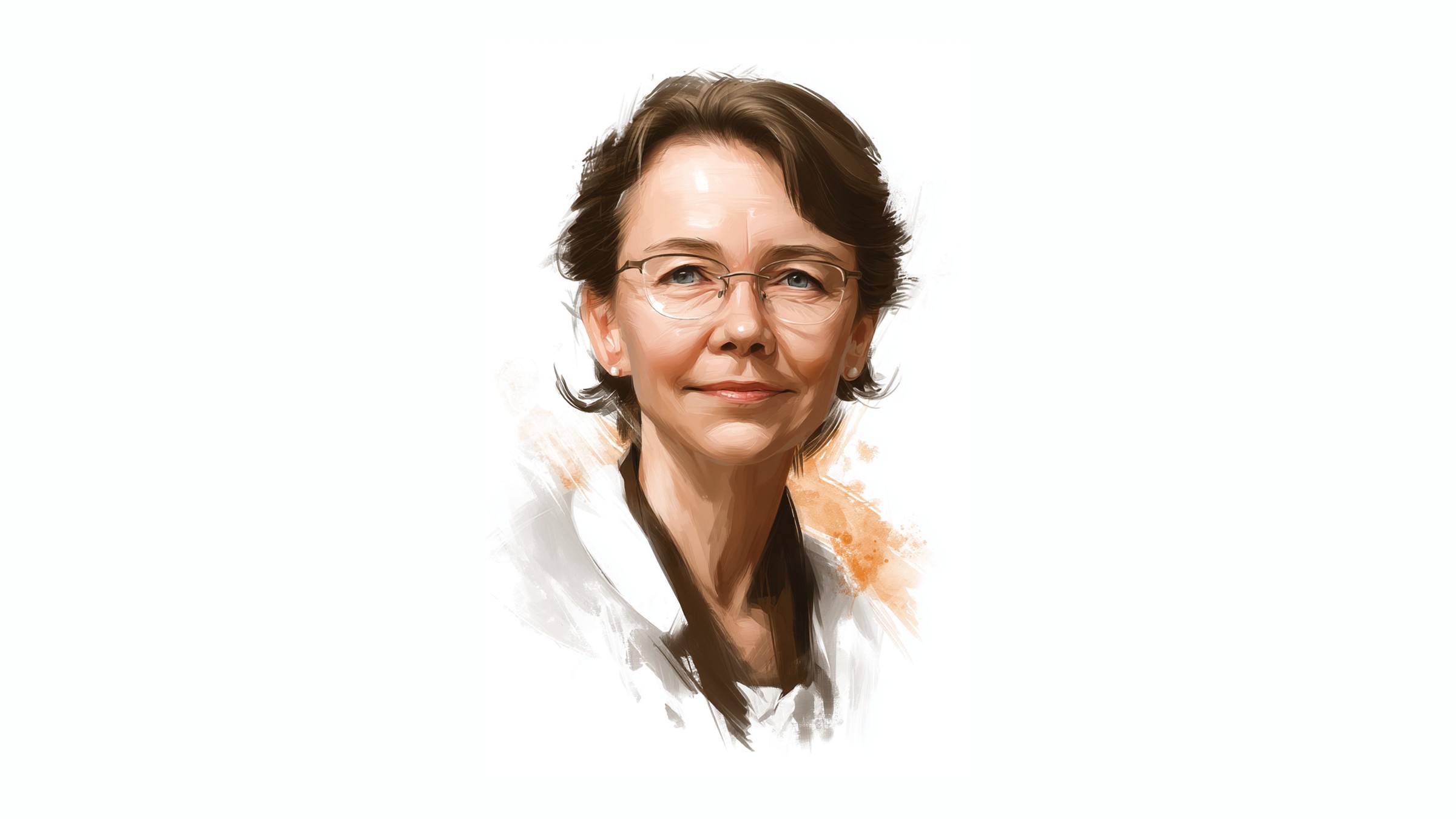
On a single ear of corn, the kernels are colored unevenly. One kernel is dark, the one beside it is pale, and some kernels are scattered with small spots. To most people it is just mottling. To one person it was the trace of genes that skip generations and change position.
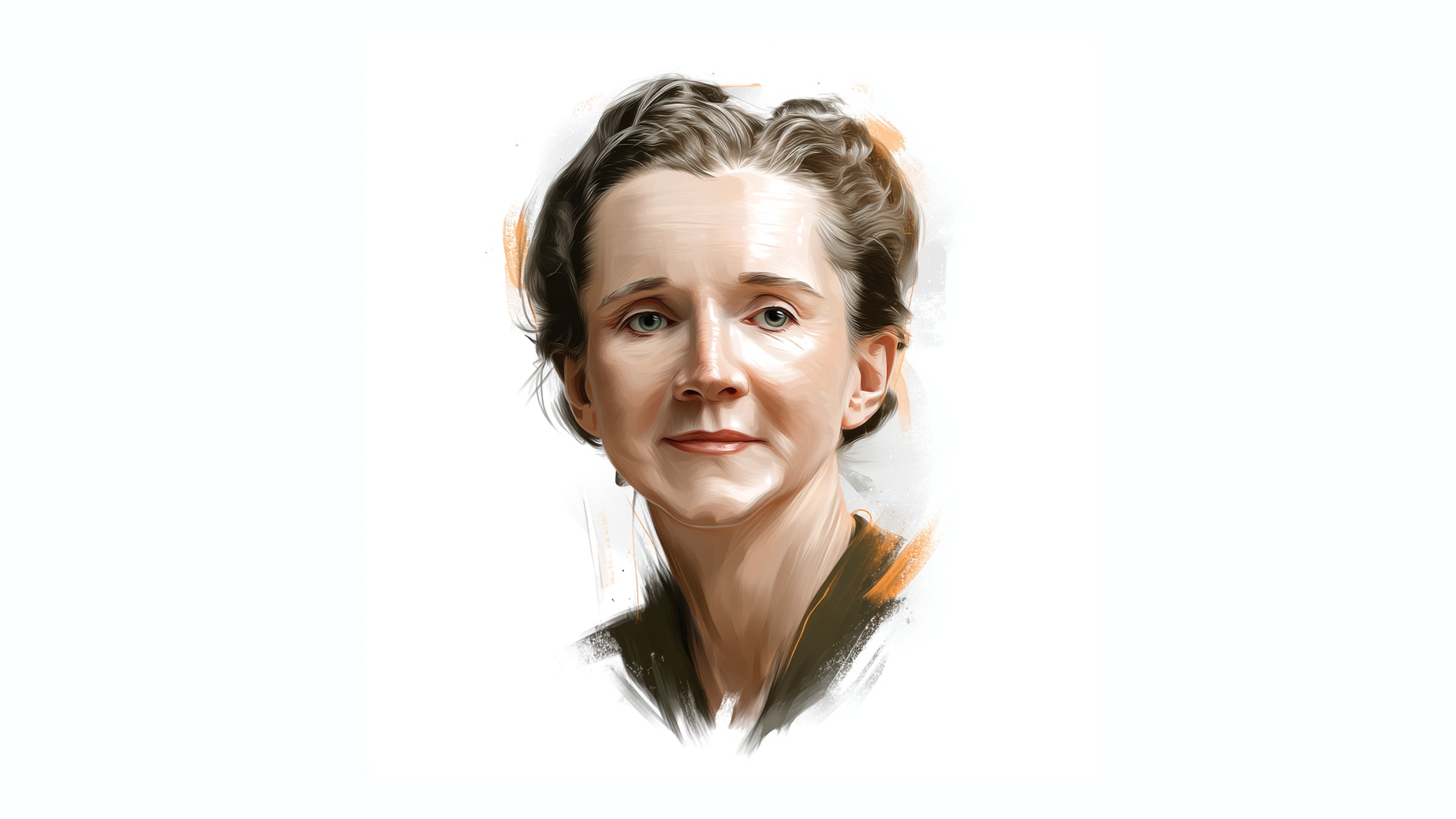
Barbara McClintock was an American cytogeneticist born in Hartford, Connecticut, in 1902, who died in 1992. She entered the College of Agriculture at Cornell University in 1919, received her bachelor's degree in 1923 and her doctorate in 1927, and developed a staining technique that made corn chromosomes visible to the eye. In 1931, together with Harriet Creighton, she proved experimentally that chromosomal crossing over during meiosis is linked to the recombination of traits. She was elected to the National Academy of Sciences in 1944, and in 1983 she received the Nobel Prize in Physiology or Medicine alone for her discovery of genetic transposition.
Q1. You took C. B. Hutchison's genetics course at Cornell in 1921, and the following year he telephoned you and urged you to enter the graduate program. Do you regard that call as the thing that set your course?
A single phone call decided my future. After that I stayed in genetics. Professor Hutchison seems to have remembered the response I showed in the classroom.
There was a bigger threshold before that call. My mother objected that if I went to college I would not be able to marry, which was a common view among parents in those days. If my father had not given his permission just before registration, there would have been no entrance in 1919 at all.
Q2. After your 1929 paper on triploid corn chromosomes, cytogenetics at Cornell moved a great deal. It was also around this time that you first showed the shapes of the ten corn chromosomes. What did you change so that what had been invisible became visible?
I changed where I looked. At a time when everyone was peering at root tip cells, I observed the cells of microspores. Using carmine staining, the ten chromosomes appeared each with its own distinct shape, and from then on I could pair groups of traits inherited together with particular chromosomes.
In 1930 I described the scene of homologous chromosomes entangled in a cross shape during meiosis. The following year, together with Creighton, I showed that the crossing over seen under the microscope actually produces new traits. Until then recombination was an assumption, and we turned that assumption into a visible event.
It also mattered a great deal that Lewis Stadler in Missouri taught me the X-ray method of inducing mutations. In corn exposed to radiation I saw ring chromosomes, and I came to the thought that there had to be something at the ends of chromosomes that preserves stability. That was the starting point from which I surmised the telomere.
Q3. You discovered transposable elements in the 1940s and 1950s but ran into skepticism, and in 1953 you stopped publishing your data. How did you take the reaction at the time?
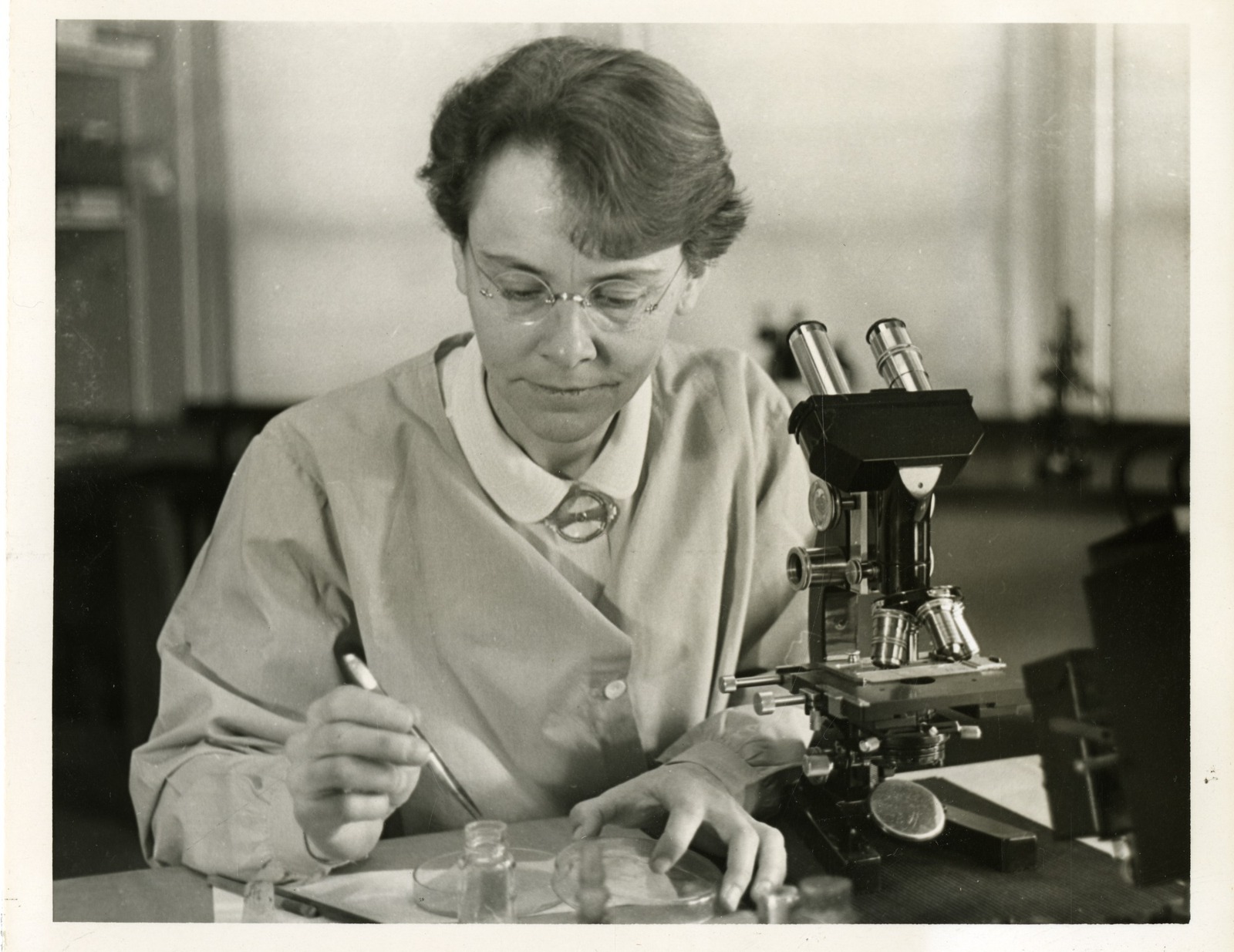
Bewilderment, and some hostility. It was a time when the idea had hardened that the genome is a fixed list of instructions passed down unchanged across generations. And yet I was saying that there are elements that change position on the chromosome, and that they switch genes on and off.
There was probably a problem with the way I presented it as well. I laid out at once the breeding results tracking kernel color patterns across many generations and the microscope observations, so I think it was hard to follow. Ending with 1953, I decided not to put out any more data.
There was nothing I gave up. I continued the research, I only stopped publishing.
Q4. After you stopped publishing you moved to the cytogenetics and ethnobotany of South American corn varieties. I wonder whether that shift was a recovery or a retreat.
Looking back, it was a place to breathe. The landraces of South America held together the history of people cultivating them over a long time and the history of the chromosomes, and I read the two together. It helped to be away from the dispute and to have work to do with my hands.
From childhood I was a child who knew how to be alone. Around the age of three I stayed at my aunt's house in Brooklyn, and at school I did not form groups. At Cornell I received an invitation from a women's club, but when I learned that the organization had a rule excluding Jews I broke off the pledge.
The capacity to be alone is what I called it. That capacity let me hold out a long time in the field.
Q5. In the 1960s and 1970s, as other researchers confirmed genetic change and the mechanisms of protein expression, your work began to be understood, and it led to the Nobel Prize in 1983. Do you see those years, more than 30 of them, as a failure of science?
Science moves that way. It took time before others met again in other materials what I had seen in corn. Only when the same phenomenon is confirmed along several lines does it become a common language.
Even so, it is people who pay the price. I set publishing aside from 1953, and there are results that never came out during that period. I learned in my own body what the scientific community demands of a person who comes carrying an unfamiliar result.
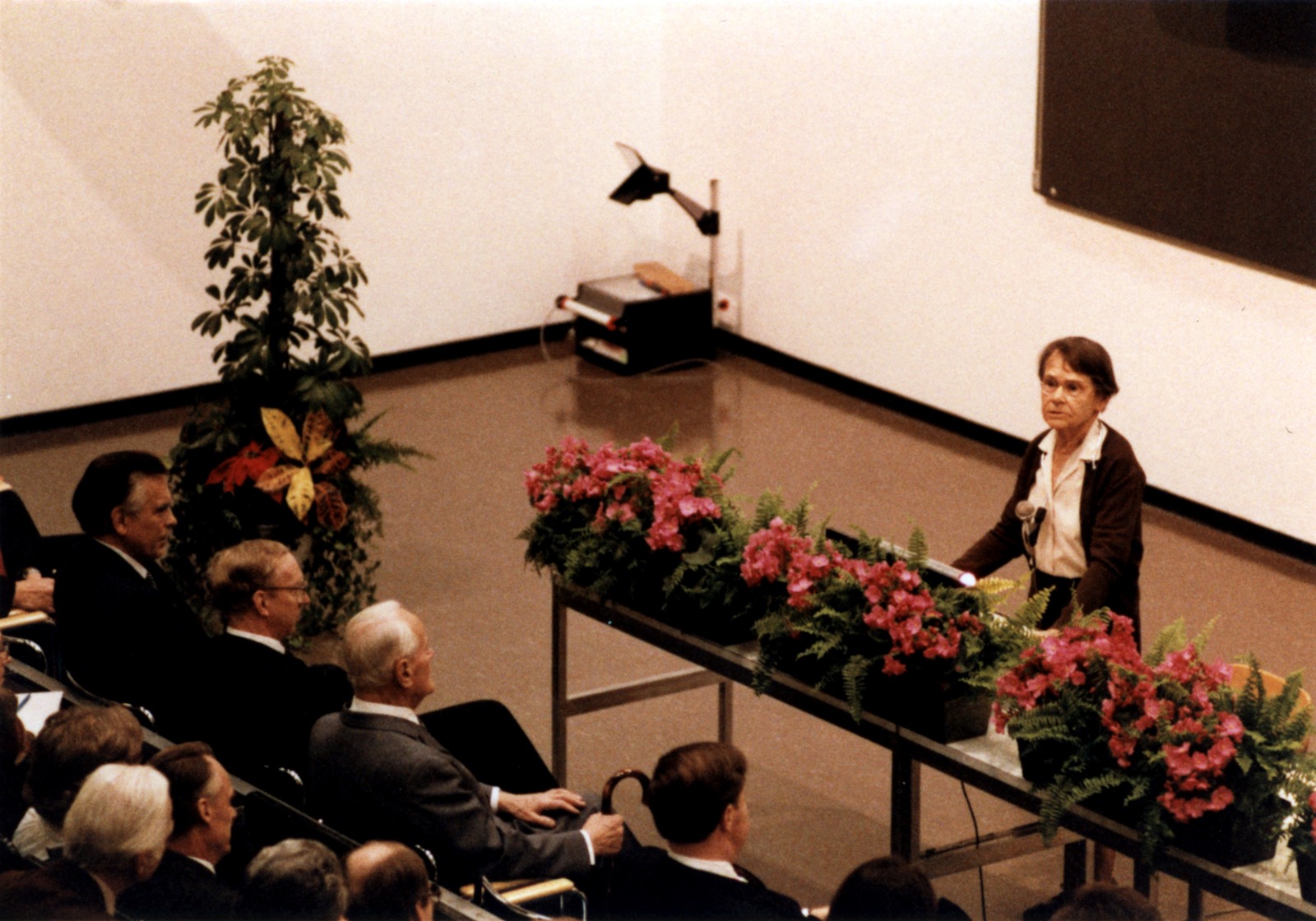
Even when the material changes, the same eye works. The way of observing I learned in corn could be used as it was when it moved to other organisms.
Q6. Science today does not stop at reading genes, it edits them. The practice of evaluating research by paper counts and citations has also grown stronger than in your time. Of what you learned in the corn field, what do you see as still useful to researchers now?
The more someone means to alter genes, the more I hope they will not forget that the genome moves on its own. Transposable elements moved in some cells and stayed put in others. Even within a single kernel the outcome differed, and that randomness was the mottling itself.
The problem of evaluation existed in my day too, only in a different form. What protected me was the corn I planted in the field each year.
Work with materials that require waiting several generations for a result is still needed now. If only research trimmed to fit a short cycle survives, a discovery that would be understood 30 years later never gets started in the first place.
Q7. If a young researcher a hundred years from now faces your corn specimens, what do you hope they will see?
I hope they will look at a single kernel for a long time. When I saw a strange pattern I pressed for the reason, and that habit was everything.
There were afternoons when I picked an ear in the field and held it up to the sunlight. The answer was written inside it, and I spent my whole life learning how to read.
The method McClintock handed down demands no special equipment. The habit of recording what is unexplained instead of treating it as error is something anyone can begin today, whether in a laboratory or a kitchen garden. It is enough to put a mark on the one line in the data at hand that is hardest to explain.
This piece is not an actual interview. It is an imagined interview reconstructed by Breath Journal on the basis of Barbara McClintock's life, writings and the records she left behind. The questions were composed by the reporter, and the answers were drawn from her writings and her career.