The National Museum of Korea announced its conclusion on September 7. The calligraphy 'Ilbansigugeun' (一飯是國恩), which had been introduced as the work of a patriot, was written by pro-Japanese collaborator Park Jung-yang (1874-1959). The museum apologized, saying it had fallen short in its basic duties.
The calligraphy was first displayed as the work of the patriot Park Won-geun. They were different people with the same name. The single fact of an identical name overturned the entire history behind the brushstrokes. The five Chinese characters, meaning that a single bowl of rice is the nation's grace, were placed in the special exhibition 'Our Table.'
Whose hand wrote the characters does not remain on the paper. What remains on the paper is the thickness and bleed of the strokes, and the label someone wrote and attached beside them.
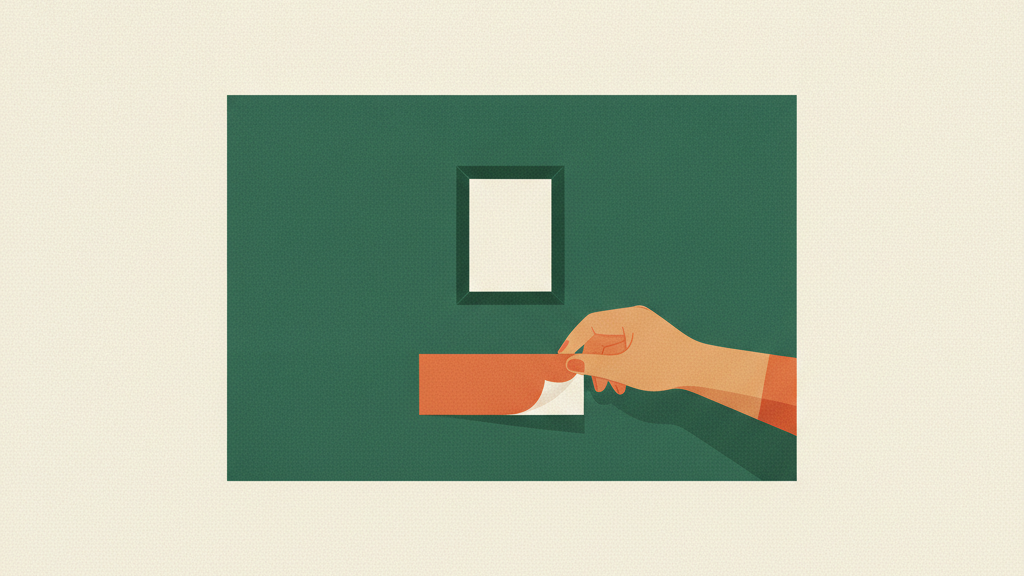
The identity of a museum artifact usually begins with that label. Visitors looking into a glass display case do not start with the strokes. They read the name, pass through the story that name tells, and then look at the strokes.
The same sentence reads entirely differently when the word patriot is attached and when the name Park Jung-yang is attached. Not a single stroke has changed.
The patriot's bereaved family came to see the exhibition. What they saw and what they said has not been disclosed. The simple fact that someone stood facing a wrongly attached label makes this matter serious enough.
The incident has put the artifact verification system under scrutiny. The museum representing the nation failed to catch the error at the stage of confirming a person's identity. Verification is work that must be repeated at the point of purchase or donation, at the point of registration, and at the point of bringing an artifact out for exhibition. Where the name slipped remains for the museum to determine.
Preservation and use conflict with each other. If an artifact stays in storage, there is no chance for a label to be wrong. The moment it is brought out and a story is attached, risk arises. The reason museums bring artifacts out nonetheless is that people see them and remember something, and because memory is made in such a place, a single wrong name can overturn an entire life.
What the museum has offered this time is a correction and an apology. What must follow is an answer as to whether errors of the same kind remain in other display cases. People with identical names, and paintings and calligraphy from periods with sparse records, do not end with this one work.
The National Museum of Korea in Yongsan, Seoul, opens its permanent exhibition free of charge. If you go there next time, it is worth reading the labels one more time than the artifacts. Who it says wrote the work, and on what grounds that attribution was settled. The objects inside the display case stay silent, and the small piece of paper beside them takes on all the explaining.