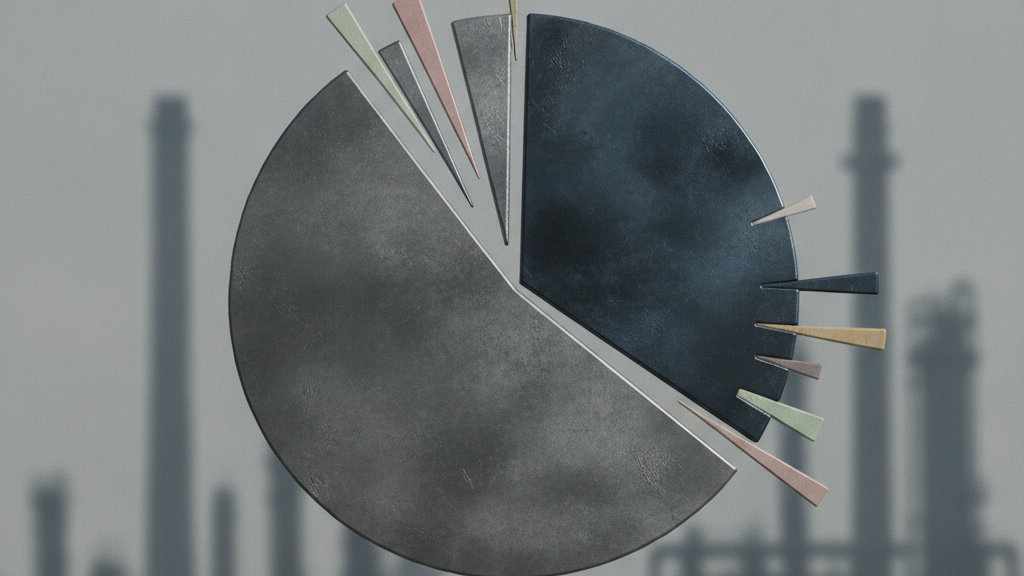
Greenhouse gas emissions from South Korea's industrial sector came to 301.62 million tons last year. That is down from the year before. Yet within that total, steel and petrochemicals accounted for 52.6%, putting the two sectors above half of all industrial emissions. The total came down and the concentration stayed where it was.
Solutions for Our Climate produced the finding by analyzing the 2025 company-level greenhouse gas reports disclosed on the National Greenhouse Gas Management System. The analysis covers industrial-sector emissions from companies subject to emissions allowance allocation. It regroups by sector the primary data that companies reported themselves, which provides a basis for examining where the decline in the total came from.
Solutions for Our Climate assessed that the drop in emissions is hard to attribute to a shift toward cleaner processes and is instead the result of production itself falling. When plants run less, they emit less. In that case the curve for the total points downward while emissions per unit of production stay the same, so emissions come back the moment the economy recovers and utilization rates rise.
The reduction in the petrochemical sector was put at about 1%. The explanation that followed was that the processes generating the emissions have not themselves changed. Solutions for Our Climate found that the scale of reductions at major companies was also negligible.
Reading the emissions decline as a decarbonization result comes with conditions. The point was raised that it is necessary to check how far process conversion has actually progressed, along with whether emissions intensity has improved. If only the total came down while those two indicators did not move, that is hard to count as a reduction achievement.
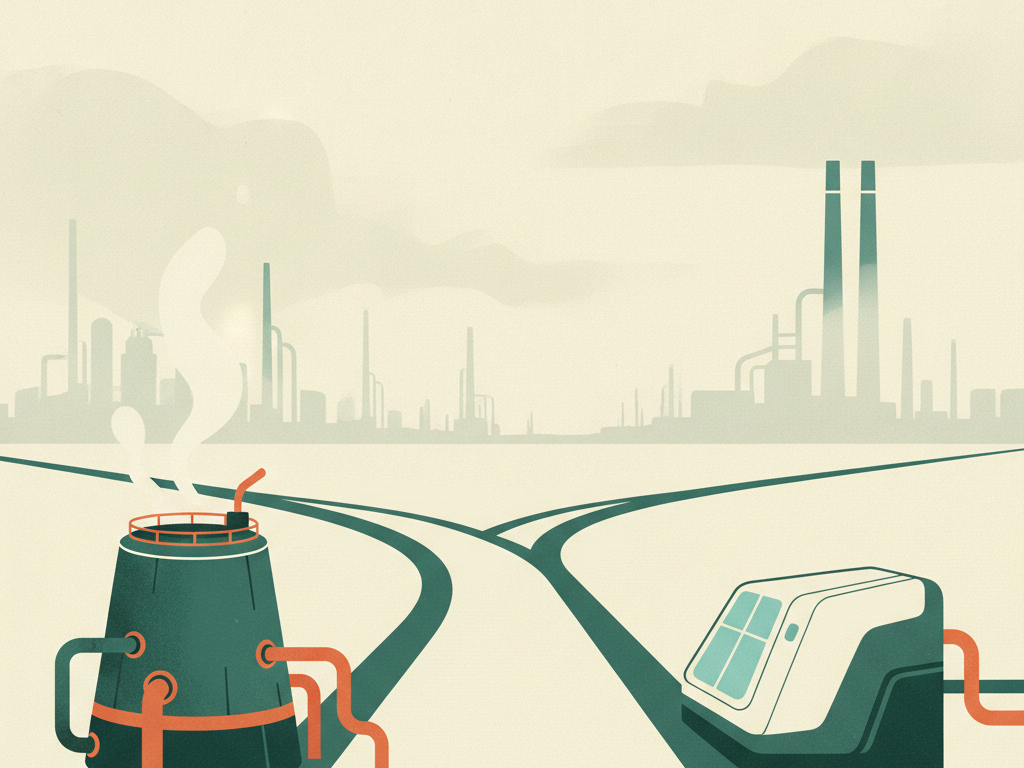
There is also a variable that will work in the opposite direction on the petrochemical side. The point is that absolute emissions could rise again as capacity expansions proceed. Depending on how the scale of the expansions and their start-up timing are set, last year's decline could turn out to be temporary.
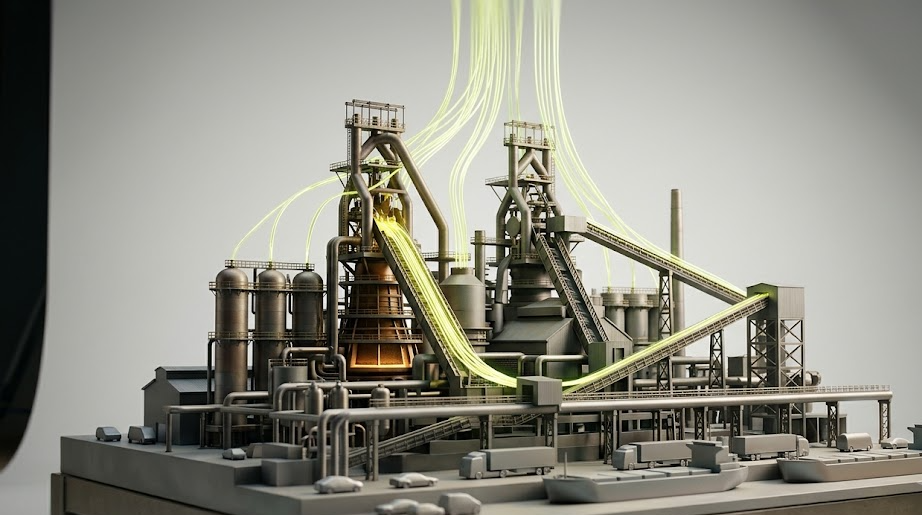
Solutions for Our Climate separately quantified the case in which the decarbonization transition of the steel industry is delayed. The analysis is that some 1,909 trillion won in production and value-added effects and 720,000 jobs could be given up over the next 25 years. It is an estimate premised on blast furnace-centered production, and how the transition timing is set weighs heavily on the result.
There is a point to watch in reading these figures. The starting point of the 25 years and the base year for the currency are not presented together, so it is difficult to place the time axis of the 1,909 trillion won figure precisely.
Steel and petrochemicals are the sectors that supply the basic materials for domestic manufacturing. That the two sectors account for more than half of industrial emissions reads as meaning that the success or failure of reductions in the industrial sector effectively rests on process conversion at these two. However much emissions are cut in the remaining sectors, if the 52.6% is left untouched the total will not move much.
The indicator to watch is emissions intensity. Rather than whether the total comes down again or rebounds in next year's reports, where emissions per unit of production have moved shows the substance of the transition. If intensity is lower even after utilization rates recover, then the processes have changed, and if only the total moves up and down, last year's decline came from swings in output.