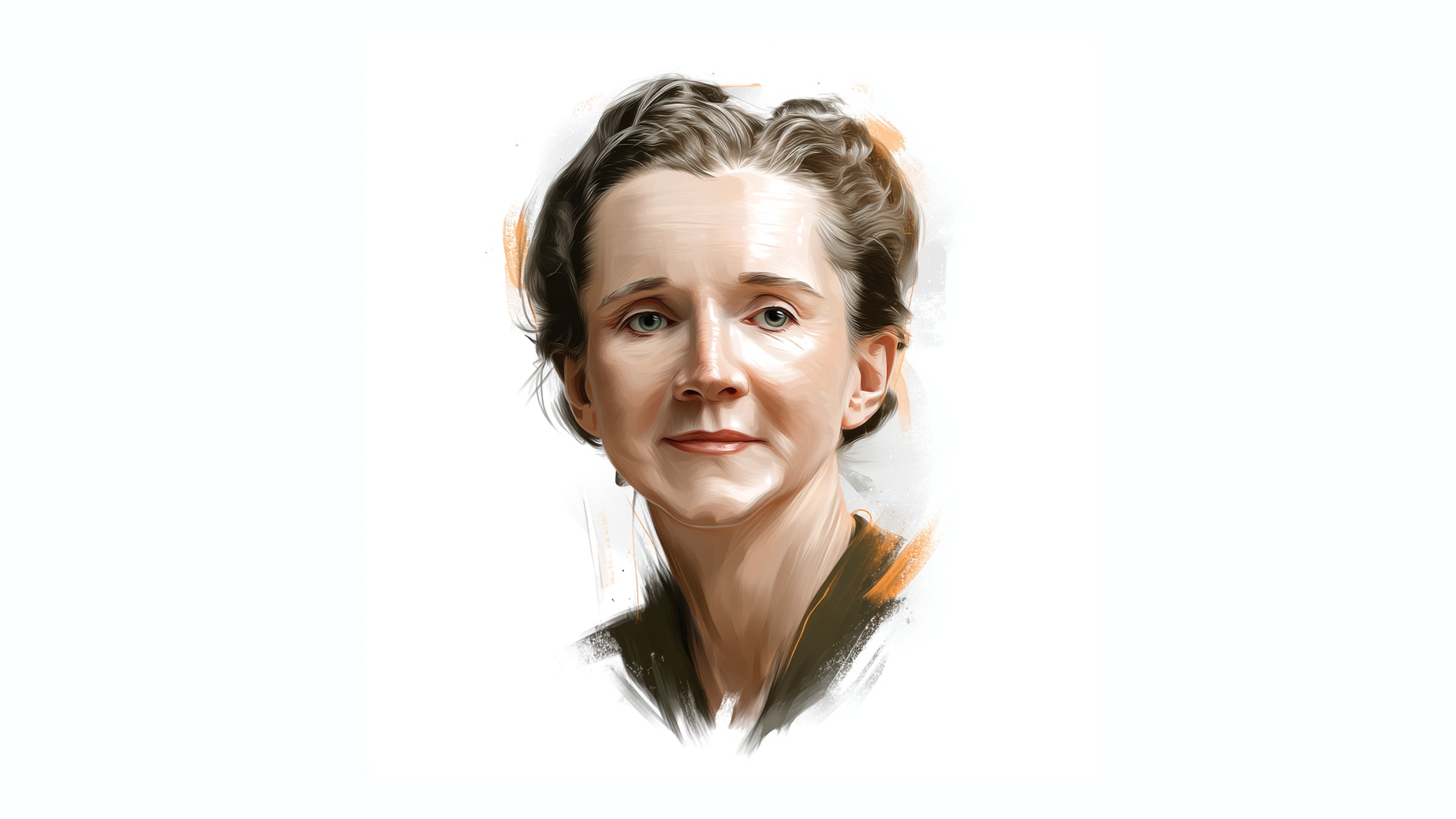
A student who entered college to study literature changes her major to biology. When she graduated in 1929, she was one of the few women at that school to take a degree in science. Some 30 years later, one book she wrote overturns pesticide policy in the United States.
Rachel Louise Carson (1907~1964) was a marine biologist and writer born in Springdale, Pennsylvania. She switched her major from literature to biology at the Pennsylvania College for Women and graduated in 1929, and took a master's degree in marine biology at Johns Hopkins University. From 1937 to 1952 she worked as a marine biologist at the Fish and Wildlife Service.
After winning the National Book Award for 《The Sea Around Us》(1951) she devoted herself to writing, and in 1962 published 《Silent Spring》. She died of cancer at 56.
Q1. You changed your major from literature to biology. Someone who meant to write went into the laboratory, and have you ever regretted that choice?
I do not think I switched from one path to another. The books I loved were, in the end, about the sea and nature. Biology was a tool that put exact names on the things I wanted to write about.
After finishing school I taught students at the University of Maryland and wrote natural history pieces for newspapers. It was training in using the language of the laboratory and the language of the page at once. That was when I learned that poetic sentences and precise facts do not eat away at each other.
From 1937 I worked as a marine biologist at the Fish and Wildlife Service. Fifteen years on, I left that job. It was to stake everything on writing.
Q2. What made someone who wrote books about the sea turn to pesticides?
It was after I finished the sea trilogy. While writing 《Under the Sea Wind》(1941), 《The Sea Around Us》(1951) and 《The Edge of the Sea》(1955), I confirmed that life runs together as one from the water's edge to the deep sea. If that is so, what is sprayed on land cannot fail to reach the water.
From the late 1950s I looked into the problems made by synthetic pesticides. I put four years of my own research into chapters 2 through 17. I set down in order what DDT and other chemicals do to birds, fish, wildlife and people.
Chapter 1 of the book opens with a fable. It is the story of a town that had been in harmony slowly losing its life and becoming a place where no birdsong is heard even when spring comes. I did not open with a scientific report because people read the next chapter only after they have pictured a person losing the place where they live.
Q3. Right after publication in 1962, the attacks from the chemical industry and pesticide makers were severe. Was any part of their rebuttal valid?
I never wrote that pesticides should all be done away with. The argument soon split over whether there should be a total ban, and it would have been far easier to make me out to be an emotional person. The abuse and the scheming reached their peak right after publication.
That does not mean there were no weak spots in my writing. In handling many chemicals in a single book, I did not break down finely enough the fact that the size of the risk differs from substance to substance. I should also have written in fuller detail about the situation of people in farming who lose their living to pest damage.
Nor do I want to paint the people who attacked me as villains. They worked in a world where selling pollution as the price of progress had long gone through without any resistance. It was that accepted practice I wanted to change.
Q4. You were ill during the time the book was under attack. How did you get through that period?
My body breaking down and the book being attacked came at the same time. In 1963 President Kennedy set up an advisory committee to deal with environmental problems, and I testified before the President's Science Advisory Committee. At that point I knew I would not be able to watch the outcome for long.
What might be called recovery was letters. My agent Marie Rodell later spent close to two years sorting my manuscripts and letters, and asked each of the senders for consent. Only what was consented to remained in the archive.
I died in 1964, but the work carried on. In 1965 Rodell planned the publication of the writings I had meant to gather into a book. It was writing about something anyone can do, letting a child place themselves under the land and the sea and the sky.
Q5. While you were writing the sea trilogy you warned about dumping nuclear waste at sea. What was it that made people believe the sea could be treated that way?
The sense that the sea is large. The idea that since it is wide, whatever goes into it is diluted held good for a long time. While writing the trilogy I kept seeing that one pool on the shore and the deep sea are different parts of the same water. Dilution is not disappearance.
It was the same with pesticides. What is sprayed on a field does not stay in the field. It passes through the soil into the water, and moves from small creatures to large ones, building up inside their bodies. Problems on the scale of the earth mostly come from this absence of boundaries.
Q6. Even now, in 2026, many countries repeat the same argument over climate and chemical regulation. Is there anything to hand on to today from the experience that led to the founding of the Environmental Protection Agency in 1970?
The problem I held on to longest was that authority was bundled together in one place. Until then a single department, Agriculture, was in charge of both promoting farming and regulating pesticides. When the same department promotes and restrains at the same time, one of the two is bound to be pushed aside. I saw that as a conflict of interest.
When the Environmental Protection Agency was set up separately in 1970, the two bundled powers were pulled apart. Before that, the Environmental Defense Fund was formed in 1967 and fought in court for the citizen's right to an unpolluted environment, and by 1972 it had won a phased ban on the use of DDT in the United States. It was a result built up by lawsuits and legislation and letters together.
I also saw those policies rolled back in the 1980s. Institutions once won are not kept unless they go on being defended. That they can be rolled back means they can be built again.
Q7. If you were to leave just one thing to someone reading this page 100 years from now, what would it be?
No grand resolve is needed. Go out today to the water near where you live and spend ten minutes looking at what lives there. You do not have to know the names. You have to know what was there to know what has gone.
All the books I wrote came out of those ten minutes. That is how an ear that hears the spring growing quiet is made.
This piece is not an actual conversation. It is an imagined interview reconstructed by Breath Journal on the basis of Rachel Carson's life, her works and the records she left. The questions were written by a reporter, and the answers were drawn from her writings and her actions.