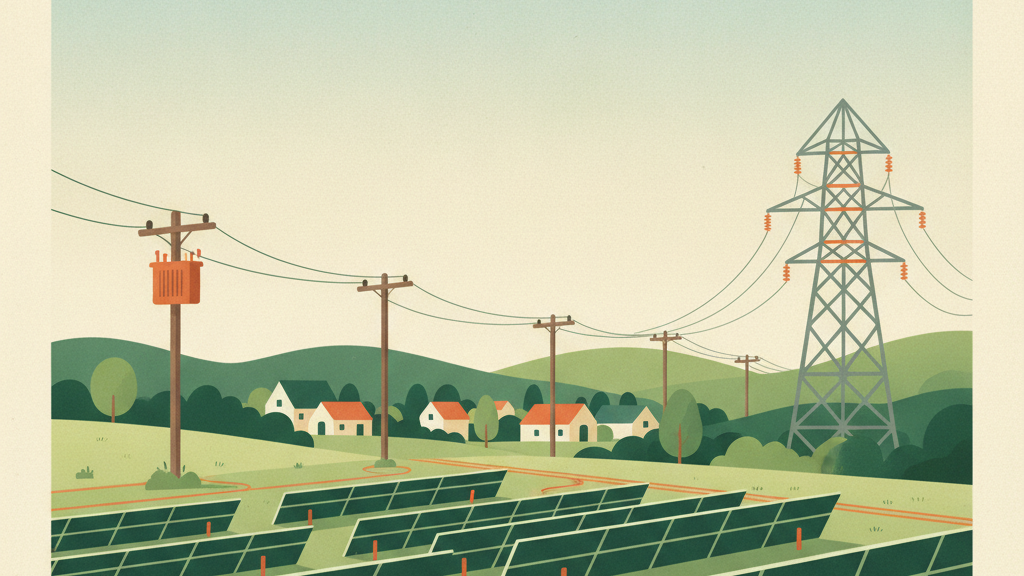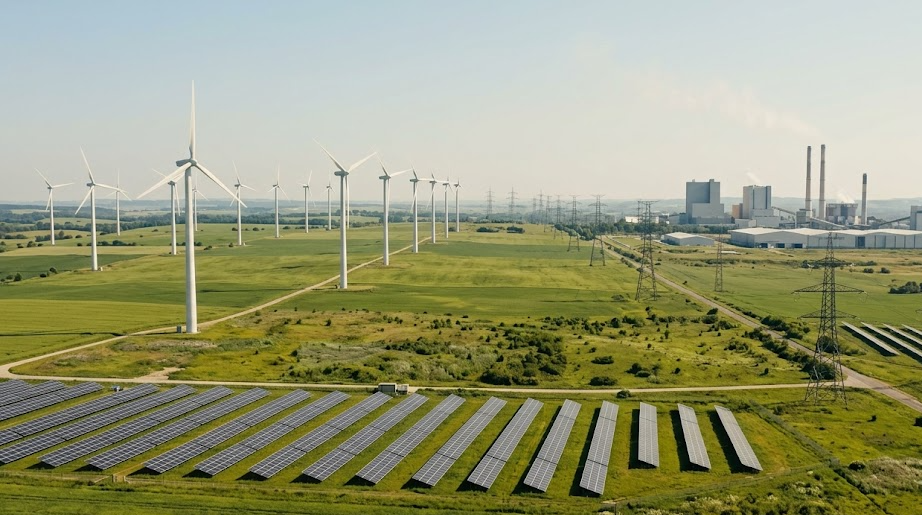
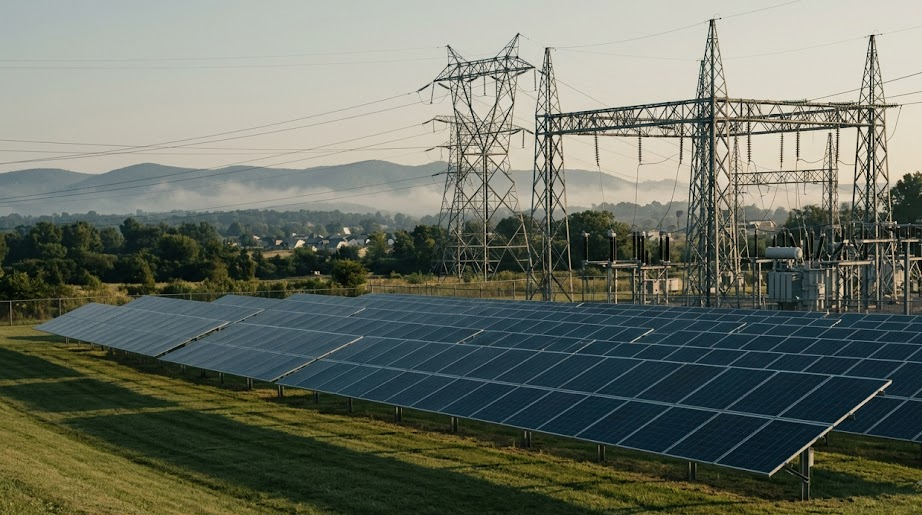
A plan has been announced to build 95MW of solar generation facilities on spare land at roughly 500 substations nationwide. Korea Electric Power Corporation (KEPCO) released the plan yesterday, with a timeline running through 2030. The targets are residual plots created during substation construction, landscaping areas and leftover strips along the boundaries. Generation facilities will be placed on sites where electricity already flows, without the process of cutting into hillsides or filling in rice paddies.
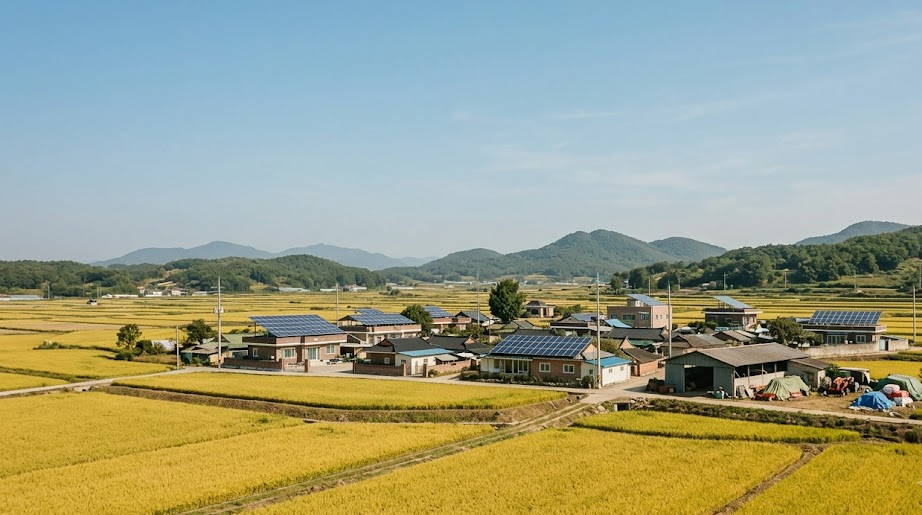
The same day, the National Assembly's Legislation and Judiciary Committee passed an amended alternative to the bill on promoting and supporting agrivoltaic power generation. It is the first case of defining in law the activity of producing solar energy while growing crops. The item came over after the Agriculture, Food, Rural Affairs, Oceans and Fisheries Committee approved the alternative at a plenary meeting last month. No date has been set for taking it up in the plenary session.
That the two pieces of news came on the same day is a coincidence, but they target the same problem. The biggest obstacle to expanding renewable energy is land, more than generation technology or unit cost. Every attempt to secure new sites drags out permits and local negotiations, and projects have repeatedly halted altogether in that process. So the approach of also using space already in use is being written into the system.
Agrivoltaics has until now had no clear legal status, caught between the Farmland Act and the generation business licensing system. This bill sets up an independent legal framework that applies ahead of other statutes, and limits project operators to farmers, resident-participation cooperatives and agricultural corporations. The design aims to prevent outside capital from consuming farmland solely as generation sites. Resident-participation cooperatives are required to return part of their profits to local residents, and the return rate was left to subordinate regulations.
Regulations went in as well. Gathering residents' opinions becomes mandatory during the generation business licensing process, and mayors, county governors and district heads may limit project scale such as site area and generation capacity, or attach conditions. Farming obligations and obligations to grow suitable crops are specified, so corrective orders and penalty surcharges follow if no farming is done. The intent is to block cultivation from becoming a formality under the pretext of generation.
In KEPCO's plan, the sequence stands out more than the scale. It is a phased approach that sets up a dedicated organization, runs a 1MW pilot project this year, then fills out 95MW by 2030. KEPCO President Kim Dong-cheol said the project would create a flagship success case for K-RE100 in the public sector. To expand this project, named the energification of idle transmission and substation assets, consultations with the Ministry of Land, Infrastructure and Transport on improving the system are also under way.
The reason system improvement is needed lies in current procedures. Development activity permits are required even for renewable energy facilities that can be restored to their original state and do not alter the character of the land. If this procedure, which takes several months, attaches to every small facility, filling 500 leftover plots would run past a single term of office on administrative work alone. The success of the idle-site strategy depends on the length of the paperwork more than the price of the panels.
The government has set targets of 100GW of renewable energy by 2030 and solar power in the 80-won range per kWh, and has presented RE100 industrial complexes and renewable energy mega special zones alongside them. 95MW is not a large share of that total. It still matters, because it becomes a case that measures how far generation can be expanded without conflict. The same is behind the demand by the Korea Renewable Energy Federation, launched on the 22nd of last month, for enacting a renewable energy special act and redesigning licensing and power trading regulations.
It is early to be purely optimistic about the idle-site strategy. Leftover plots vary in shape and have plenty of shade, so efficiency per site falls short of wide flat ground. For agrivoltaics, the key is how well yields hold up under the panels, and the actual scope of application will vary with the range of perennial plants set by the enforcement decree. For both projects, the first year's pilot results determine what comes next.
There are places to check in the area where I live. Generation business licenses and resident opinion-gathering procedures announced by local governments are posted on city, county and district websites, and once the agrivoltaics bill takes effect, this channel becomes a practical route for adjusting project scale. Objecting when there is something to object to, and weighing the terms when there is a chance to join a cooperative. Where renewable energy gets built will in the end be decided by the people living next to that land.