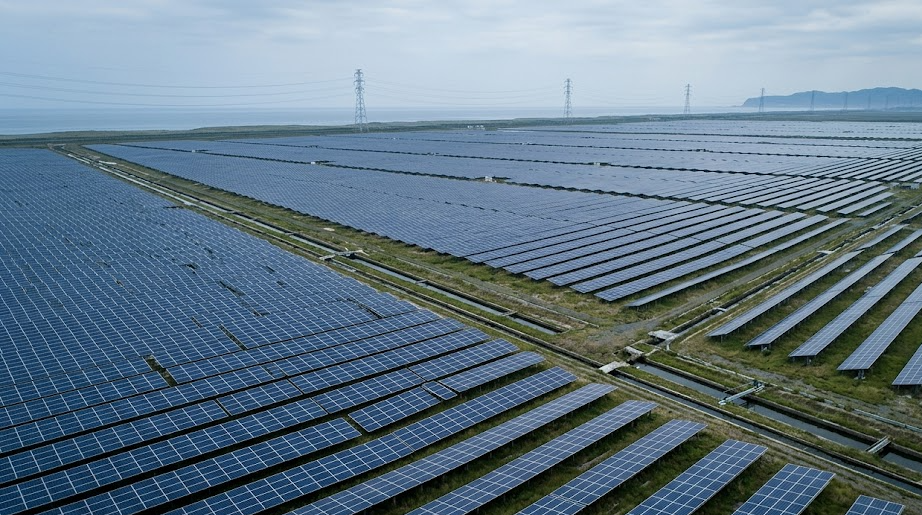
A 400MW solar power plant is coming to Munnae-myeon, Haenam-gun, South Jeolla Province. It is a project pushed by Korea South-East Power. The site is 4.6 million square meters, or 1.4 million pyeong. About 640,000 modules will be laid down.
The target for completion is June 2028. The preferred bidder for EPC was selected in May this year. Modules and cells will be supplied by Hanwha Solutions' Q CELLS division from domestic production, and the cells come out of the Jincheon plant in North Chungcheong Province.
Laying the 154kV power network from the plant to the Haenam substation went to Taihan Cable. It is a 50 billion won contract that bundles everything from design to testing.
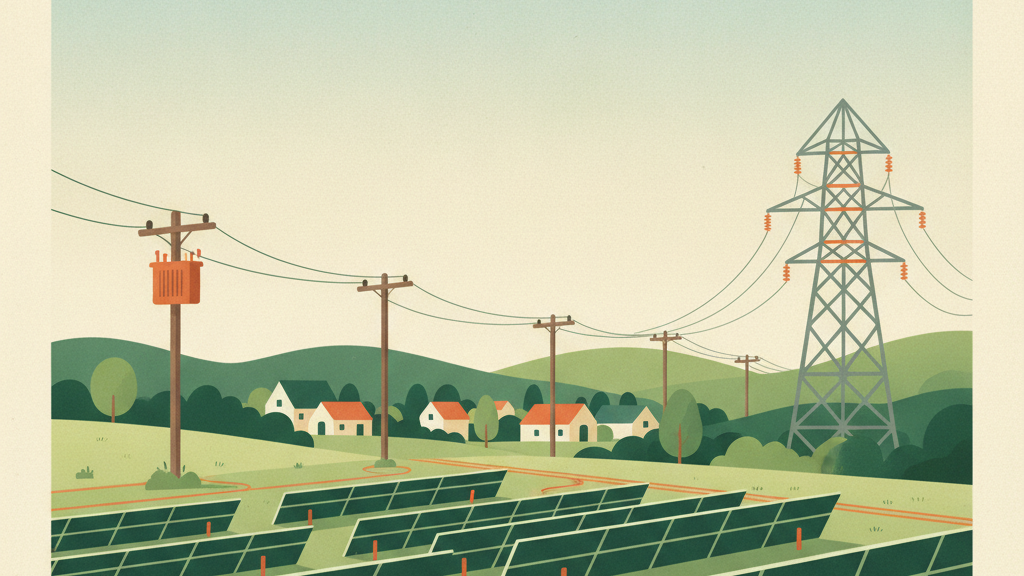
For a power plant to run, transmission lines and substations, inverters and transformers, storage devices and management systems all have to be installed together. The Haenam project is holding on to a module supplier and a cable contractor at the same time.
Behind it is AI.
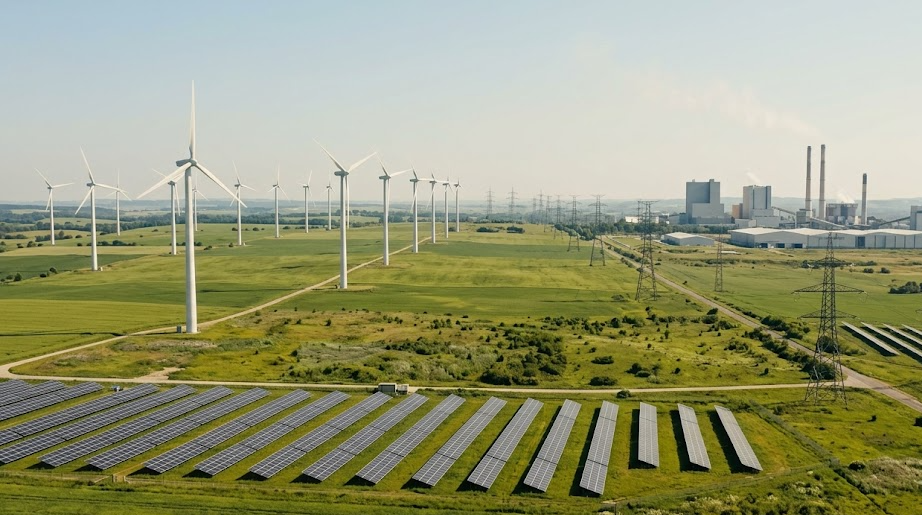
As data centers and semiconductor facilities increase, power demand is jumping. The Ministry of Climate, Energy and Environment and the general committee of the 12th Basic Plan for Electricity Supply and Demand set August 20 for discussions on how to handle this demand. In its second-half policy briefing the government brought out an "Electro-state" strategy, saying it would raise renewable energy capacity to more than 100GW by 2030 and reach a 20% share of generation ahead of schedule.
Last year the renewable share of power generation was 11.4%. That means it has to be nearly doubled in a little over four years.
Solar and wind output rises and falls with the weather, the time of day and the season. ESS and hydrogen are each raised as tools to absorb this swing. ESS fills gaps within a day, and hydrogen stores across seasons.

On August 13 a forum titled "The Great Transition of the Power System in the AI Era and the Role of Hydrogen" was held in Yeoksam-dong, Seoul. It was hosted by the Korean Society of Energy Engineering and the Korean Hydrogen and New Energy Society, and organized by the Korea Hydrogen Association and the Korea Institute of Science and Technology.
At the forum there was a presentation titled "Responding to Power Demand and Transitioning to a Carbon-Free Power System for the Successful Pursuit of the Three Mega Projects." The presenter was Park Eun-duck, president of the Korean Society of Energy Engineering. Park Jong-bae, president of the Korean Institute of Electrical Engineers, also took the podium as a presenter. Around the same time, discussions also emerged that view hydrogen storage (HESS) and water electrolysis as a way to relieve power bottlenecks.
There is movement on the sea side as well. The government is pushing to expand offshore wind in the Southwest Sea and will hold the first offshore wind power generation committee during the second half of this year. The committee's composition and the projects it covers will be disclosed when it convenes.
On another front the signals are bending. In global electric vehicle battery usage in the first half of this year, LG Energy Solution was third with 8.6% and SK On was eighth with 3.1%. Both companies saw their share fall from a year earlier.
Samsung SDI was pushed out of the top 10. Whether the stage for the battery industry can widen from electric vehicles to grid storage becomes the real key to expanding ESS.
Voices calling for a return to nuclear power in the name of AI power demand have grown louder. On the reclaimed land in Haenam, 640,000 modules are being prepared for installation, and the 154kV cable is written into a contract. Renewable energy facilities are set down as dates on a construction schedule.
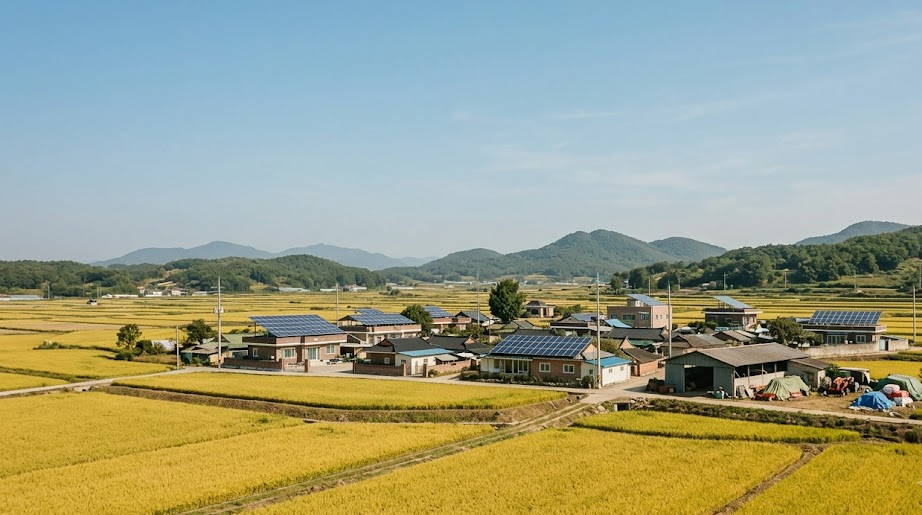
The Basic Plan discussions continue on the 20th. Where the electricity each household uses comes from can be checked in Korea Electric Power Corporation contract types or in local governments' notices for renewable energy projects. While a large complex like Haenam goes up, a 3kW rooftop system connects to the same grid.