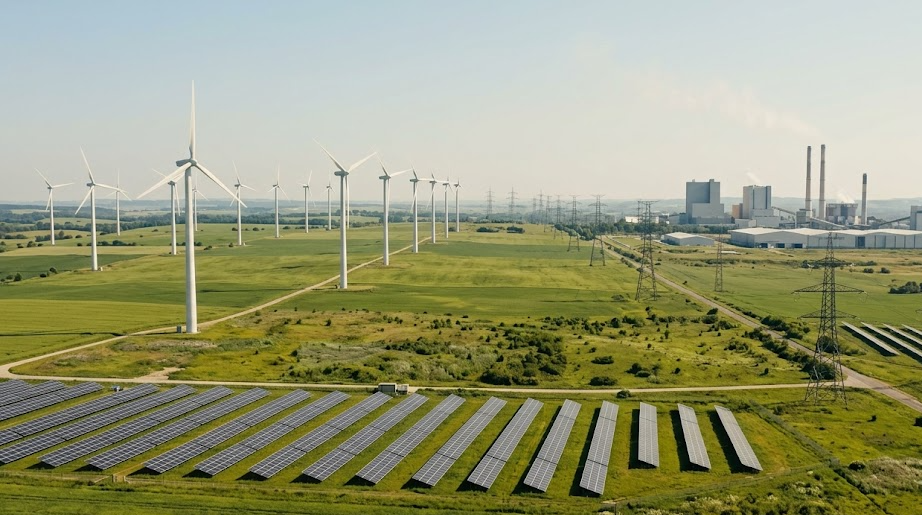
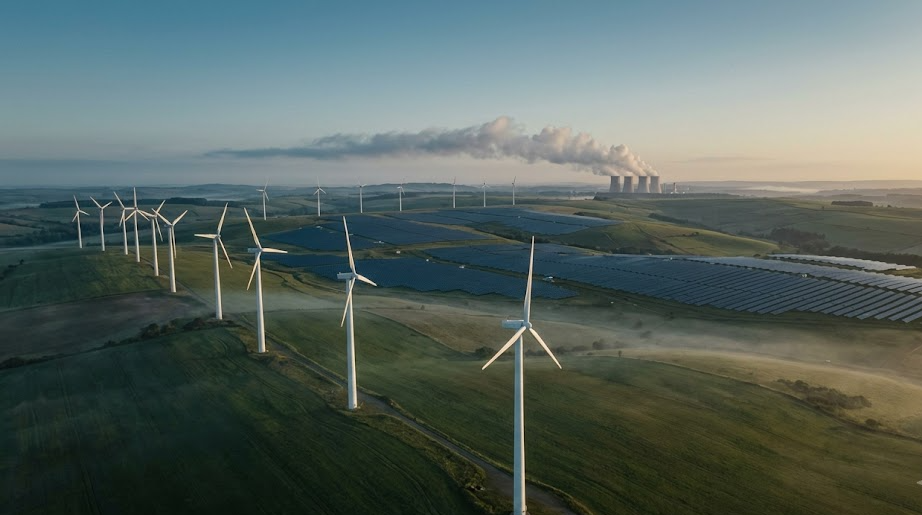
China's coal power share fell to 49.7% in the first half of this year. In figures compiled by China's National Energy Administration, coal power generation from January to June came to 2.5 trillion kWh. This is the first time it has fallen below 50% on a half-year basis. Over the same period, renewable generation approached 2 trillion kWh and accounted for 41.2% of the total.
The change on the capacity side is sharper. Combined wind and solar capacity in the first half reached 1.95 billion kW, up 16.8% from a year earlier. Electricity produced by the two sources exceeded 1.2 trillion kWh. The two covered a quarter of China's total social electricity consumption.
China is the world's largest emitter.
The IEA estimated China's coal power share at about 60% as of 2024. The figures are hard to place side by side with the National Energy Administration's, as the compiling body and the year both differ. Still, both figures point to a trend moving in one direction.
In the IEA's 2024 tally, South Korea's coal power share was 28.7%. Japan's was 26.1%, the United States' 16%, and the EU's 11%. Among major economies, South Korea's coal dependence ranks on the high side.
The government's target for cumulative renewable capacity by 2030 is 100GW. The picture is 87GW of solar, 9GW of wind, and 4GW from the rest. According to a KDI analysis, reaching this target requires installing an average of at least 6.8GW every half-year.
The record over the past 5.5 years was 1.7GW per half-year. That means about four times more must be delivered.

Broken down by source, the gap widens further. Solar requires 3.6 times the past record, and wind 10 times. The 9GW wind target may look small, but the actual burden is heavier than solar's.
Money has not been absent either. RPS compliance costs came to 4.5 trillion won in 2025 alone. Cumulative settlements since the system was introduced in 2012 have reached about 28 trillion won.
By KDI estimates, the social benefit per won of subsidy in 2020 was 1.33 won for solar and 1.18 won for onshore wind. Excluding learning effects, they fall to 0.89 won and 0.80 won respectively. In the same year the United States recorded 3.50 won for solar and 5.21 won for wind.
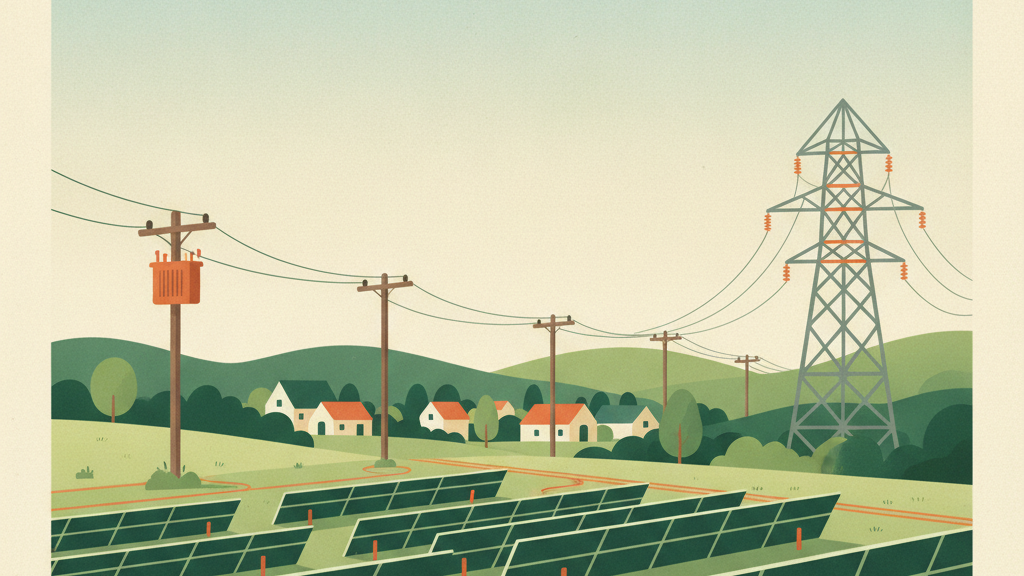
Raising subsidies alone will not close this gap. Even when plants are built, connections are delayed if transmission networks fall short, and curtailment applies after they are connected. When SMP and REC prices swing, it becomes difficult for financial institutions to supply capital. The bottlenecks are concentrated on the side that carries and prices the electricity rather than the side that produces it.
On the 30th, the Korea Environmental Economics Association and the National Academy of Engineering of Korea jointly held the "Hydrogen Sector Coupling Policy Forum for a Renewable Energy Leap" at the Korea Chamber of Commerce and Industry in Jung-gu, Seoul. Yoo Jong-min, professor of economics at Hongik University, delivered the keynote presentation. How to handle electricity during surplus hours was the axis of the discussion.
China's curve did not bend with a single decision. It kept adding capacity and built places to use that electricity alongside it. South Korea's half-year record accumulates only in the same way.
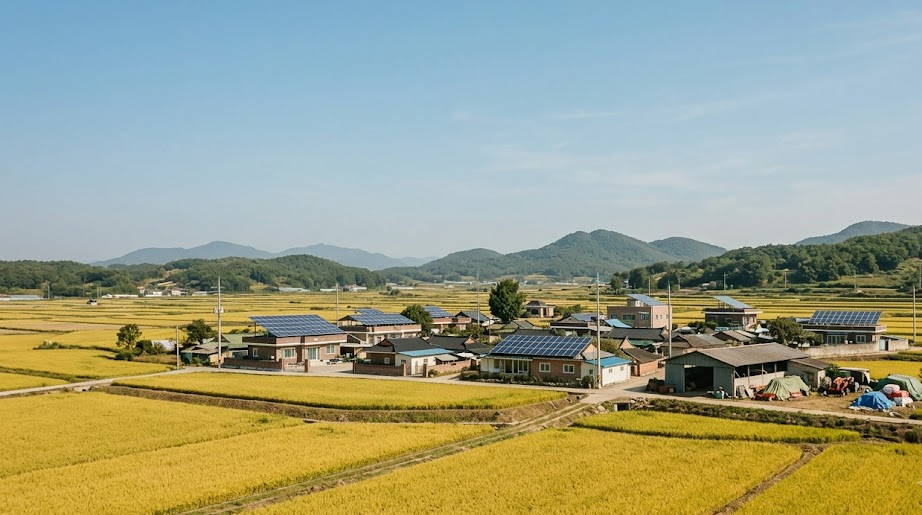
There is one thing households can try right away. Shifting washing machines, dishwashers, and electric vehicle charging to midday, when solar output is concentrated. It captures, bit by bit, electricity that would have been discarded, and bills fall along with it.