The Electricity Regulatory Commission of the Ministry of Climate, Energy and Environment held the "1st Grid Code Subcommittee." As announced on July 20, the first meeting took place the following day at the Coal Center in Jongno-gu, Seoul. The Electricity Regulatory Commission reorganized the existing "Power System and Reliability Subcommittee" into the Grid Code Subcommittee. With the name changed, the scope it covers has also widened.
The grid code is a bundle of standards that set out how the power grid is to be operated. It contains the standards for maintaining power system reliability and power quality, and it also includes the electricity market operation rules. The regulations on the use of transmission and distribution electrical facilities are within it as well.
At the first meeting, the members decided to take up first the state of Korea's grid code for inverter-based resources and the tasks for improving it, along with BESS safety and grid connection standards. Added to these were the prevention of large-scale blackouts, the system restoration framework, and mid- to long-term improvements to future power system operation standards.
Deployment targets and project schedules are running ahead.
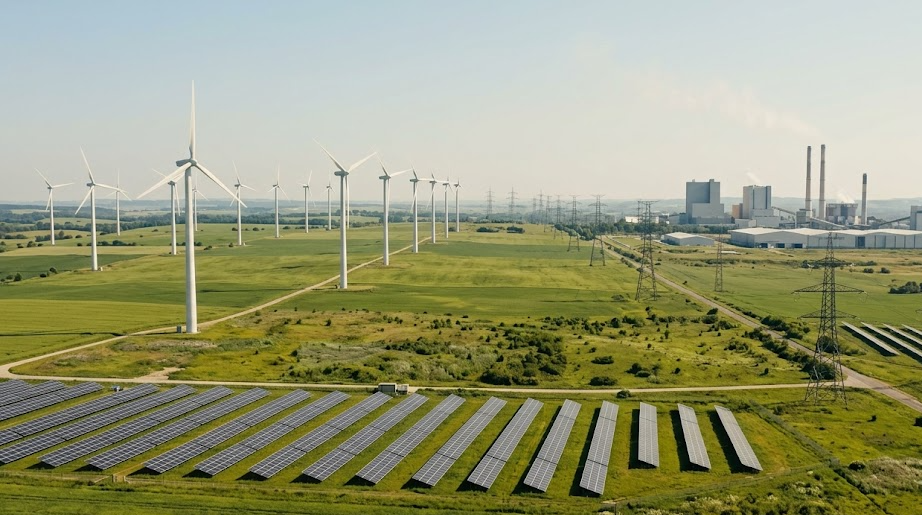
In April, the government presented a plan to shift to a renewable-centered power system through the "Energy Grand Transition Promotion Plan." In May came the "1st Basic Plan for Renewable Energy." The target for renewable energy installed capacity is 100GW by 2030.
For offshore wind, the target is 25GW of deployment by 2035, and a bidding roadmap totaling 55GW over the next 10 years has been finalized. The plan is to newly supply more than 4GW a year on average.
Projects are moving on the ground as well. In the first half of this year, projects totaling 1,786MW were selected for offshore wind bidding, and 532MW of that is floating. The 390MW Shinan Ui offshore wind project has begun construction.
Along with the Offshore Wind Special Act enacted last year, financial support worth 1.3 trillion won drawing on the National Growth Fund and the Future Energy Fund is being pursued. That corresponds to about 40% of total project costs.
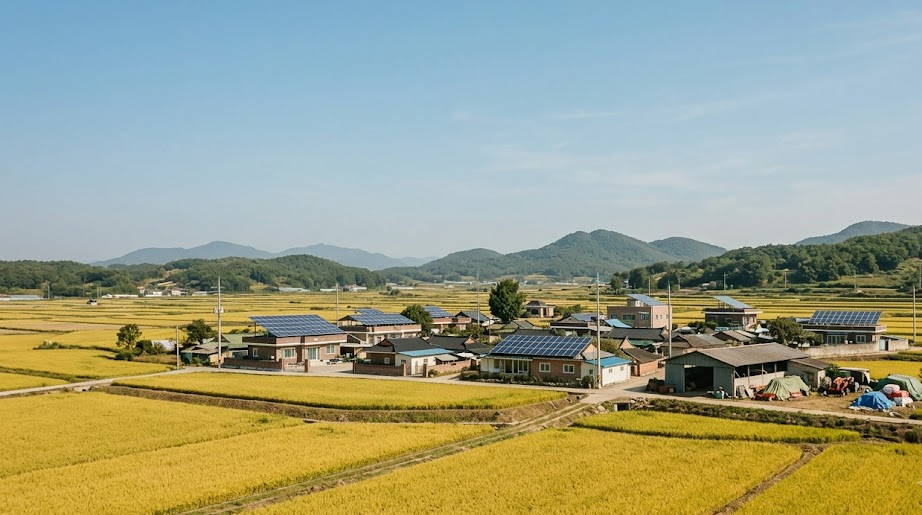
Solar power has picked up volume too. The Ministry of Climate announced a competitive bid for 1GW of fixed-price contracts this year. The ceiling price is 147.686 won per kWh, 5% lower than the previous year.
Professor Kim Young-duk of the Department of Economics at Pusan National University published "An Analysis of the Greenhouse Gas Reduction Efficiency of New and Renewable Generation in the Power Sector" in the latest issue of the "Journal of Climate Change Research." The paper uses data from five state-owned power generation companies in Korea from 2015 to 2024 to estimate how much renewable energy has substituted for fossil fuel generation. The reduction efficiency parameter showed no statistically significant difference from zero.
Behind this is a difference in scale. Looking at the same 10-year average, the new and renewable generation facilities of one power generation company amounted to 2.6% of its fossil fuel facilities. Their share of generation stopped at 2.2%.
It is hard to push out existing generation with a share of that size. For substitution to happen, the electricity has to actually be carried onto the grid.
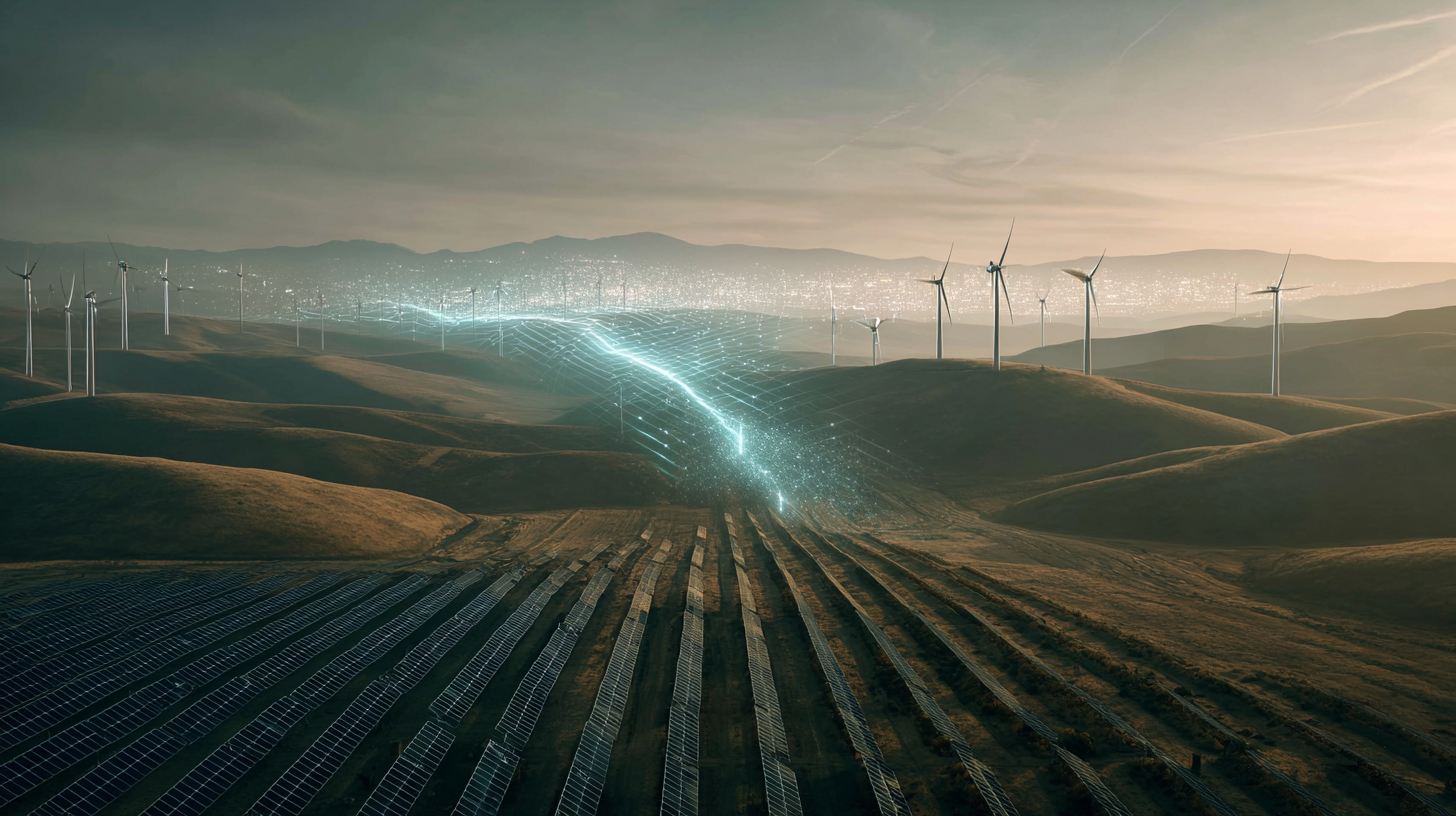
[Illustration: a contrasting composition in which a rotating disc-shaped mechanical device and a rectangular electronic component are tied into the same wire network | Caption: When inverter-based resources enter a grid built around synchronous generators, the operating standards change first]
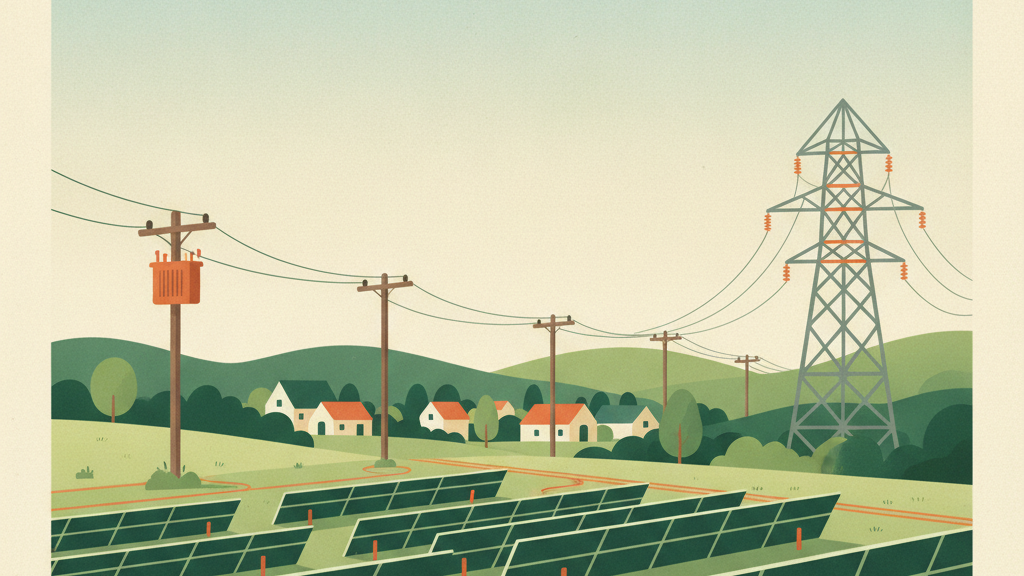
Solar and wind attach to the grid through inverters. They differ in character from the existing power grid, which was built around rotating synchronous generators. The power system is shifting from a centralized structure focused on large power plants to a distributed, two-way system in which solar, wind, ESS and demand resources all take part.
When transmission networks fall short or grid operation constraints arise, there are cases where generation is curtailed. When facilities that have been built stop, the emissions cuts disappear along with them.
One axis of the government's response is storage facilities. It is widening the application of grid-forming technology to transmission-connected ESS and pursuing the introduction of long-duration battery-based ESS. The Grid Code Subcommittee's placing of BESS connection standards on the agenda of its first meeting falls in the same current.
Deployment targets and grid standards have to advance together for results to come. The 100GW target is a matter of erecting facilities, and it is also a matter of deciding when and on what terms the electricity those facilities produce will be accepted onto the grid.
The subcommittee's discussions are only at the starting stage. Revising the grid code means touching the electricity market operation rules and the transmission and distribution use regulations, so it affects both businesses and consumers. For those preparing a renewable energy project or considering rooftop solar, it is worth looking at how grid connection conditions change along with generation costs. The administrative notices and rule amendment proposals on the grid code issued by the Ministry of Climate and the Electricity Regulatory Commission are the point at which to check.