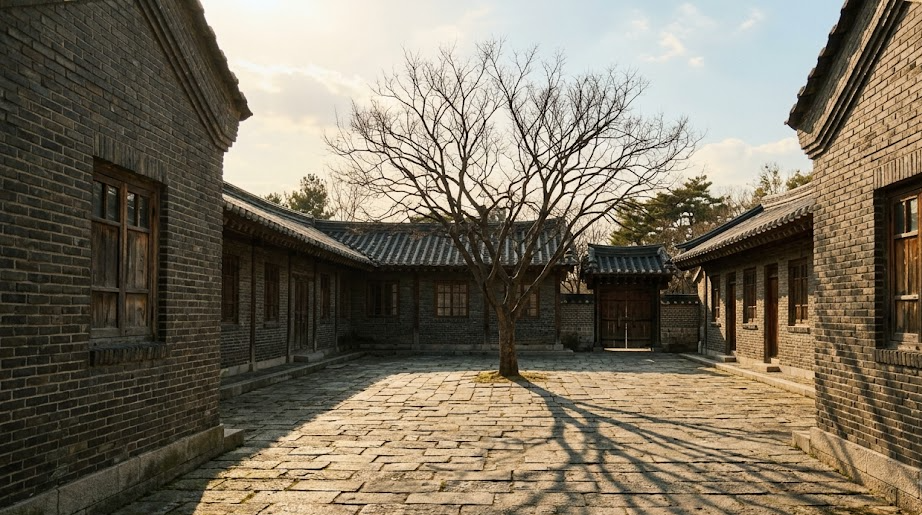
The Seoul Museum of Craft Art opens two special exhibitions at once on the 28th. They are "The Hybrid," marking 140 years since Korea and France established diplomatic relations, and "Andong Detached Palace, Layers of Time," organized on the occasion of the 120th anniversary of the wedding of Emperor Sunjong and Empress Sunjeonghyo. The museum announced the simultaneous opening of the two exhibitions on the 27th, a day earlier.
"The Hybrid" is held on the third floor of Exhibition Hall 1. The starting point of this exhibition is the gifts Emperor Gojong presented to foreign envoys, along with the craft works of the Korean Empire that crossed the sea in connection with participation in the 1900 Paris Exposition. Those objects were scattered across various storage facilities at home and abroad for more than a century, and now they are gathered in one place.
Seventeen artifacts are being introduced in Korea for the first time, and nine are cultural heritage items designated or registered as national heritage. Also included are works held by the Museum am Rothenbaum in Germany, the Musée national des arts asiatiques-Guimet in France, and the Musée des Arts et Métiers in Paris. The exhibition binds together with the word "hybrid" the arithmetic by which the surfaces of mother-of-pearl, metal, and lacquer polished by artisans of the Korean Empire were placed under European lighting and then returned.
Hybrid does not mean impure. It is the trace of a period when Western designs were laid over Joseon lacquerware, and Joseon chests were recut to fit the dimensions of Paris display cases. That awkward joint was the reality that crafts of the late 19th and early 20th centuries had to bear.
The other exhibition is held on the third floor of Exhibition Hall 3. The Seoul Museum of Craft Art and the Oryundae Korean Martyrs Museum joined hands to prepare it, and what it deals with is the clothing of the imperial household. At its center are the garments of Empress Sunjeonghyo, who wed Crown Prince Sunjong in 1906, and of Prince Uiwang and his wife, who spent their final years on this site from 1948 to 1955.
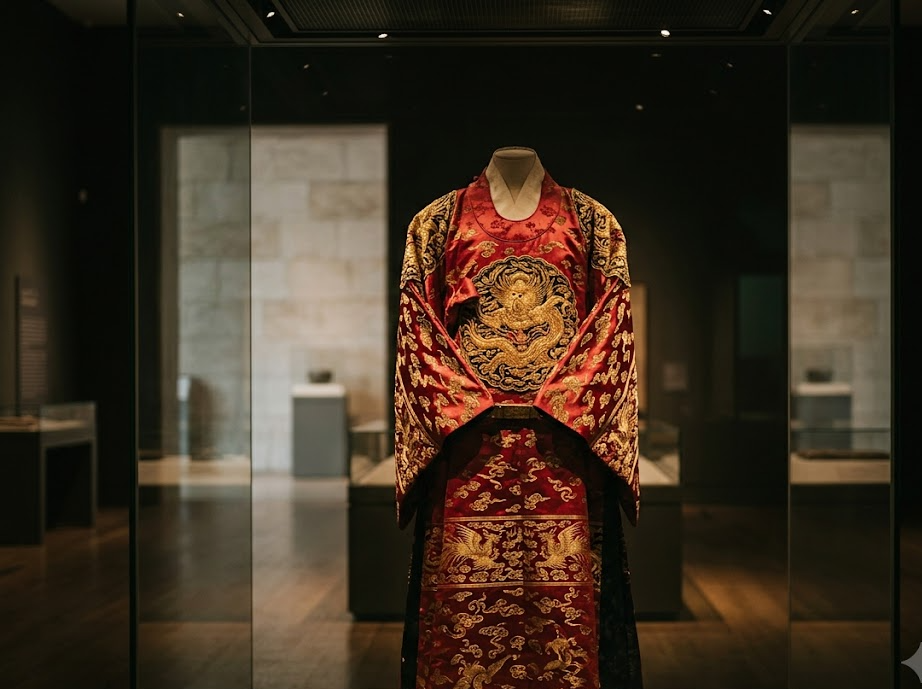
The place where the museum stands is the very site of Andong Detached Palace. On ground where the courtyard in which the wedding was held and the dwelling of old age lay stacked upon each other, the clothing of that time hangs once more. Exhibitions in which the place and the artifacts share the same coordinates are not common.
The object where the eye will linger longest is the wonyugwan, the ceremonial crown said to have been worn by Prince Uiwang at his 1906 investiture. This is the first time the original has met visitors since it appeared during the 2013 procedures for designation as National Folklore Cultural Heritage. The crown, emerging into the light after more than a decade, testifies to just how carefully it has been kept in darkness in the meantime.
Here preservation and public display are always at odds. Textiles, paper, and lacquer are vulnerable to light and moisture, and the longer they are put out, the more they deteriorate. So such artifacts can be viewed only for short periods, and the museum pays a price each time between the eyes of visitors and the lifespan of the objects. How long the two exhibitions will run and how to apply for a viewing must await a confirmed announcement.
Kim Su-jeong, director of the Seoul Museum of Craft Art, offered an official statement on the exhibitions. The meeting within a single building of two markers of time, the 140th anniversary of diplomatic relations and the 120th anniversary of the wedding, has a different texture from adding one line to a list of commemorative events. If the work of a craft museum is to gather what has been scattered, show it briefly, and send it back, it is visitors who lose out by missing that brief moment.
Step out of Anguk Station and walk a few paces toward Bukchon, and a low brick building appears. Stand in its courtyard, recall that underfoot is the old detached palace site, then go up to the third floor, and the lacquerware that traveled to Paris and the wonyugwan that never left this land wait on their separate floors. The April sunlight lingers long.