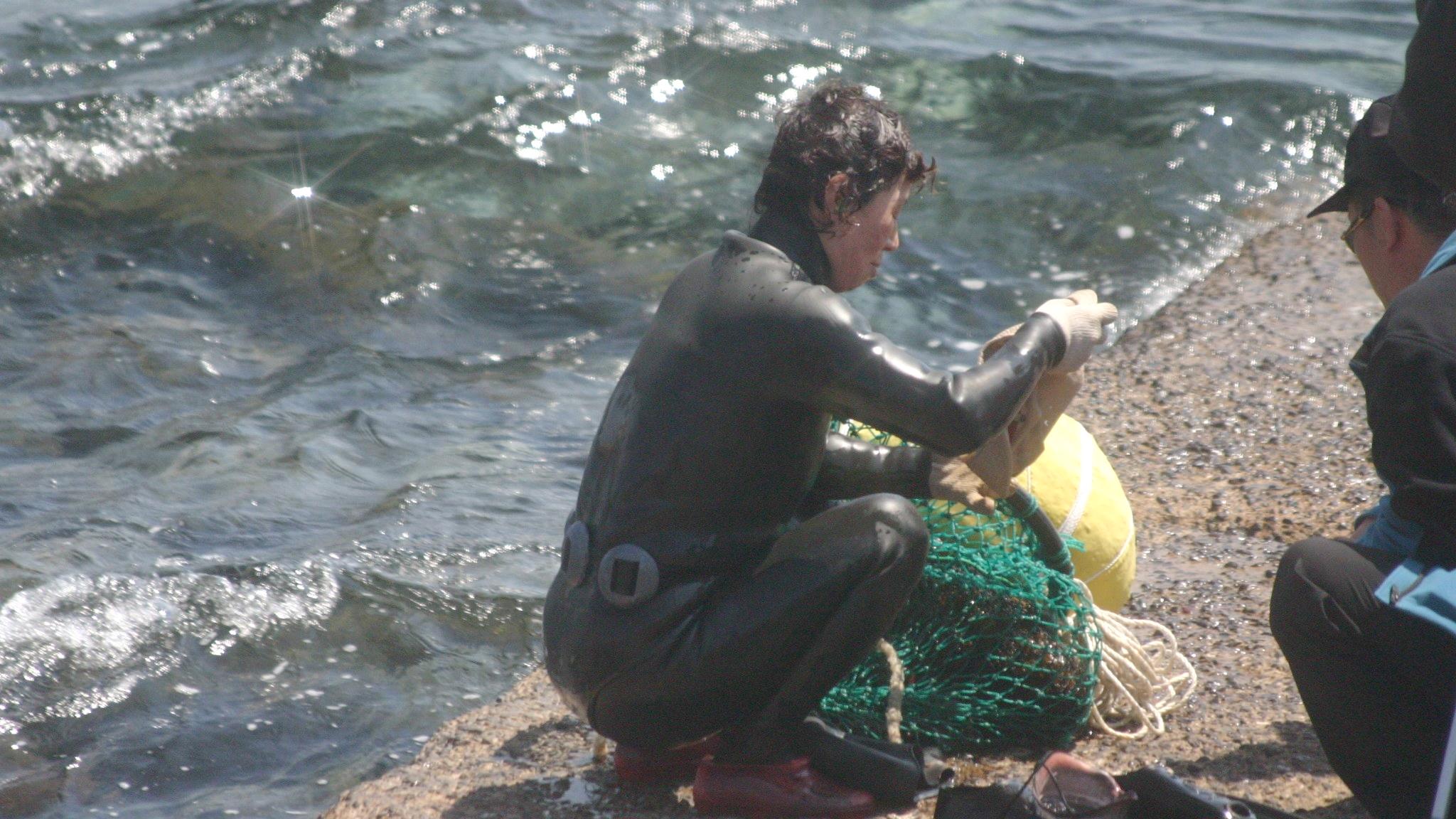
There are 2,371 Jeju haenyeo. The figure was counted as of 2025. In the mid-1960s, 23,081 women went into the sea. Over a little more than half a century, nine out of ten have come out of the water.
Jeju haenyeo culture was inscribed on the UNESCO Representative List of the Intangible Cultural Heritage of Humanity in 2016. This year marks the tenth. The meeting that decided the inscription was held in Addis Ababa, Ethiopia. What UNESCO valued was the region's cultural identity rather than individual diving skill, along with the knowledge and techniques passed through the community to the next generation.
Being recognized and remaining in the water are not the same thing.
The inscription covered more than the diving work itself. It included the jamsugut, the ritual praying for safety before going out to sea, the haenyeo songs that held the rhythm of the labor, the folk knowledge for reading tides and marine life, and the way the diving associations have divided and tended the sea fields. The scope recognized as heritage did not stop at a single technique.
The population curve was already steep before the inscription. By 1970 the number of Jeju haenyeo had fallen to 14,143. From the early 1900s through the 1960s, Jeju haenyeo went out to the seas of other regions to dive, and that outside diving all but ended through the industrialization and regional development of the 1970s.
A large part of the Jeju sea is village fishing grounds managed by fishing village cooperatives. The haenyeo scatter and raise seed stock of top shell, abalone and small abalone, then bring them up. They do not use oxygen tanks. Anything that falls short of the set size is not put into the net but sent back, and the catch is shipped out together through the fisheries cooperative.
Figures show that the number of young haenyeo has risen by 45 since the inscription. Measured against those retiring, it falls short. The Jeju provincial government under Wi Seong-gon has drawn up and is pursuing a plan to train haenyeo.
Meanwhile, a systemic transition from cultural properties to national heritage is under way. Moon Chae, professor emeritus of urban design and information engineering at Sungkyul University, said that as national heritage management operates around permits for alteration of the status quo and restrictions on activity, clashes arise between the administration and residents. Living heritage is maintained only if people keep putting their hands to it. If those hands are tied in the name of preservation, the thing to be protected disappears.
The special exhibition "Breath of the Sea: Jeju Haenyeo, Women and Community," organized jointly by Jeju Province and the Korean Cultural Center in Brazil, opened at the center's main building in São Paulo on June 15. The center's director is Jung Jung-hee. The exhibition closes on August 30.
A tenth anniversary is a way of counting the years stamped on a document. At sea, the count is how many people went into the water this year. Wait at a village fishing ground harbor at the right tide, and you can check that count by how many times you hear a black wetsuit rise to the surface and let out a long breath.