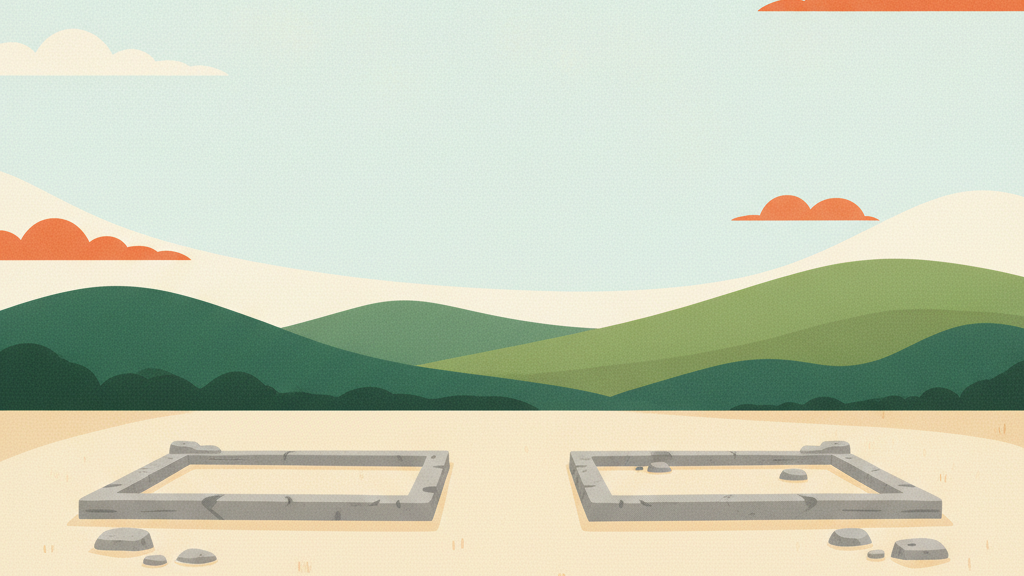
The east and west stone pagodas at the Inwang-dong temple site in Gyeongju will be rebuilt. The restoration project cleared review by the Restoration Subcommittee of the National Heritage Repair Technology Committee in January 2026. The Gyeongju city government plans to secure the main components and then raise the two pagodas at their original locations. On the 28th, an academic conference discussing the scope of the work will be held in Gyeongju.
"Current Status and Future Tasks in the Preservation and Restoration of the Inwang-dong Temple Site in Gyeongju" begins at 10 a.m. on August 28 in the Grand Ballroom of the Hilton Hotel in Gyeongju. The Korea Heritage Service, the National Museum of Korea, and the Gyeongju city government are holding it together. The Seorabeol Cultural Heritage Institute is organizing the event. About 200 academic experts and citizens are expected to attend.
The Inwang-dong temple site lies south of Wolseong, the Silla royal palace. It was the very center of the old capital.
The temple site was designated a Historic Site in 2016. The Gyeongju National Research Institute of Cultural Heritage excavated the ground from 2002 to 2011, and a twin-pagoda temple layout, with pagodas facing each other to the east and west in front of the main hall, came to light. Maintenance of the precinct, including the main building sites and the visitor path, has been completed.
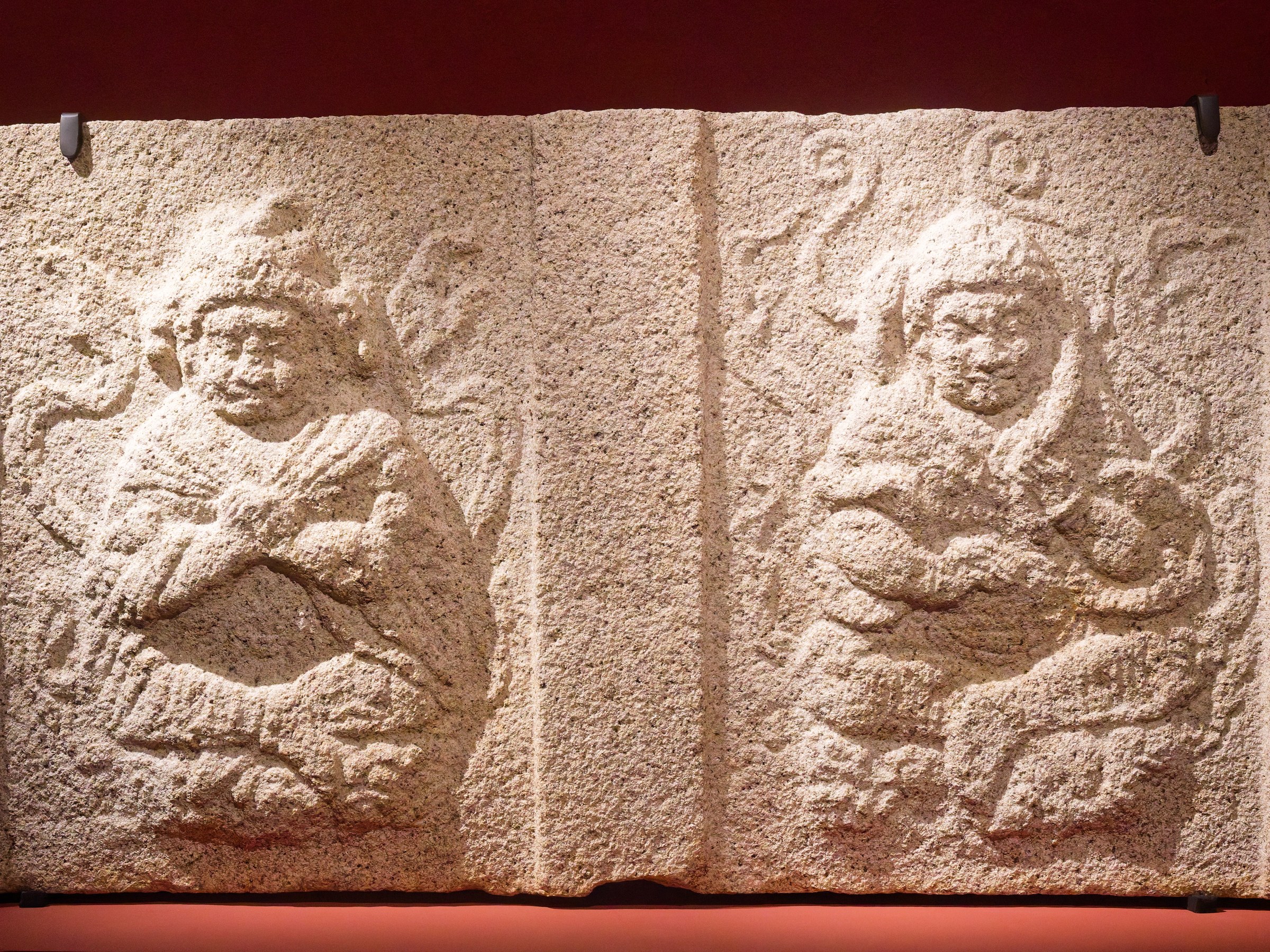
The object that best shows the character of the restoration is the palbujungsang (Eight Guardian Deities) panel. Eight guardian deities are carved in low relief on a broad granite slab that was fitted into the upper platform. They are beings who protect the Buddhist law, and they are a representative form of ornamentation that late Unified Silla stone pagodas wore on their bodies.
Four of these panels will be moved to the restoration site within the year. The transfer agreement has been concluded.
The panels left the temple site and spent a long time inside museum display cases. Once they are fitted back into the pagoda, they will meet the rain without glass. They will sit at a height where hands can touch them.
The conference is divided into two sessions. In Part 1, "Survey and Maintenance of the Inwang-dong Temple Site in Gyeongju: Current Status and Tasks," Kim Dong-ha, researcher at the Gyeongju National Research Institute of Cultural Heritage, addresses the excavation survey and the characteristics of the temple layout, and Lee Ju-hyeong, expert adviser to the Historic Sites Subcommittee of the Korea Heritage Service, takes up how the southern district of the Silla royal capital should be maintained and what that means. Nam Chang-geun, researcher at the Gyeongju National Research Institute of Cultural Heritage, reviews the state of the maintenance work.
In Part 2, "The Value and Preservation of the Stone Pagodas at the Inwang-dong Temple Site in Gyeongju," Heo Hyeong-uk, curator at the National Museum of Korea, examines the iconography and style of the Eight Guardian Deities, and Jeong Hae-du, researcher at the Seorabeol Cultural Heritage Institute, presents research on the stone pagoda restoration. Im Jae-wan, curator at the Gyeongju National Museum, handles the restoration of the surface ornamentation of the three-story stone pagoda and its symbolism, and Kim Jong-u, curator at the National Museum of Korea, handles damage assessment of the platform panels in the museum's collection and estimation of the stone's place of origin. Measuring the damage and determining the place of origin bear directly on where the new stone will come from.
The restoration of the surface ornamentation is also on the list of presentation topics. Whether the carvings are cut anew or the surfaces are left smooth will completely change the impression of the pagodas.
From 4 p.m., Kang Bong-won, professor emeritus at Shin Gyeongju University, chairs a general roundtable. The topic is "Exploring New Directions for the Maintenance of the Silla Royal Capital and the Inwang-dong Temple Site." Eight participants take part, including Choi Tae-seon, professor at the Joong-Ang Sangha University, Lee Sang-jun, former director of the Buyeo National Research Institute of Cultural Heritage, Hong Bo-sik, professor at Kongju National University, Shin Yong-cheol, director of the Yangsan City Museum, Han Jeong-ho, professor at Dongguk University, Han Uk, professor at the Korea National University of Cultural Heritage, Kwon Taek-jang, director of the Gaya National Research Institute of Cultural Heritage, and Kim Ji-hyeon, professor at Dongguk University.
The maintenance of the Inwang-dong temple site proceeds as part of the "Comprehensive Plan for the Restoration and Maintenance of Core Sites of the Silla Royal Capital." The Gyeongju city government said it will reflect the expert opinions and citizen proposals raised that day in its future restoration and maintenance policy. How far the scope of restoration will extend will be settled through discussions such as these.
The temple site south of Wolseong can still be walked into today. Following the visitor path, the two sites where the pagodas stood lie apart at a fixed interval. On the 28th, 200 seats will be set up in the Grand Ballroom.