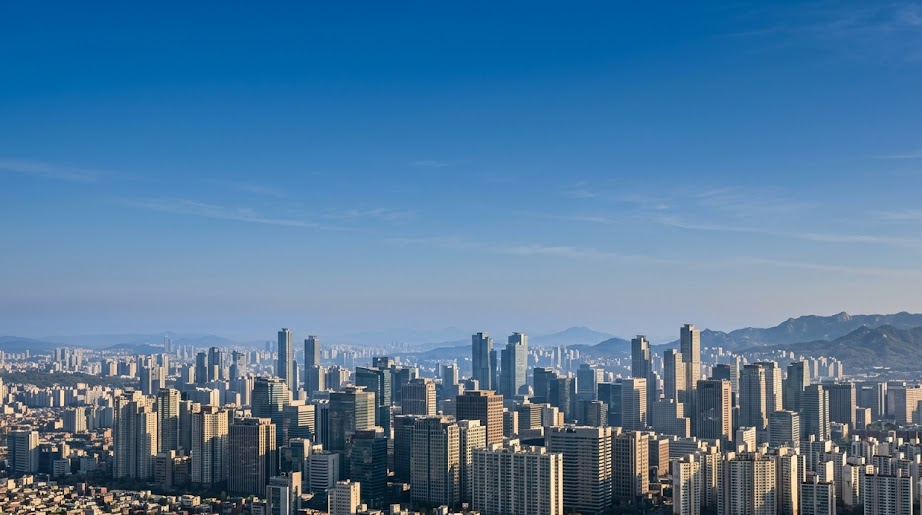
In 2006, Seoul's annual average concentration of particulate matter (PM10) was 60㎍/㎥. In 2025 it was 32㎍/㎥, 47% lower. Fine particulate matter (PM2.5) also fell 40%, from 30㎍/㎥ to 18㎍/㎥. These are the 20 years of records released by the Seoul Metropolitan Government on the 19th.
Translated into everyday experience, the change becomes clearer. Days rated 'bad' for fine particulate matter fell from 108 a year to 32, less than a third, and 'good' days rose from 73 to 182, about 2.5 times. It means half the year is now filled with clean air.
This change did not come on its own. The Seoul Metropolitan Government made air quality improvement a core city project in 2006, and the following year drew up the 'Clean Seoul 2010 Special Measures' as 10 key tasks across five areas. A total of 8,900 diesel city buses were replaced with compressed natural gas (CNG) buses, and older diesel vehicles were fitted with soot reduction devices or scrapped early, with more than 230,000 vehicles receiving low-emission measures by 2011.
Regulations followed. In 2017, an ordinance took effect allowing vehicle operation to be restricted and emission facility operations to be adjusted on days with high particulate matter concentrations. The policy blocking the operation of Grade 5 emission vehicles that have not taken low-emission measures is still cited as a leading improvement tool. Installing screen doors at subway stations to block pollutants entering platforms was part of the same current.
Electric vehicles did not move as fast as planned. The 2010 'Green Car Smart Seoul' policy set out to supply 120,000 vehicles by 2020, and as of the end of last year 122,995 electric vehicles were registered in Seoul, 3.4% of the city's total 3.59 million vehicles. It reads as meaning that reaching the target took longer than expected. Only by placing gaps like this alongside the results, without inflating them, can the next plan be drawn up realistically.

It is also hard to credit a single city. The Seoul Metropolitan Government itself explains that the air quality improvement appeared across the capital region as a whole. In Bucheon, Gyeonggi Province, a fine particulate matter concentration of 23㎍/㎥ marked the lowest record since the seasonal management system was introduced. It is closer to saying that regulations moving together at the regional level took effect.
Then, from the 18th, yellow dust originating in the Gobi Desert and the Inner Mongolian Plateau rode the wind into the Korean Peninsula. The Korea Meteorological Administration forecast that PM10 and PM2.5 concentrations in the Yeongnam region would reach 'bad' levels on the 21st. Strong winds with instantaneous speeds of 55㎞ per hour, and around 70㎞ in mountain areas, are also forecast for Yeongnam and the Gangwon east coast the same day.
Conditions at the source are getting worse. As rainfall has decreased and vegetation has weakened, yellow dust has occurred more often, and when dry weather combines with stagnant air, pollutants emitted at home and abroad pile up as well. The share that can be reduced inside the city has largely been reduced over 20 years, so the next task moves to cooperation beyond the border that slows desertification and manages emissions together.
For the next few days it is better to keep windows closed and carry a mask. The next thing worth trying is to check your own car's emission grade once. Owners of Grade 5 vehicles can find out whether they qualify for low-emission measures and early scrapping support, and if not, the option remains of putting off driving for a day when a high-concentration forecast is issued.
What the 20 years of records tell us is simple. Each individual measure looked small, but once they were combined, the sky changed.