As of January 1, 2026, Korean cultural heritage located overseas was counted at 121,143 cases, or 256,190 items by detailed quantity. The figure comes from a survey of 801 museums and art galleries in 29 countries including Japan, the United States and Germany. The Korea Heritage Service and the Overseas Korean Cultural Heritage Foundation released the numbers on the 18th. That is 8,472 items more than the 247,718 counted a year earlier.
Japan holds the most. With 110,611 items, it accounts for 43.2% of the total. Next come the United States with 68,961 items, Germany with 16,082 and the United Kingdom with 15,417. By country share, the United States follows with 26.9%, Germany with 6.3% and the United Kingdom with 6.0%.
This count is not the whole picture. Some institutions do not disclose their holdings or how items were acquired, and authorities and scholars believe the actual scale is larger than the tally. A rising figure does not mean more items are flowing out. As the reach of the survey widens, things that left long ago are added to the list belatedly.
The paths of dispersal were not single either. Plunder by the great powers in the late 19th century and theft and looting during the early 20th century colonial period form the main strands, but objects that crossed the sea through ordinary transactions and collecting, donations and gifts are mixed in as well. This tangle is what makes discussion of repatriation difficult. Items confirmed as looted and items handed over for payment cannot be demanded in the same language.
The Overseas Korean Cultural Heritage Foundation was established in July 2012. Its first survey the following year confirmed 152,915 items, and the count passed 200,000 for the first time in 2021. Going further back, there are records of 76,143 items in 2008 and the crossing of 100,000 in 2009. A list that has grown more than threefold in a little over a decade means less that so many artifacts left the country than that the pace of confirming where they are has been that fast.
The number actually returned is 1,299 cases and 2,855 items as of January 2026. Compared with a total of more than 250,000 items, that is a little over one percent. By method, donations account for the overwhelming majority at 1,249 cases, while purchases through auctions or negotiations come to only 49.

Recovery has mostly not been the result of prevailing by paying a price. It has come thanks to a change of heart on the part of the owner.
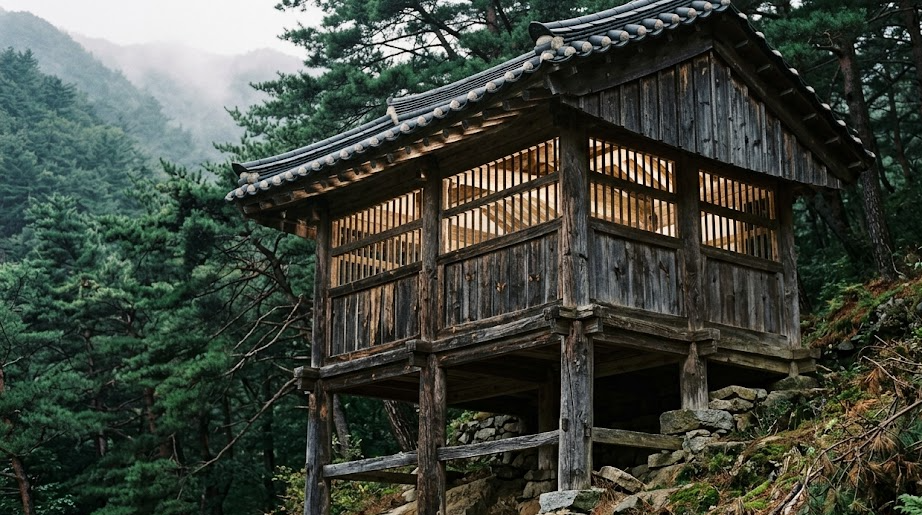
Last year Gwanwoldang returned as an entire building. A late Joseon wooden structure that had been moved to Japan during the colonial period, it set foot on domestic ground again in June. Its pillars and rafters were carried away as dismantled components, and nearly a hundred years passed before it was raised again. That same year the signboard of Seonwonjeon Hall at Gyeongbokgung Palace, a Goryeo-era hand-copied sutra and an early Joseon Buddhist painting also found their places again.
In 2020 an angbuilgu was won at auction in the United States and brought into the country. It is a bronze sundial on which time was read as a shadow passed over the markings carved inside the hemisphere. In a land where the sun rises at a different latitude, the object could not tell the time and stood as a piece of sculpture with only its form remaining. Coming back is also a matter of recovering a use.
Heo Min, head of the Korea Heritage Service, said at his first press meeting after taking office last July that heritage confirmed as looted would be brought back without fail. No figure has ever been presented dividing what among the roughly 250,000 items was looted and what left the country legitimately. The same goes for the institution-by-institution breakdown of the roughly 110,000 items in Japan. For the language of the demand to become precise, the list has to become precise first.
There is also a view that being scattered is not necessarily loss. The Metropolitan Museum of Art in New York, the British Museum, the Guimet National Museum of Asian Arts in Paris and the Palace Museum in China are also windows that show Korean cultural heritage on permanent display. Whether the descriptions read by visitors looking into those cases state how the objects came to be there is another matter. The case for preservation and the demand for return collide at this point.
What can be confirmed right now is the 2,855 items that have returned. Gwanwoldang has been reassembled and casts shade beneath its eaves, and the writing on the Seonwonjeon signboard still remains on the grain of the wood. Facing them in the exhibition hall of a national museum, the total of 250,000 recedes and the hundred years one object went through comes into view. The list is updated every year, but the time of the things that have returned is recovered one item at a time.