What does a single seed need in order to sprout. Temperature, water, light, and waiting. Researching trees is the same. Nothing can be said from one season of observation, and only after stitching together several years does a single sentence emerge.
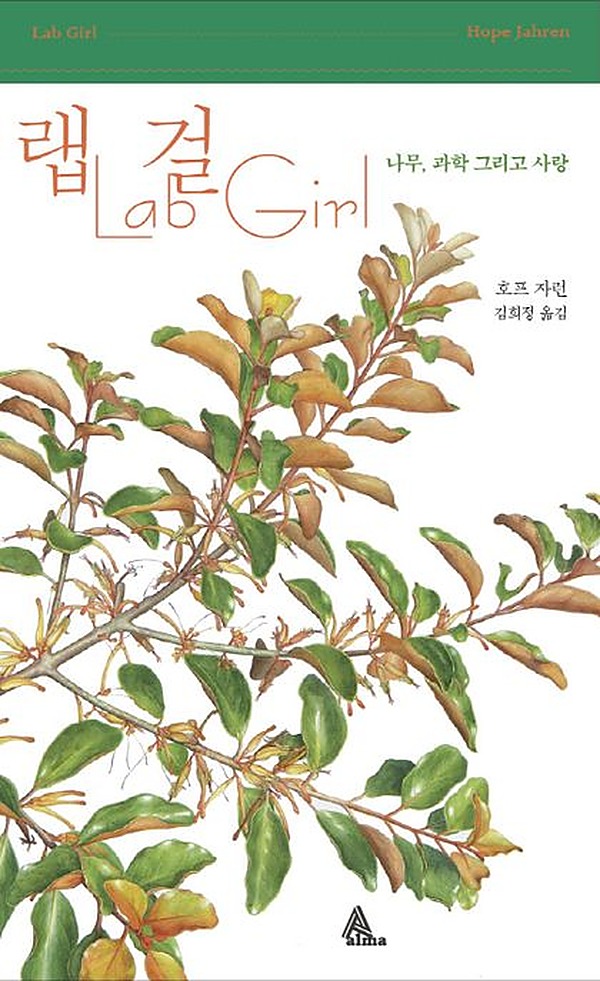
Hope Jahren's 'Lab Girl' (Alma, 2017) is a book that records that time of waiting. It is a memoir in which a scientist who has studied plants writes about the days in the laboratory she passed through. Trees, seeds, and roots form one axis, and the labor she took on in order to examine them forms the other.
What readers who open a popular science book expect is usually the conclusion. What discovery was made and what it changed. This book shows the long process that comes before it. It is a repetition of securing equipment, worrying about budgets, staying up all night, and looking at specimens again.
This is where the climate desk finds its point of interest. The figures cited as evidence when carbon neutrality is discussed are all products of this kind of time. How much carbon a forest holds, how fast a tree grows and how it responds to climate change, can be known only if someone sits with it for a dozen years or more, measuring and recording. Data does not come down from the sky.
So this book raises an unexpected question. Is the research field itself sustainable. For knowledge that addresses the climate crisis to keep being produced, the lives of the people who make that knowledge have to hold up. Planting trees and protecting the people who study trees are connected as one.
The book's strength lies in not forcing science and life together. Paragraphs explaining the life of plants and paragraphs describing her own life alternate and reflect each other. It has a different texture from essays that merely offer impressions with nature as material, and from introductory books that only list facts.
There are places where it thins out. This book is not a policy text. Those who open it expecting carbon budgets or the institutional design of resource circulation will find little. Because the account passes through personal experience, one person's trajectory cannot explain the circumstances of every research field.
Even so, what this book leaves behind is an attitude. It neither exaggerates the crisis to frighten anyone, nor covers everything over with the fact that a single tree was planted. There is a voice there that only someone who has looked for a long time can produce.
The word record is used in this book as another name for diligence. The hand that writes down when the leaves came out, the steps that return to the same tree every year, are not converted into results. The author says there are changes that become visible only when such accumulation piles up.
In an age that cannot bear waiting, what use is there in following the life of a tree. While the voices speaking of crisis grow louder, what has the person who looks long at slow-growing things protected.