
Is ESG a successful concept or a failed one? Through the continuing debate over mandatory disclosure, almost no one has weighed the question of success or failure. While attention has gone to how the system should be designed, the work of examining the concept the system rests on has been pushed back. 'Green Swans' (Thenan Publishing, 2025) is a book in which that deferred examination is carried out by the person who proposed the concept.
The author, John Elkington, is a figure who long pushed the idea of placing the three axes of economy, society and environment together in corporate management. The roots of the approach now known by the acronym ESG lie here. The premise that the person who introduced the concept to the world grades his own report card decades later is this book's starting point.
Books that profess self-criticism usually run in one of two directions. They defend the concept, or they blame the market for misusing it. The grain this book chooses is the more uncomfortable one. The moment the gap between the usage the proposer intended and the usage the market actually consumed becomes the issue, part of the responsibility returns to the proposer.
The point where Korean readers will catch here is clear. Mandatory disclosure places the burden of measurement and reporting on companies. An increase in the number of items measured is no guarantee that those items connect to actual environmental and social performance. If the designers of the system add indicators without knowing the limits of the concept, what grows thicker is only the page count of the reports.
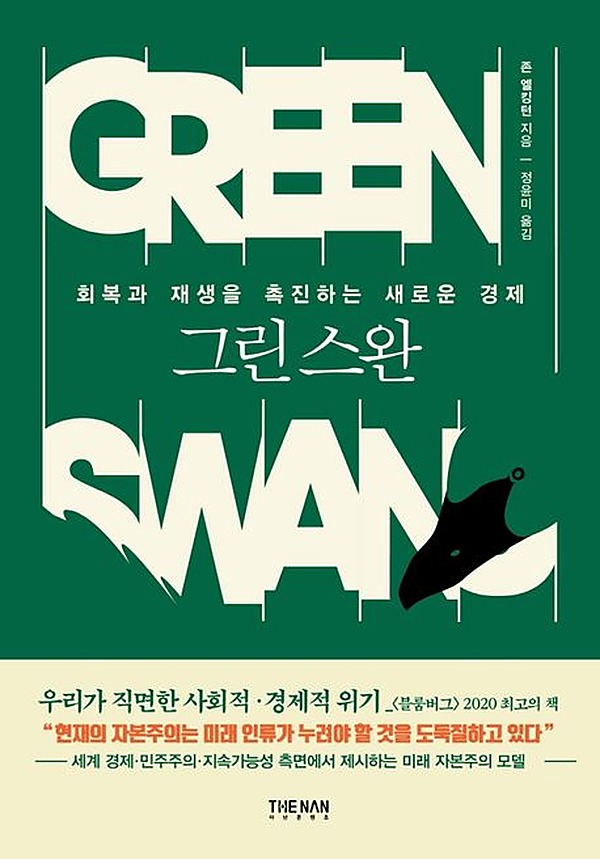
What the title points to sits in the same context. On the opposite side of the black swan, which means an unforeseen catastrophe, it groups the possibility of unforeseen rapid improvement under a single name. Discussions of industrial transition generally put their weight on costs and risks, and this book asks that sudden change on the improvement side be treated with equal weight. It is an unfamiliar demand for a financial view that books transition only as expenditure.
The book's force comes from who is speaking. Several books by outside critics pointing out the holes in ESG have been published, and their arguments are for the most part predictable. When the person who created the concept names the failures himself, items that admit no excuse also make the list. The same point carries a different weight.
Where it thins out can also be guessed. Self-criticism shows its force in diagnosis, but once it moves to prescription the density of the evidence tends to drop. Proposing one more new name is no guarantee of preventing the misuse that befell the earlier concept. That a book which took issue with the lifespan of a concept answers again with a concept is worth readers' scrutiny.
It is of use to those handling disclosure work, those deciding on sustainability investments, and those translating industrial transition into policy. Opened as an introduction to ESG, it yields little. It pays off when a reader with the fundamentals opens it in order to doubt those fundamentals. A statement of reflection written by the maker himself becomes, in itself, material for the next design of the system.