What does the state record, and what does it not leave behind? In the Month of Patriots and Veterans we read names, ranks and the names of battle sites. The days of the people who cooked, bore children and crossed borders outside that roll were never set down in any document. Min Jin Lee's “Pachinko” (Influential, 2022) pushes four generations into that blank.
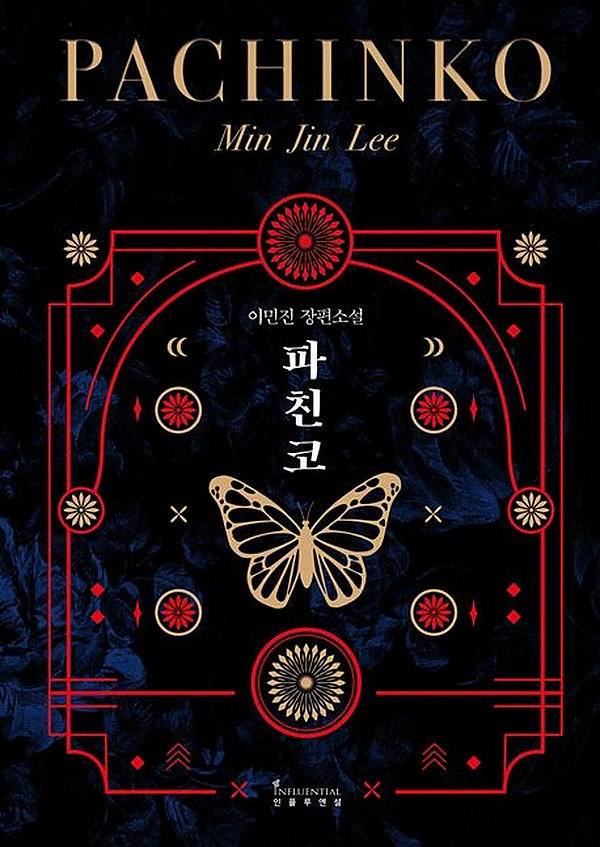
The novel is a four-generation chronicle of migration and settlement. It follows the years in which one family crosses the sea, changes its language and raises children again in a rented room in an unfamiliar city. In Korea it was published by Influential in 2022 as a two-volume set. Showing how one generation's decisions become the next generation's conditions takes that many pages.
The grain of the book is not hot. Instead of setting off events on a large scale, it builds up in a low voice what people ate, what they sold and where they laid their bodies down. The weight of the jar the kimchi is packed into, the price of rice and the smell of mildew in a rented room, which of his two names a man with two names is called by, become the muscle of the narrative. This physical texture lasts longer than grand declarations.
That is also why the book is taken up in the middle of summer. Work on cultural heritage usually takes buildings, documents and artifacts as its objects, but the daily history of migrants had no buildings to leave behind. The rented house was torn down, the shop where they worked changed trades, and the graves are across the sea. In such a history, heritage is handed down only in the form of stories, not objects.
The tension between preservation and use is also shown honestly inside this novel. Those who want to keep the language, the food and the ancestral rites of home sit down at one table facing those who believe they must throw all of it away to survive. The novel does not one-sidedly take either side's hand. It repeats, with a different face in each generation, the fact that keeping has its price and discarding has its price.
Its strength is clear. Without being crushed by grand history, it redraws the 20th century at the scale of the kitchen, the market and the workplace. It returns a group that has long been handled as statistics to individuals with names, personalities and habits.
There are places where it thins out. As the generations pass, the time given to a single character shrinks, and the inner lives of the later generations are not filled in as thickly as those of the earlier ones. That is the price of the breadth the generational-chronicle form takes on. Readers who expected a novel that digs to the end of one character's depths may find it empty.
Even so, the book is clearly needed by certain readers. That goes for people with whole years missing from a family elder's life story, people recording an old local market or a long-standing shop, people who have counted heritage only in buildings. What you most want to do after closing both volumes is ask an elder near you about the family table. The daily history the state did not record usually stays and breathes inside conversations like that.
When you close the two volumes, what is left at the end is a single table. The daily history the state did not record stays and breathes as the smell of a kitchen and the temperature of a rented room, within four generations of people with names and habits. What you should ask an elder near you is there.