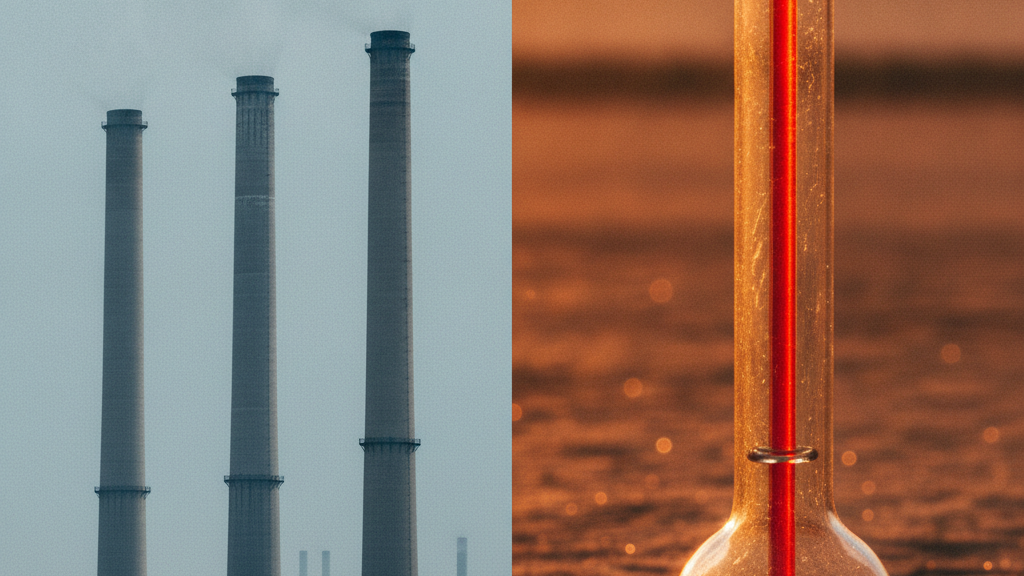
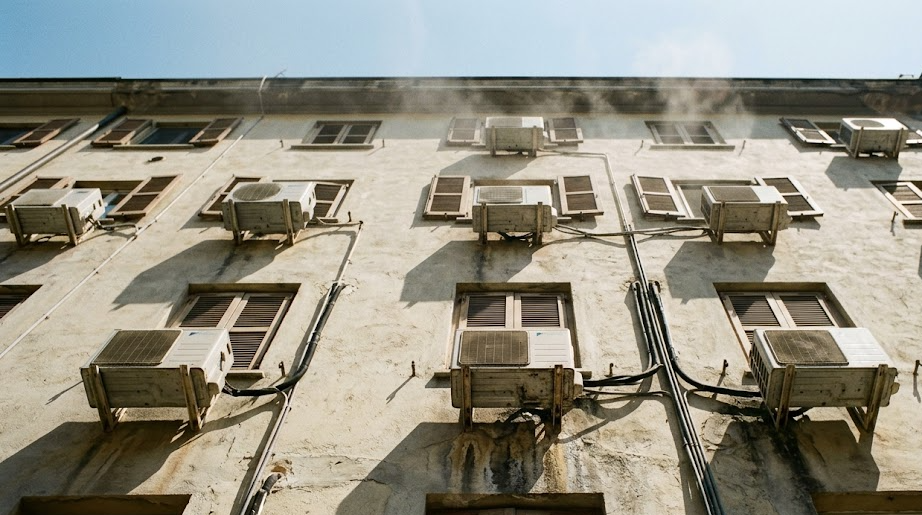
In six European countries, more people said "expanding access to air conditioning" mattered more than "tackling climate change." The pollster YouGov surveyed between 1,028 and 2,105 adults in each country from the 7th of last month to the 11th of this month. All six countries produced the same result. In Britain the split was 48% to 23%.
The gaps varied widely by country. Spain was 48% to 26%, while Germany and France were 45% to 26% and 45% to 33%. Poland was 41% to 20%, the lowest share for climate action. Only in Italy were the two answers close, at 35% to 32%.
Reading this result as an abandonment of climate action misses the other half of the survey.
In the same survey, only 12-24% of respondents thought wider air conditioning would weaken the will to tackle climate change. Most Europeans do not see cooling and emissions cuts as a trade-off. While 6-27% cited climate impact as a reason for not installing air conditioning, 51-75% named installation cost as the biggest obstacle. What makes people hesitate is money.
The demands are clear enough. Between 61% and 73% of respondents across the six countries said air conditioning should come as standard in all new housing. Between 65% and 75% also said it should be possible to install without approval from local authorities or a landlord's permission. What respondents pointed to for change was the design stage of new buildings and the rules governing rentals.
As it happens, European policy has seen a run of retreats. The German government cut the taxes and fees that fund renewable energy subsidies, and the German parliament withdrew a provision requiring renewable equipment for home heating. Shell dropped plans to build a biofuel plant in the Netherlands, and Norway's Equinor abandoned its target of building 10-12GW of renewables by 2030. There is no basis for saying these policy retreats stemmed from the polling results.

Air conditioning has also emerged as a front in Europe's "culture war." One assessment holds that mainstream parties face criticism for being lukewarm about wider access on ideological grounds, while right-wing parties argue air conditioning should be treated as a necessity. Splitting cooling along political colors hurts both sides.
Since more than half of respondents named installation cost as the biggest obstacle, subsidies for high-efficiency units and priority support for low-income households address both access to cooling and restraint on electricity demand. The same goes for the point where demand for mandatory installation in new buildings topped 60%. Bundling insulation, shading and efficiency standards for cooling units together delivers the same coolness on less electricity.
John Browne, the former BP chief executive, called for climate action, saying policy on the decarbonized energy mix is not accelerating. The responses of European citizens point the same way. The demand for a means of surviving heat waves and the demand for lower emissions sit together in the same person.
There is something to do at home right now. If you are planning to buy an air conditioner, it is worth weighing the energy efficiency rating and the sizing of the indoor unit ahead of the price. Summer electricity bills and emissions are decided here.
And if you live in rented housing, it is better to check the installation terms in your contract. That is the clause seven in ten European respondents want changed.