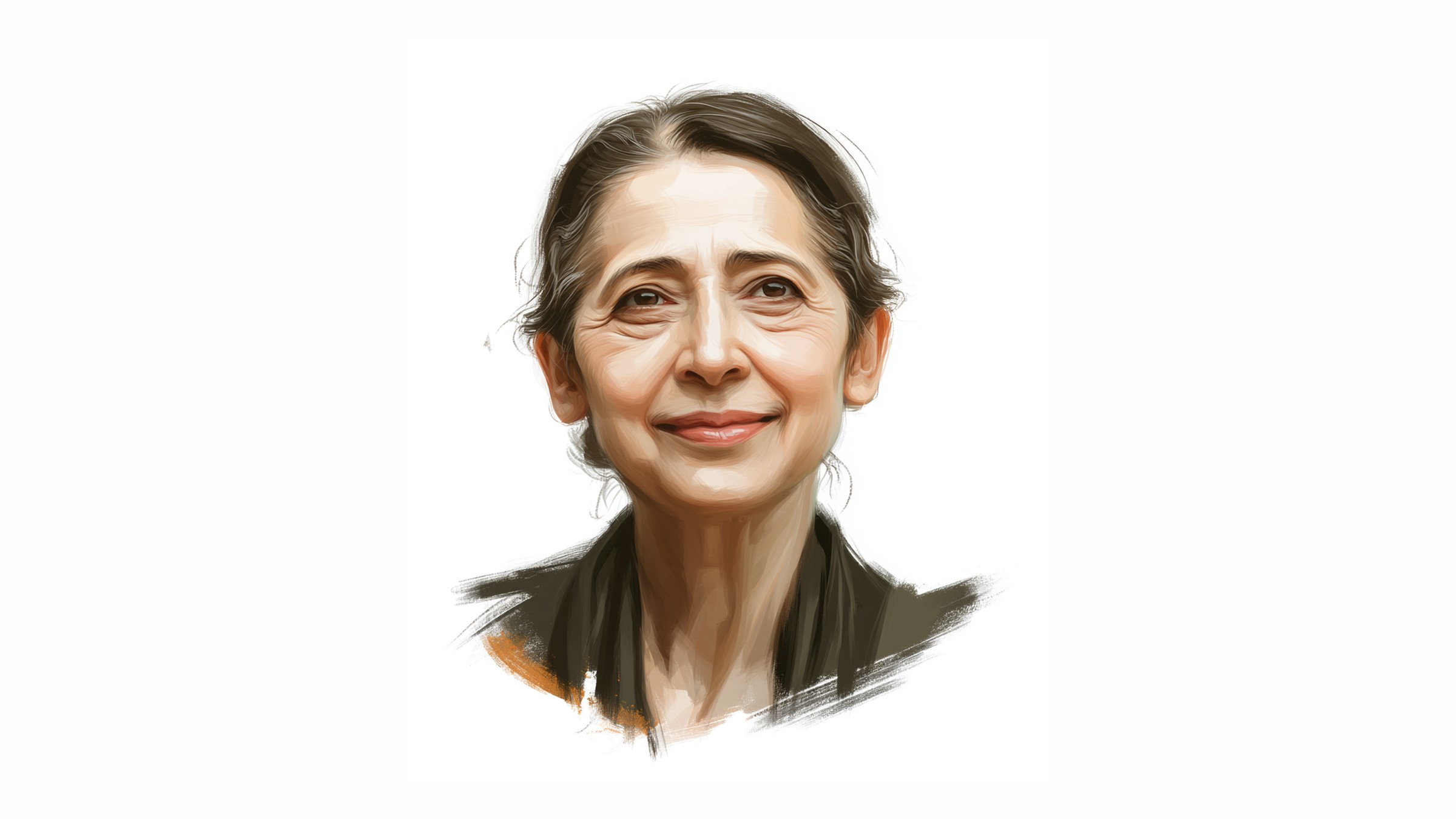
In 1938, a woman sat on a train heading for the border. She was leaving behind a laboratory built up over more than 30 years and the title of full professor, the first ever held by a woman in Germany. In her pocket were 10 marks and a diamond ring that Otto Hahn had pressed into her hand, one that had belonged to his mother. It was meant as a bribe if she was stopped at the border, but in the end she never had to use it.
Lise Meitner was born in 1878 into a Jewish family in Vienna's Leopoldstadt, the third of eight children. At a time when public higher education was closed to women, she studied physics through private tutoring and passed the Gymnasium graduation examination in 1901, then became the second woman in Austria to earn a doctorate, at the University of Vienna. She started out in Berlin as Max Planck's assistant, discovered the stable isotope of protactinium with the chemist Otto Hahn, and became Germany's first female full professor in 1926. After the Anschluss she fell under the Nuremberg racial laws and fled to Sweden, where she explained to the world, together with her nephew Otto Robert Frisch, what nuclear fission was.
Q1. Let me ask about the day you crossed the border. Dirk Coster vouched to the German officials that you were entitled to pass, didn't he? Only months earlier you had been head of the physics section at the Kaiser Wilhelm Institute for Chemistry. Do you think that single day divided your life?
It did. I held out for several years on the grounds that I was an Austrian national and therefore not subject to German law. Leo Szilard, Fritz Haber and my nephew Frisch had all been driven out, and I alone remained. When the annexation made me a German overnight, that exception disappeared.
On that train I was less a scholar than a woman without luggage. I had left my position and my property behind and got out with nothing but myself. I tried to obtain an appointment at the University of Groningen, but it did not work out, and through the efforts of Eva von Bahr and Carl Wilhelm Oseen I reached Stockholm.
Things were not easy there either. I was given a place at Manne Siegbahn's institute, and he was not pleased at the idea of a woman doing physics. Approaching sixty, I began again under someone else's roof.
Q2. It was under that roof that the interpretation of nuclear fission emerged. In December 1938 Hahn wrote to you that barium had appeared, and you and Frisch produced the answer using the semi-empirical mass formula. What were you wrestling with during those few days?
Hahn's letter left me at a loss. Uranium had been struck with neutrons and barium came out. As a chemist his detection was accurate, but he could not bear the conclusion. Frisch and I applied the semi-empirical mass formula to what he had sent.
When there are too many protons, the force pushing them apart exceeds the strong force holding the nucleus together. That is why elements heavier than uranium do not sit quietly in nature. The masses of the fragments added together came to less than the original, and what had vanished comes out as energy. Einstein's formula fitted exactly.
A uranium nucleus struck by a neutron splits into barium and krypton, releasing several neutrons and an enormous amount of energy. We published that interpretation as a paper in early 1939. The clue had come in a letter from Bohr in December, pointing out that the energy released was far greater than predicted.
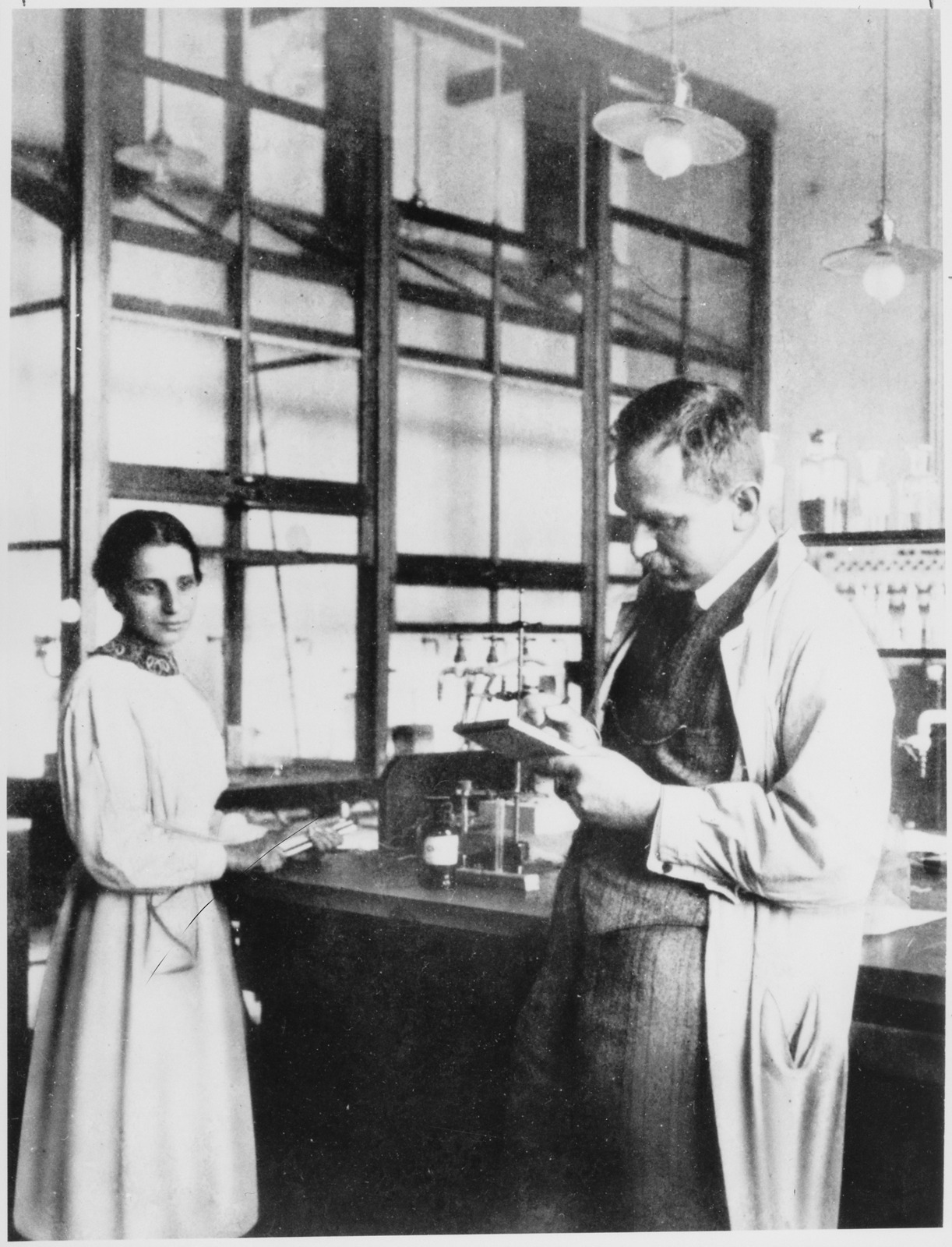
Rather than joy, I felt a chill down my back. If a neutron calls forth another neutron, no one knew where it would stop.
Q3. Nuclear fission is the principle behind nuclear power generation and at the same time behind nuclear weapons. Regarding the fact that the explanation you provided was put to use in weapons, how far do you think the responsibility of the discoverer extends?
I have no intention of saying my hands are clean. When Hahn and I began searching beyond uranium in 1935, we were competing to find new elements. Rutherford, Irène Joliot-Curie and Fermi were chasing the same thing. We thought it was worth a Nobel Prize, but no one had weapons in mind.
Discovery cannot be stopped, but its uses are decided by people. I know how light an expression of regret sounds. That is why a researcher must never take her eyes off what lies behind the door she has opened.
Q4. The 1944 Nobel Prize in Chemistry, awarded for nuclear fission, went to one person alone. There was no limit of three laureates standing in the way either, and the committee was criticized by scientists and the press. How did you endure it?
There is no doubt that Hahn deserved the prize. He was the one who carried out the experiment. But explaining why that process releases such enormous energy was far from the domain of chemistry.
A committee judging research that straddles chemistry and physics seems to have understood only one of the two languages. The electron emission phenomenon I described in 1922 is also known by the name of Auger, who found the same thing the following year. After going through it twice, a person becomes calm about it.
I kept working. Swedish citizenship came a few years later, and in the meantime I put nothing down.
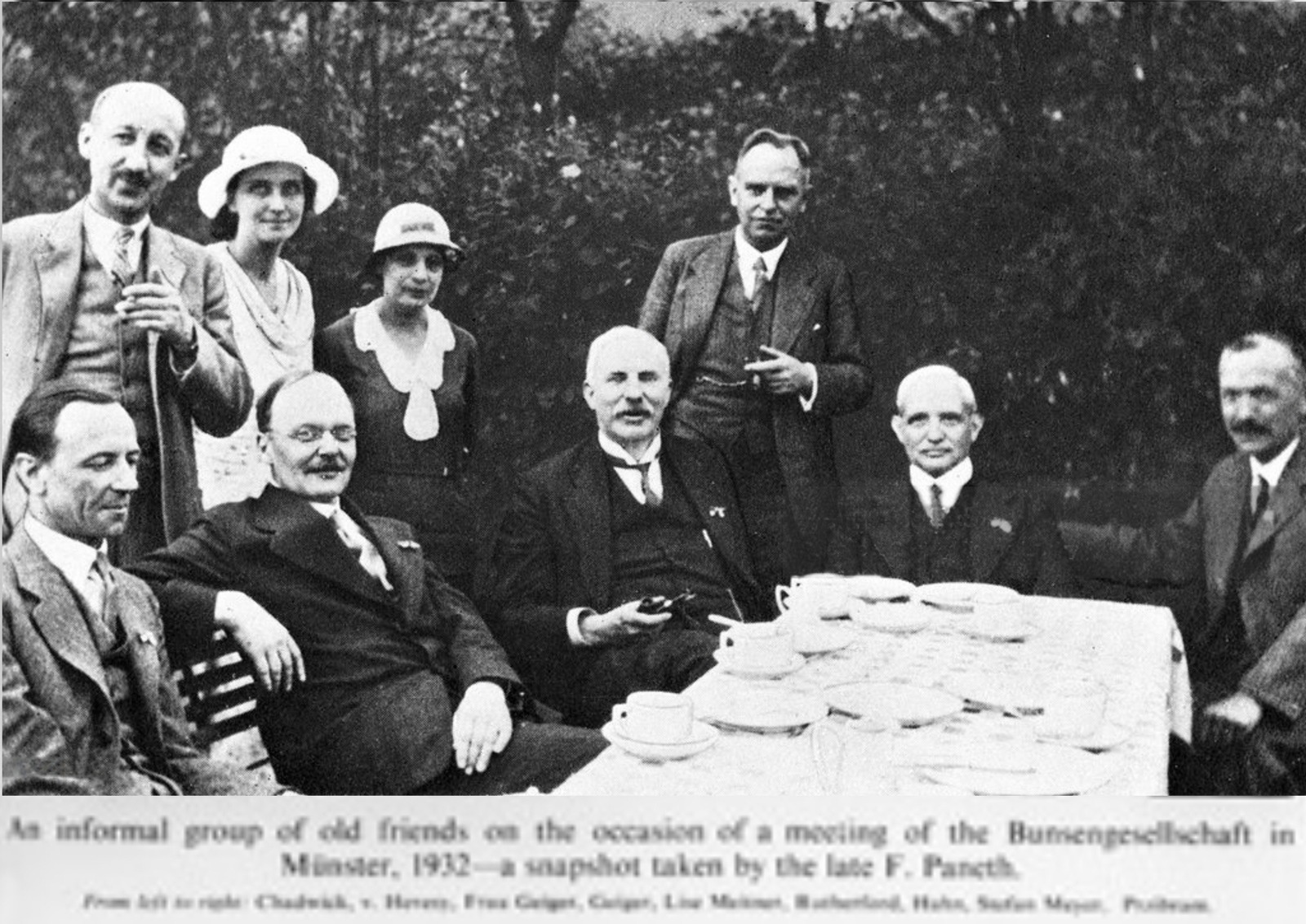
Q5. There are many contributions that do not carry your name. At the Kaiser Wilhelm Institute you were an unpaid guest for some time, and when Chadwick was trying to prove the existence of the neutron you sent him polonium. What kept you doing such things?
During my time as a guest there was no salary and I lived on money my father sent. Even so, the key to the laboratory was in my hand. I sent Chadwick polonium because he was struggling to prove the neutron. No other reason was needed for that.
During the First World War I served as a nurse operating X-ray equipment. I returned to Berlin in 1916 and tried to take up my research again, but the inner conflict left by those years followed me for a long time. Even after I was back at my laboratory desk, I kept seeing that light passing through human bodies.
Q6. Today, in 2026, a number of countries are talking about expanding nuclear power in the name of responding to climate change. As someone who worked with radioactivity all her life, how do you view this debate?
The same phenomenon produces weapons and produces power. Anyone who talks about only one side is hiding half of it, whichever side they are on. I have never opposed the obtaining of energy itself.
What matters is the honesty of the people handling it. Ever since I wrote my 1907 paper on alpha particle scattering, whenever the results diverged from my expectations, I abandoned the expectations. Hahn detected barium and still could not believe it himself because he was honest, and thanks to that honesty the letter came to me.
Discussions of nuclear power that speak only of catastrophe or only of safety are missing that honesty. Weigh together how many years the waste lasts and who is left on that land if an accident occurs. If the conclusion is still that it is needed, that is a legitimate conclusion.
Q7. What would you leave to a young researcher sitting in a laboratory today?
When I was about eight I kept a notebook under my pillow and studied the colours floating on films of oil. That child looked because she wanted to know, and had no idea what it would be used for. Keep that feeling, but ask every day what your own results become once they go out into the world.
In 1997 element 109 was given my name. An element remembers a person, but what is done with it is decided each time by people who are alive. Before you leave the laboratory today, write that question down just once. I began it far too late.
This piece is not an actual interview. It is an imagined interview reconstructed by Breath Journal on the basis of Lise Meitner's life, writings and the records she left behind. The questions were written by our reporter and the answers were drawn from her writings and her actions.