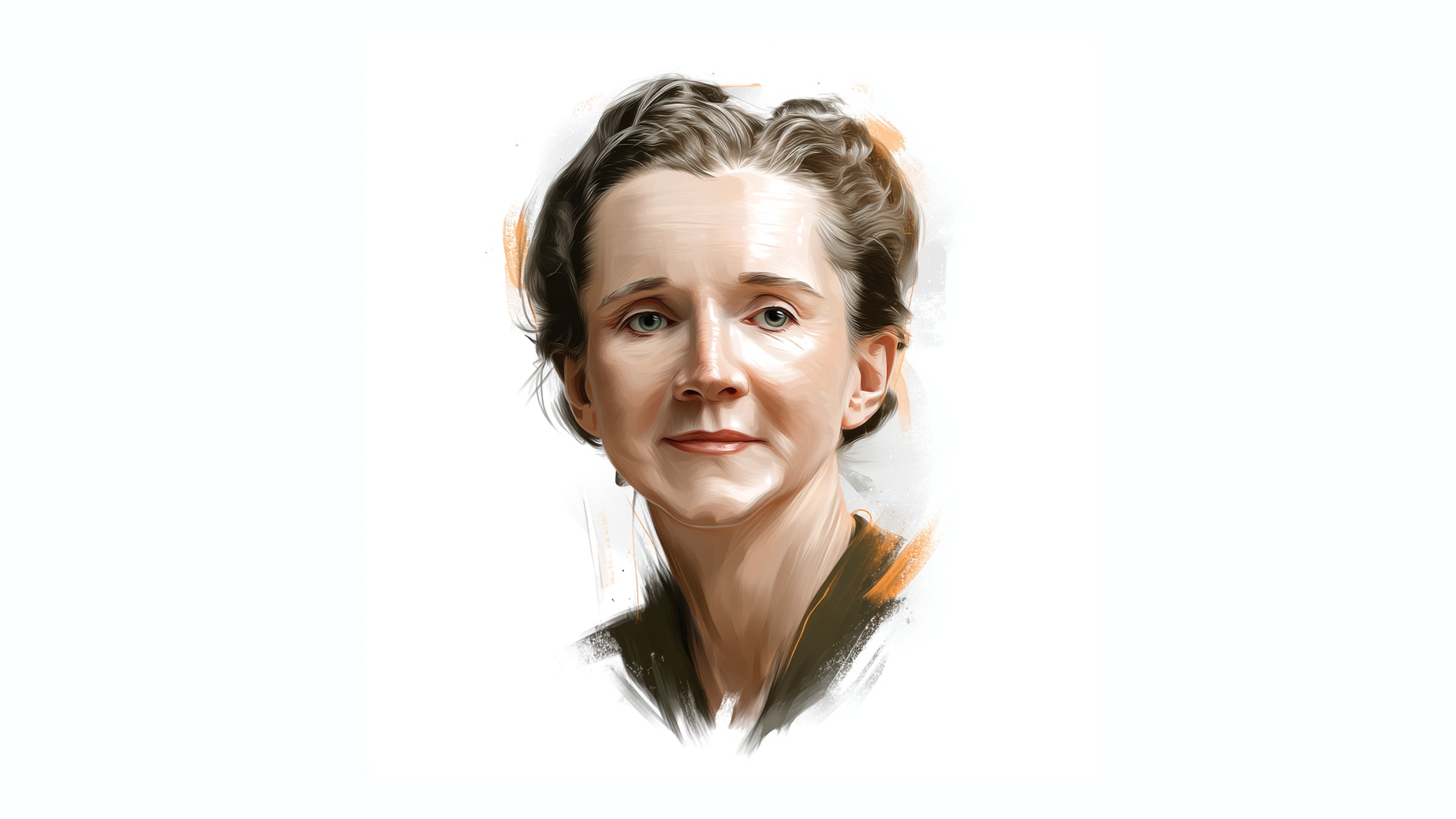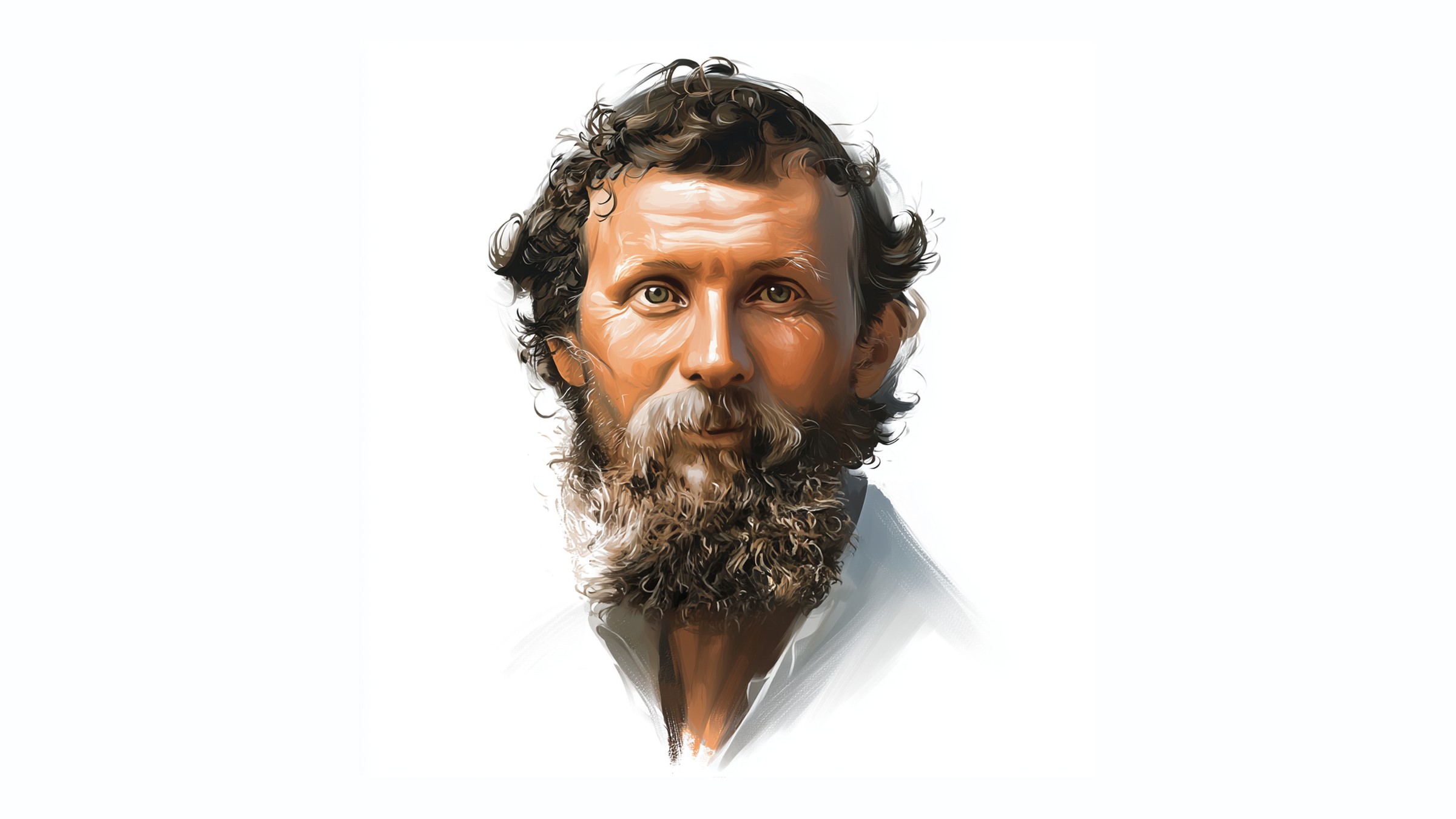
On the seashore of Dunbar, Scotland, there is a path where a three-year-old walked holding his grandfather's hand. That boy grew up roaming the coast and fields of East Lothian, and was often beaten by a father who regarded everything that interfered with Bible study as trifling. He would later be called the father of America's national parks.
John Muir was born on April 21, 1838, in a three-story stone house in Dunbar, the third of eight children. At eleven he crossed to the United States with his family, and the writings he produced as a naturalist, author, botanist and glaciologist walking the Sierra Nevada were read by millions. He helped preserve Yosemite Valley and Sequoia National Park and co-founded the Sierra Club. He died on December 24, 1914.
Q1. You have said your earliest memory is a walk with your grandfather at age three. Did your feeling for nature begin then?
That short walk lies at the bottom of my memory. When I was a little older I roamed the coast and fields of East Lothian all day long. I was a boy who competed over how many birds' nests he knew and rolled about the playground acting out the battles of the Scottish Wars of Independence.
In those years an interest in natural history took hold, and reading Alexander Wilson's books gave me an eye for birds. At eleven I went to America with my family, but the accent stayed with me all my life. A boy raised in Dunbar simply grew old in the forests of America.
Q2. In the course of making Yosemite a national park, you published two pieces in a magazine. Why did you leave the mountains and choose the page?
In the mountains, no matter how loudly you shout, it does not carry to Washington. I published two pieces in The Century Magazine, "The Treasures of the Yosemite" and one describing the terrain of the proposed national park. The aim was to make a person who had never once seen the valley read those pieces and feel that the valley had to be protected.
In 1890 Congress passed the bill establishing Yosemite National Park. The president and members of Congress who read the writing moved, and I consider that to have been the power of the valley itself rather than the power of my prose.
What is to be protected must have a name and a boundary line. Land without a name is always counted for some other use.
Q3. You were called an absolute preservationist. The argument for blocking human use entirely was criticized as extreme even in your own day.
I argued that plants and animals and everything within should be placed beyond the reach of human hands. I was told many times that I went too far, and I will not say that those words were all wrong. To people who lived off the land, my argument must have sounded like cutting off their livelihood.
Even so, what pushed me that far was the experience of negotiation. An agreement to open things up just a little never stopped at a little. Give away half and the next generation gives away half again.
My way of thinking remained as a principle of national park management, and hunting was banned in most of the major parks. Species facing extinction were able to stay within the ecosystems where they had lived. I think that as far as I went too far, some things were also protected.
Q4. Your father regarded everything that interfered with Bible study as trifling and often took up the rod. How did you get out from under that severity?
I was a boy who could not keep still, so there was much to be beaten for. Roaming the coast and fields of Dunbar was also a way of getting out of that house for a while. Open the door and step out, and there was a world where no one scolded me.
I will not say that I abandoned faith. The doctrine fell away of itself without my pushing anything away, and no feeling of loss remained. Instead I learned to worship in the mountains.
The prose of Thomas Carlyle and the poems of Robert Burns filled that empty place. Even when walking the American backcountry, I always carried a volume of Burns on me.
Q5. In your writing, nature reads as closer to faith than to a resource.
The man who wrote my biography summed up my calling as not handing the American soul over entirely to materialism. I do not find that expression excessive. Once you begin to count the valley only in the price of timber and pasture, the valley ends on the day the counting ends.
The sense that people are one with the land is the result of observation, not sentiment. Look into the time it takes a glacier to carve granite and you learn where a human lifetime sits. A society that has lost that sense cannot explain to itself what it ought to protect.
Q6. Now, in 2025, the climate and biodiversity are collapsing together. Will drawing boundary lines alone be enough?
It will not. The threats of my time were visible, like saws and herds of cattle, and could be stopped by putting up a fence. Today's threats come in over the fence. Even inside a park boundary, when the temperature rises the trees inside die.
That does not mean boundary lines have become useless. Protected land is the last strip a species can fall back to, and without that strip there is no ground on which to speak of recovery. Protecting what is inside the boundary and cutting emissions outside it are one piece of work.
I would say to be equally wary of the claim that it is all over and the claim that a small fix has settled it. Both keep people from moving.
Q7. If you were to leave just one thing with someone reading this now?
This weekend, walk out to a mountain or a stream nearby. It is enough to come back having made one tree, one bird, whose name you know. To know a name means you have begun to protect it.
When I returned to Dunbar in 1893 and met old friends, the shore in my memory was unchanged. That is because someone had kept that shore. One tree you give a name to now will leave someone's memory unchanged a hundred years from now.
This piece is not an actual interview. It is an imagined interview reconstructed by Breath Journal on the basis of John Muir's life, writings and surviving records. The questions were written by a reporter and the answers were drawn from the writing and deeds he left behind.