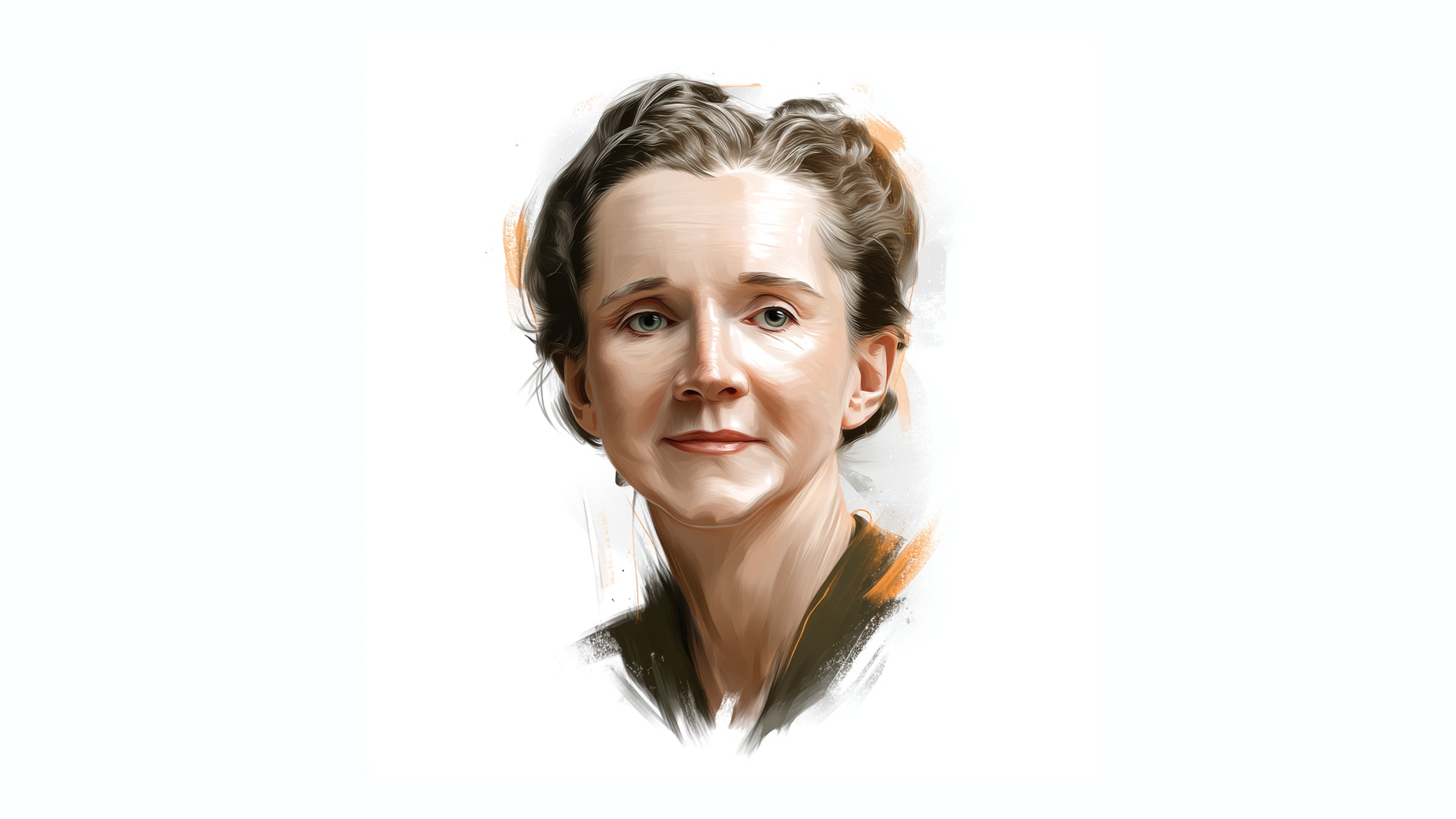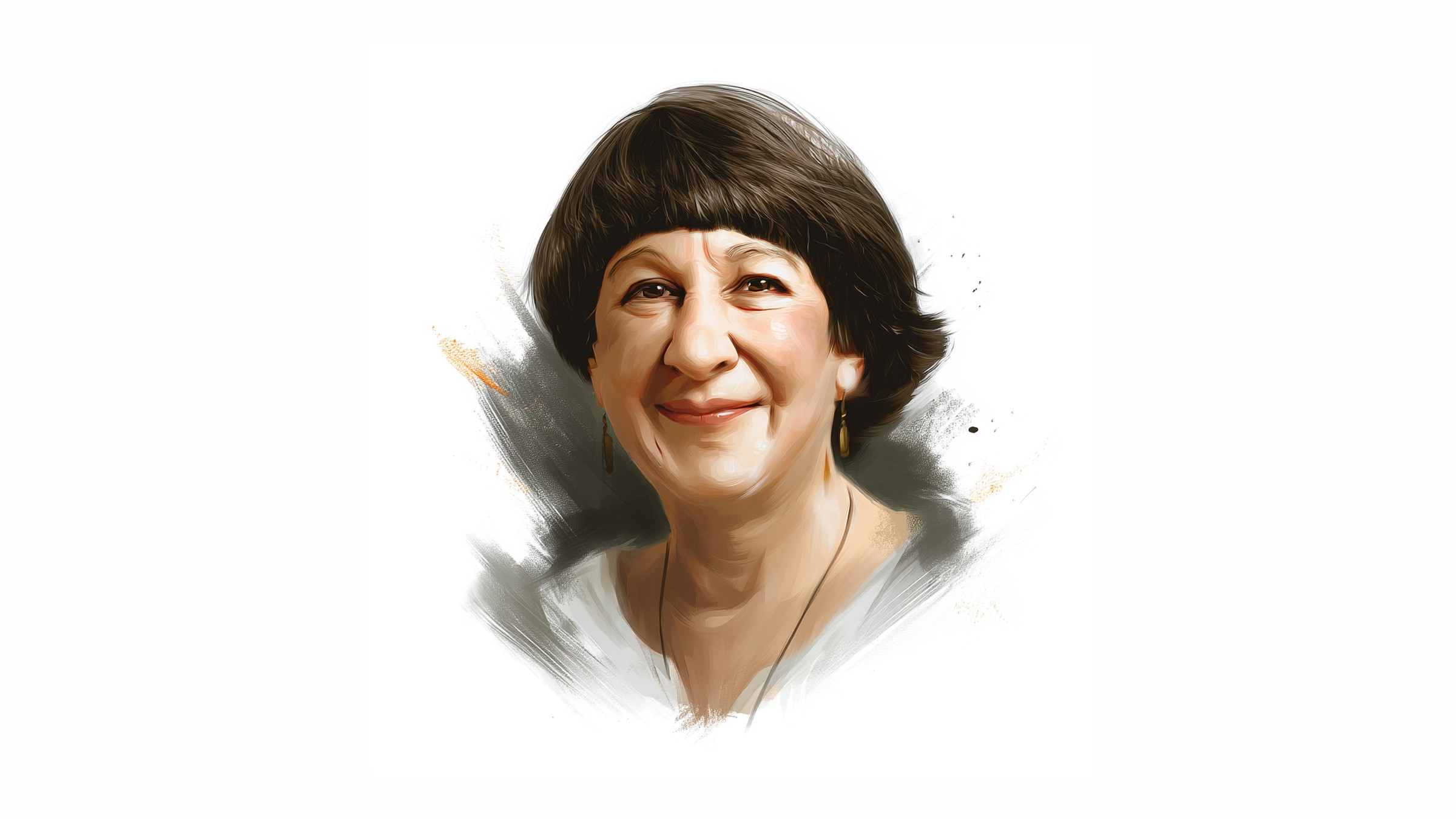
In 1990, she shrank the world into a village of 1,000 people and wrote it down. Once population, income and resources were transferred to the household accounts of a single village, things invisible in statistical tables came into view. The piece later spread as the story of a village of 100 and was translated into many languages. It was the moment when a scientist who worked on world models explained the world by shrinking it to its smallest.
Donella Hager Meadows was born in 1941 in Elgin, Illinois. She received a bachelor's degree in chemistry from Carleton College in 1963 and a doctorate in biophysics from Harvard in 1968. After a year-long journey from England to Sri Lanka, she became a researcher at the Massachusetts Institute of Technology and joined a research team in the department created by Jay Forrester, the founder of system dynamics.
She taught at Dartmouth College for 29 years beginning in 1972. She received the Walter Payne science education award in 1990, was named a Pew Scholar in 1991 and a MacArthur Fellow in 1994, and after her death from meningitis in 2001 at the age of 59 she received the John Chafee environmental award. The U.S. Association of the Club of Rome created an award in her name, given for work toward sustainability.
Q1. After receiving your doctorate in 1968 you traveled for a year from England to Sri Lanka, and on your return you went to MIT. What led a laboratory biophysicist to join a world model team?
On that journey I crossed a number of borders. The way land dries out, the way people crowd in, the way prices rise differed from country to country, but what stayed with me was the sense that they were entangled with one another. Training to look precisely at a single molecule on a lab bench was not enough to handle that entanglement.
When I returned I met Jay Forrester's team. He was an engineer who had built computer magnetic memory, and the person who established the way of thinking called system dynamics. The idea of tying population, the economy and pollution into a single cycle and putting it into calculation was unfamiliar at the time, and what I had learned in chemistry and biophysics was useful there.
Q2. In 1972 you built a world computer model called World3 for the Club of Rome, and the result was "The Limits to Growth." In that work with your husband Dennis Meadows, Jørgen Randers and William Behrens III, what did you attend to most as lead author?
A model is not a prophecy machine. We calculated how the long-term trends of population, the economy and the environment push and pull one another, and we set several branches of the future side by side. We put effort into writing it so that readers could follow for themselves under what conditions those branches diverge.
So the book went to bookstores instead of journals. It became front-page news around the world, and a debate began over how far the earth can support human economic expansion. That debate has not ended even now.
The following year the team's papers were gathered and my husband and I edited them into a book. Rather than putting something out once and insisting we were right, we thought it more honest to leave the process of calculation open.
Q3. "The Limits to Growth" long faced accusations of predicting doom and rebuttals that the calculations were wrong. Which part of that criticism was valid?
The variables a world model handles are necessarily coarse. When the whole earth is compressed into a few flows, differences between regions and the details of technology get smeared. Criticism that pointed this out was fair, and in later work we explained the model while also stating what it cannot say.
There was another kind of accusation. It held that to speak of limits is to frighten people, and that frightening people paralyzes them. I thought the opposite. I never said collapse was fixed, only that it would come to that if we did not change our present habits.
The attitude that holds a model up as an oracle and the attitude that calls it a fraud both misunderstand calculation. Calculation is a tool that shows how results change when conditions change.
Q4. How did you hold up while the criticism went on so long? The Balaton Group, which you created with your husband in 1982, overlaps with that period.
The more heated a debate becomes, the more defending yourself alone wears a person down. Instead of defense I chose connection. I tied together people studying resource use, environmental conservation, system models and sustainability into a network of networks, and we gathered each autumn at Lake Balaton in Hungary.
It had a separate official name, but people simply called it the Balaton Group. There, each of us brought out the failures we had experienced in our own countries. When there is a gathering where failures are shared, you gain the strength to endure blame.
Writing was also a way of recovering. For a long time I wrote a weekly column reading world events from a systems perspective, and those pieces were later collected in a book of the same title. A person with a deadline every week has no time to stay long in despair.
Q5. In 1996 you founded the Sustainability Institute and built cohousing and an organic farm at Cobb Hill in Hartland, Vermont. Why a farm, for someone who worked on world models?
When calculation and daily life run apart, calculation does not last long. I wanted to put earth systems research and a real example of sustainable living in one place, and Cobb Hill was that attempt.
There you can see how soil, water and human labor get through the winter. The things compressed into a single variable in a world model were in fact made up of negotiation with neighbors, crop rotation and barn repair. Without that sense, sustainability hardens into a slogan.
Organizations such as the Sustainable Food Lab and Climate Interactive branched off from this institute. The name changed to the Donella Meadows Institute in 2011, and since 2016 it has operated as the Academy for Systems Change.
Q6. "Leverage Points: Places to Intervene in a System," published in 1999, is still widely read. Holding that piece up against the climate and resource discussions of 2025, what do you see?
That piece is a list laying out kinds of intervention from those with the greatest effect to the smallest. People mostly start with the easiest place, the place where you adjust the numbers a little. Raising a tax rate by a few percent and tightening a standard slightly are like that.
Interventions with large effects lie further inside. What a system takes as its goal, and whether the way of thinking that holds up that goal can be changed, are far stronger levers. If you try only to cut emissions while leaving growth itself as the goal, the system recovers what was cut somewhere else.
I am equally wary of talk that declares it is over and talk that changes only the label to green while leaving the calculations as they are. Both take away from people the room to intervene.
Q7. If there were one thing the next generation should take from you, what would it be?
When I shrank the world into a village of 1,000 and wrote it down, I learned that people move when something big is made small. What a reader can do today is of that size too. It is to pick one cycle that repeats in daily life and draw its loop on paper.
When you draw the loop, where you have to touch becomes clear. In the winter barn at Cobb Hill I repeated that work every year.
This piece is not an actual interview. It is an imagined interview reconstructed by Breath Journal on the basis of Donella Meadows's life, writings and the records she left. The questions were composed by the reporter, and the answers were drawn from her writings and her activities.