53.6% versus 18.8%. They are the average share of renewable power sources each country must take on to meet the 1.5-degree pathway, and the target Korea's 11th Basic Plan for Long-term Electricity Supply and Demand has set for 2030. InfluenceMap, a British think tank, pointed to this gap in a report analyzing Korea's power plan on the 8th and assessed that the domestic plan diverges from the pathway laid out by climate science. In the same week, the Ministry of Climate, Energy and Environment finalized a supplementary budget of 616.2 billion won and allocated 232.3 billion won of it to expanding renewable energy.
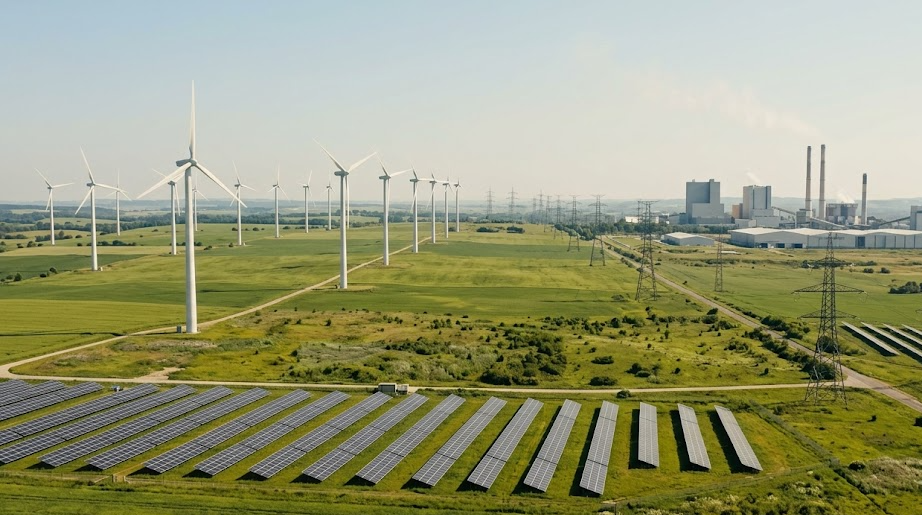
It is hard to call the government's will weak. Kim Sung-hwan, Minister of Climate, Energy and Environment, proposed a "renewable-centered grand transition" at a Cabinet meeting on the 6th, and the "People's Sovereignty Government Energy Transition Implementation Plan" was released the same day. Its backbone is deploying 100GW of renewable energy and reaching a 20% share of generation by 2030. The Offshore Wind Power Act also took effect on March 26.
The problem is the gap that sits between one plan and the other. The 11th Basic Plan is a 2024-2038 plan that cleared the Ministry of Trade, Industry and Energy's Electricity Policy Deliberation Committee on February 21, 2025, and it puts nuclear at 31.8% and coal at 17.1% in 2030. InfluenceMap saw these two figures as more than double the science-based policy targets recommended by the IPCC. Whether the 20% in the new implementation plan and the 18.8% in the Basic Plan are an update of the same plan or two separate documents standing side by side has not been explained by either side.
InfluenceMap pointed to the influence of fossil fuel-related companies such as the Korea Gas Corporation, the Korea National Oil Corporation and the Korea Electric Power Corporation as the background to the low targets. No rebuttal from these companies or from the Ministry of Trade, Industry and Energy has come out. The report also noted that Samsung Electronics, SK Group and Hyundai Motor Group, which have publicly declared RE100 and net zero, did not raise their voices directly in the policymaking process and stayed with indirect involvement through business associations. It means the side with the power to lift the targets kept silent.
The design of the system has been changing quite a bit in the meantime. The implementation plan contains a reform proposal that converts the RPS into a bidding market based on long-term contracts and introduces regional pricing and time-of-use pricing. Some power sources including coal are left in the form of capacity payments, and coal is to be phased out by 2040 while some units are kept as reserve power. LNG will be gradually reduced while used to cope with variability, and nuclear will be used as a supplementary baseload source.
Outside conditions are not smooth. A report released by the Korea Institute for Industrial Economics and Trade on the 10th pointed out the constraints blocking the renewable energy transition. After the U.S.-Israeli preemptive strike on Iran on February 28, the Strait of Hormuz was blocked and Qatar's Ras Laffan LNG facility shut down, and Qatar declared force majeure on its gas contracts. International oil prices passed $100 a barrel, and gas prices rose more than 40% in Europe and more than doubled in Asia.
It might seem that renewables gain an advantage when fossil fuel prices jump, but the calculation is not that simple. According to an analysis cited in the report, when interest rates rise by 2 percentage points, generation costs rise 20% for renewables and 11% for gas. That is because renewables, with a large share of upfront investment, are more sensitive to interest rates. As diesel prices rose, the cost of running heavy equipment at construction sites for facilities was 35% higher than before the war, and this month thermal coal futures rose 13.2% in Asia and 14.2% in Europe, yet Korea decided to lift the cap on coal-fired generation.
Pressure on the demand side is also growing. The World Resources Institute expects electricity use by U.S. data centers to rise from about 180TWh in 2024 to more than 400TWh in 2030. What fills the supply while demand swells becomes the core of the next plan. As the situation in the Middle East has confirmed once again that dependence on fossil fuel imports is itself a risk, expanding renewables is being handled as an energy security task at the same time as a climate response.
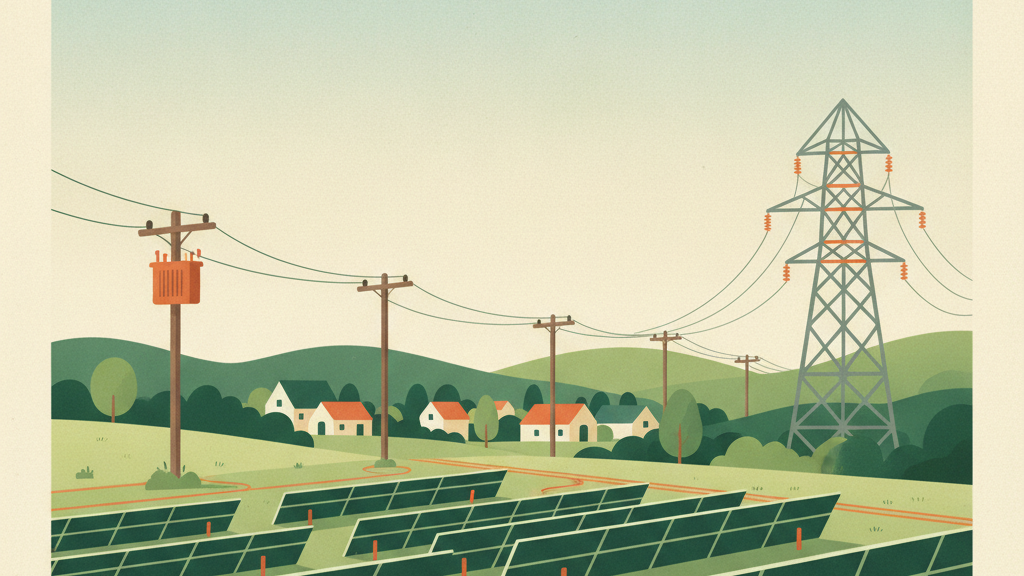
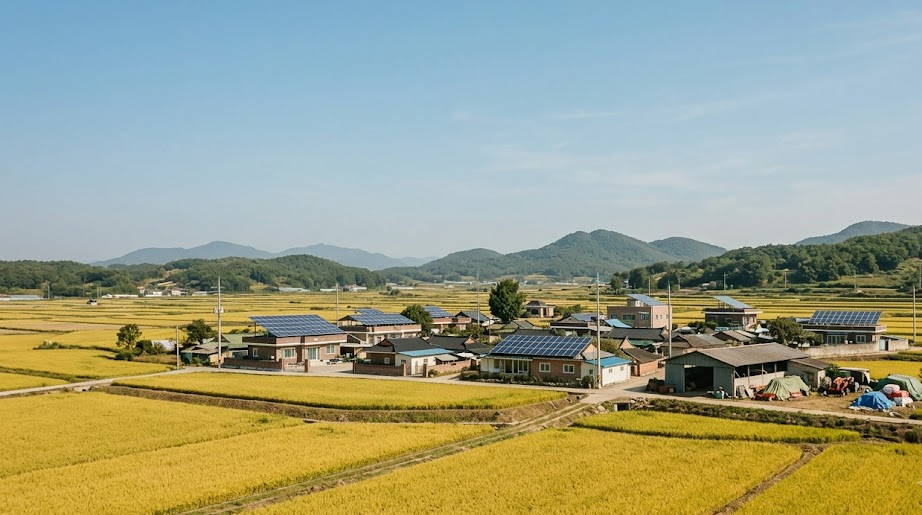
A solution for public acceptance is also prepared. The implementation plan presented the sunlight income, wind income and grid income models, in which residents invest directly in generation and the grid and share the revenue, along with "grid income villages." The idea is to turn power plants, once facilities to be endured, into assets that pay dividends.
The 12th Basic Plan for Long-term Electricity Supply and Demand will be announced in the second half of this year. Whether the gap between 100GW and 18.8% narrows there or remains as it is will soon be revealed. It is not too late to begin by opening a local government bulletin board once to see whether notices for grid investment or solar projects have been posted in your area. The more power plants residents hold a stake in, the further the targets come out from the documents.