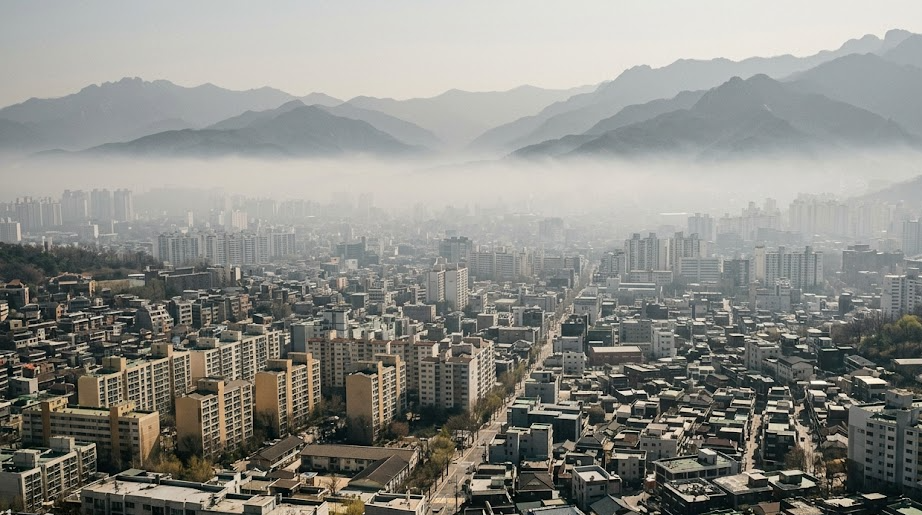
For about half a month each year, Koreans breathe in four air pollutants at once. Days on which fine dust (PM10), ultrafine dust (PM2.5), nitrogen dioxide and ozone all exceeded their standards on the same day were counted at 15 per year. The figure comes from "DeepMap," an artificial intelligence pollution mapping model developed by a team led by Professor Yim Jeong-ho of the Department of Earth, Environmental and Urban Engineering at UNIST, which scanned all of East Asia. The analysis covers 2021 through 2023.
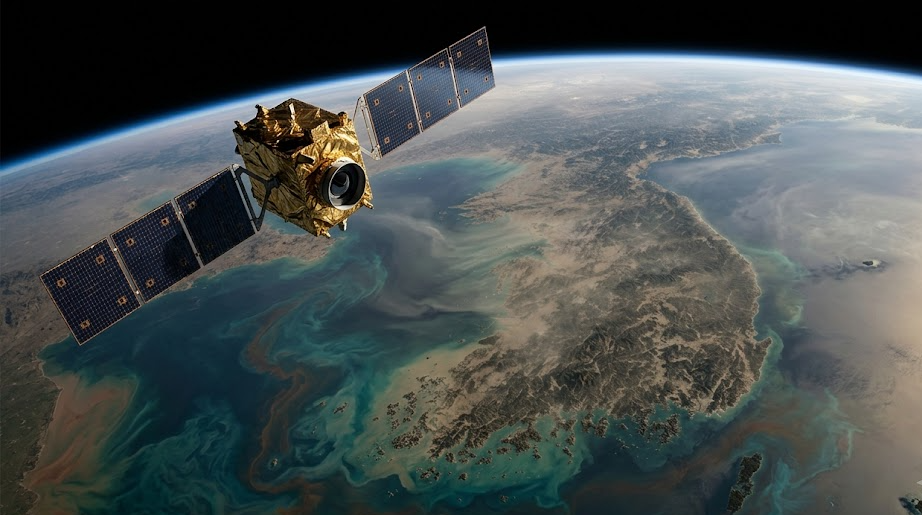
DeepMap estimates ground-level concentrations of six pollutants simultaneously on an hourly basis. PM10, PM2.5, nitrogen dioxide, ozone, carbon monoxide and sulfur dioxide are the targets. It combines observations sent by a geostationary environmental satellite with an atmospheric chemistry transport model, numerical model weather data and ground observation data to calculate concentrations on a 10-km grid. A multitasking design was applied that also learns the relationships pollutants exchange with one another.
Why that design matters shows up in health effects. That simultaneous exposure to several substances is worse for the body than breathing in only one is a known fact, but many studies so far have calculated substances one at a time. How many days several substances rose together, and where such things happen, could not be seen. DeepMap draws that overlap onto a map.
By region, the North China Plain was the most frequent at 24 days a year, followed by eastern China at 19 days a year. Korea's 15 days comes next. Days when the four substances exceeded standards at the same time were concentrated in March and April, and in October. That means the risk is concentrated at the turn of the seasons.
Conditions in Seoul this spring line up with that period. From March 1 to March 29, there were 13 days in Seoul when ultrafine dust was at the "bad" level. These are days that exceeded the domestic standard of 35 micrograms per cubic meter. On March 17, high concentrations of ultrafine dust pushed into the central region, and the first emergency reduction measures of this spring were issued for the Seoul metropolitan area and South Chungcheong Province.

Explanations diverged over the cause that day. The National Institute of Environmental Research cited an announcement by China's meteorological agency and mentioned the influence of wildfires abroad. When Professor Jung Su-jong of the Graduate School of Environmental Studies at Seoul National University examined NASA satellite imagery from the same day, the fire points recorded in northeastern China were field fires burning agricultural residue. Fires that start in mountains and fires that start in fields call for entirely different responses.
Field fires follow the seasons. When Chinese researchers looked at the 20 years from 2004 to 2023, more than 80 percent of biomass burning in northeastern China was concentrated in March-April in spring and October-November in autumn. The number of fire points showed a trend of increasing by an average of 759 each year, and fire power by an average of 12,000 megawatts each year. That matches exactly the March, April and October period when days of simultaneous exceedance by the four substances were concentrated.
A gap in the system becomes visible here. Air quality management today sets standards separately for each substance and issues alerts separately. If ultrafine dust alone falls just below the standard, that day is recorded in the statistics as a calm day, but if nitrogen dioxide and ozone were high alongside it, the burden the lungs went through was by no means calm. That is why an indicator counting days when several substances were breathed in together needs to enter forecasting and the conditions for issuing reduction measures.
The research results were published in the journal Environmental Science & Technology on March 20. The European Union is also revising its system in the direction of strengthening air quality standards, so discussion of overhauling domestic standards is likely to flare up again within this year. Whether policy authorities will reflect the concept of combined exposure in the standards has not been decided. For an issue where the season and the cause have emerged this clearly, the grounds for putting off the discussion grow weaker.
There are things individuals can do as well. In spring and autumn, especially in March, April and October, it helps to check nitrogen dioxide and ozone grades along with ultrafine dust concentrations and adjust outdoor exercise times. Ozone rises in the middle of the day, and nitrogen dioxide rises along roadsides during commuting hours. Simply knowing when and where to avoid reduces the days of breathing in several substances together.