At around 5:30 a.m. on March 28, 2026, a fire broke out near Sambimun (三備門) in front of Jaseondang at Gyeongbokgung Palace in Seoul. A night safety officer making rounds inside the palace spotted the smoke and put it out himself with a fire extinguisher and a hydrant, and the flames were brought under control at around 5:50 a.m. One support pillar of the side gate next to Sambimun and part of a sinbangmok (信枋木) were damaged, and no one was injured.
A sinbangmok is the timber at the base of a doorjamb that carries the axis on which a door swings. When an area the size of a palm is blackened, that wood never recovers its original grain. The surface of a pine that had endured for centuries changed its nature in 20 minutes in the dry dawn air, and this is why people who work with wooden architecture fear fire.
Gyeongbokgung was the principal palace of the Joseon dynasty. It was designated a Historic Site in 1963, and Jaseondang, standing just in front of where the fire broke out, was the building where the crown prince and princess resided, restored in 1999. So the scorched wood belonged to a zone where the time of the dynasty and the time of restoration stand overlaid.
Accounts of how long it took to extinguish the fire diverge slightly among roughly 20 minutes, roughly 10 minutes, and 15 minutes. Accounts also differ on the cause. The Korea Heritage Service said that an investigation by the fire authorities and other related agencies suggests spontaneous ignition, and said no human movement was confirmed around the site at the time of the fire. The fire authorities, meanwhile, conducting a joint forensic examination, said words to the effect that spontaneous ignition is hard to accept.
The hours after the fire was out were not quiet either. The Gyeongbokgung Management Office reported to the fire authorities after finishing the extinguishing on its own. For the 9 a.m. opening, screens were put up near Sambimun and visitor routes were adjusted, and Gyeongbokgung opened normally that day. Heo Min, head of the Korea Heritage Service, visited the site that day to review the situation.
The announcement came late. The Korea Heritage Service informed the accredited press corps of the situation by text message only seven hours after the fire, and did not post the fire on the Royal Palaces and Tombs Center website, the Gyeongbokgung website, or its social media accounts. In the meantime, visitors passing the screens would have assumed repair work. When an agency that must carry both preservation and public use tries not to disturb the rhythm of use, information arrives this late.
The crowds Gyeongbokgung handles are not small. By the Royal Palaces and Tombs Center's count, Gyeongbokgung drew 6,886,650 visitors in 2025, 38.7% of annual visitors to the palaces and royal tombs. The Korea Heritage Service had increased security staffing from early March in preparation for a BTS concert, and said it would review safety conditions at major palaces and royal tombs. The person who first spotted the smoke that dawn was a safety officer making rounds on a patrol area widened that way.
On the day of the fire, dry weather advisories were in effect in most regions, including the Seoul metropolitan area, Gangwon, and Daejeon. No account has traced the cause of the Gyeongbokgung fire to those weather conditions, but what dry spring winds mean for wooden heritage is something those who have managed the palace experience every year. Repair work is under way around Sambimun, and the forensic examination has not reached a conclusion.
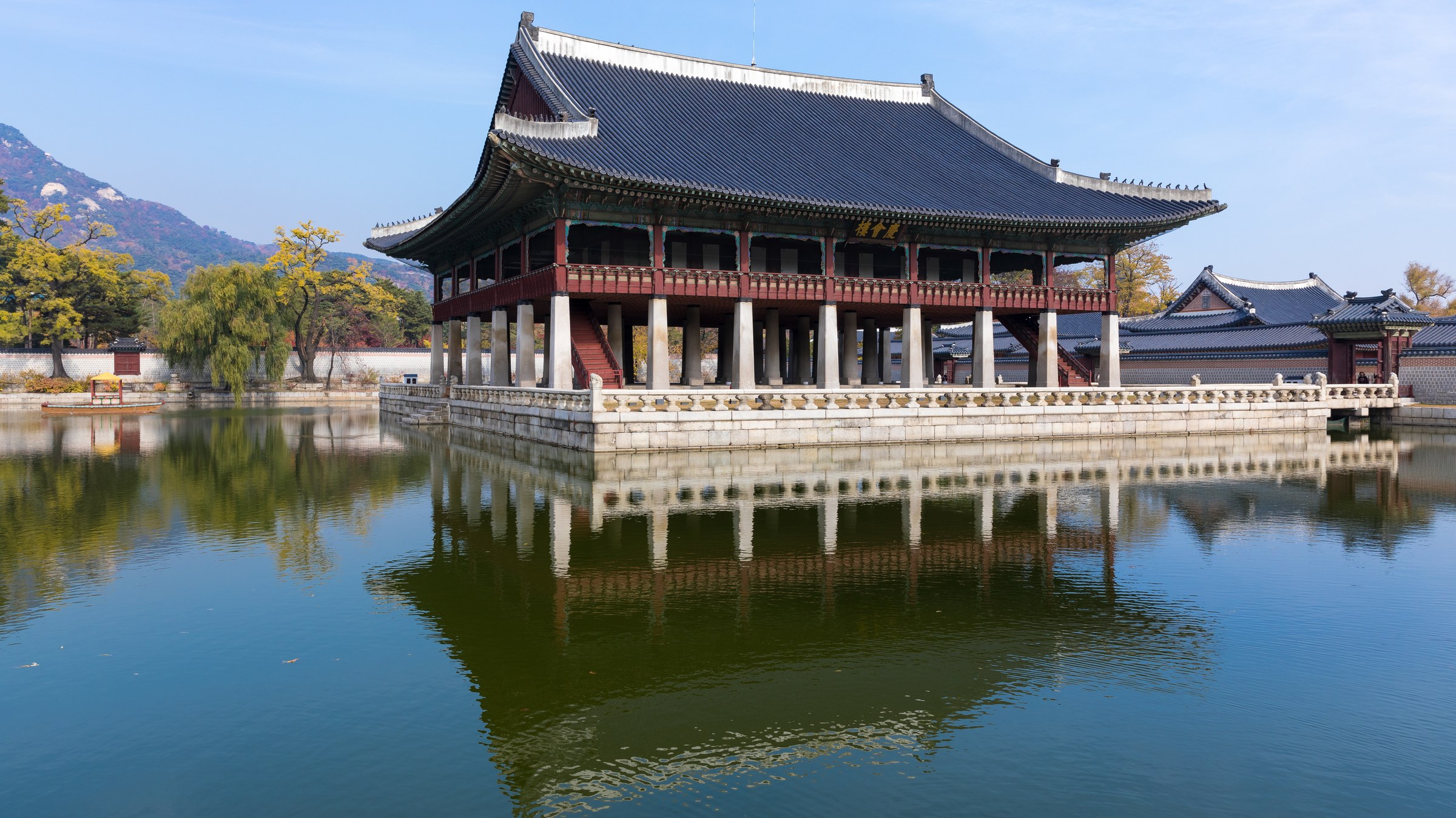
When the screens come down, that side gate pillar can be seen directly. Going a little east from the visitor route leading to Gyeongbokgung's Geunjeongjeon and Gyeonghoeru brings you to Jaseondang, and in front of it is the gate that caught fire. If the newly fitted wood differs in color from the wood that was already there, you can tell without a fingertip what material a 600-year-old palace has actually endured on.