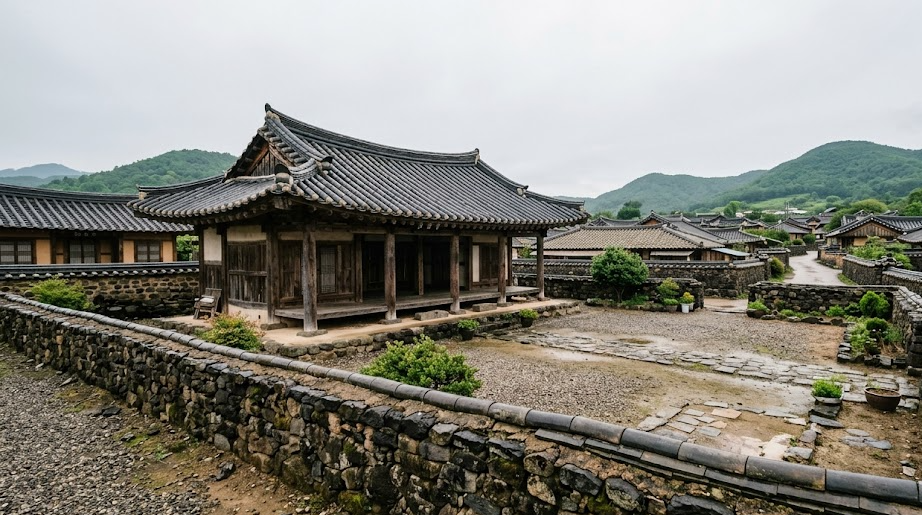
The Jeju World Heritage Office announced on March 10, 2026 that it had newly set the standards for permitted construction in the historic and cultural environment preservation areas surrounding 150 provincially designated heritage sites. The standards were loosened at 100 of them. The new standards take effect on March 13, the day they appear in the provincial gazette.
The biggest change comes in Zone 1, where the Cultural Heritage Committee examines each building individually and decides whether to grant permission. Its area drops from 3.76㎢ to 2.25㎢. The reduction is a little over 40%, and while some put the rate of reduction at 40.1% and others write it as "about 40%," the two area figures are the same.
A historic and cultural environment preservation area is a band drawn within 300m of the boundary of a heritage site's designated zone. Inside this band, land is divided into three parts according to the strength of the regulation. Zone 1 undergoes individual review, Zone 2 must observe a maximum building height set for each heritage site, and Zone 3 falls under general statutes including the urban planning ordinance.
Daejeong Hyanggyo is a case where the grain of the revision shows clearly. Its Zone 1, which had been 163,611.1㎡, was adjusted to 124,544㎡. Measured from the designated zone, only the area up to 20m to the east and 20m to the west remains subject to individual review, while the stretch along the road to the south moved from the height-regulation zone to the general statute zone, as did the area beyond the mountain ridge to the rear.
The makeup of the 150 sites is as follows. Monuments are the most numerous at 98, followed by 45 folk heritage sites, 6 tangible heritage sites and 1 heritage material. The sites subject to easing are reported to include Jocheon Yeondae, a beacon station that watched over the northern coast in the Joseon period, Jonjaamji at the foot of Bollae Peak in Hallasan National Park, Jeolbuam, and Daejeong Hyanggyo.
The last time construction rules around provincially designated heritage sites were touched was 2016, so this is an adjustment that skipped ten years. In that time the villages grew old and the houses wore down. From March 2025 the World Heritage Office took advice from experts in history, archaeology, architecture and folklore, the Cultural Heritage Committee walked the sites, and briefings and the gathering of residents' opinions followed. Opinions from provincial residents were received over 21 days beginning in November 2025.
Kim Hyeong-eun, head of the World Heritage Office, said in effect that protecting residents' property rights and protecting the heritage sites and their surrounding environment had been weighed together. Accounts also differ on the character of the easing. One explanation holds that the inconvenience to residents has been reduced while protection of the heritage has become tighter, and another account puts it as loosening restrictions on the exercise of private property rights and widening the conditions for local development. No confirmed account has been made public of how the remaining 50 sites were handled.
The basalt of the beacon station is black, and rough to the touch. The sound of hackberry leaves swept by the wind in the hyanggyo courtyard mixes with the noise of the village outside the wall. Separating heritage from people's daily life and freezing it in place was also a way of erasing that sound. How the scenery changes after the regulations are loosened will take some years to see.
The details of the changed standards can be found on the Jeju Province website, and questions may also be put to the World Heritage Office's Cultural Heritage Division or to the Culture and Arts Divisions of Jeju City and Seogwipo City. Which zone a given plot of land falls into differs by heritage site, so checking directly is faster. Standing 20m east of the wall of Daejeong Hyanggyo, one can gauge with the eye what this adjustment kept and what it let go.