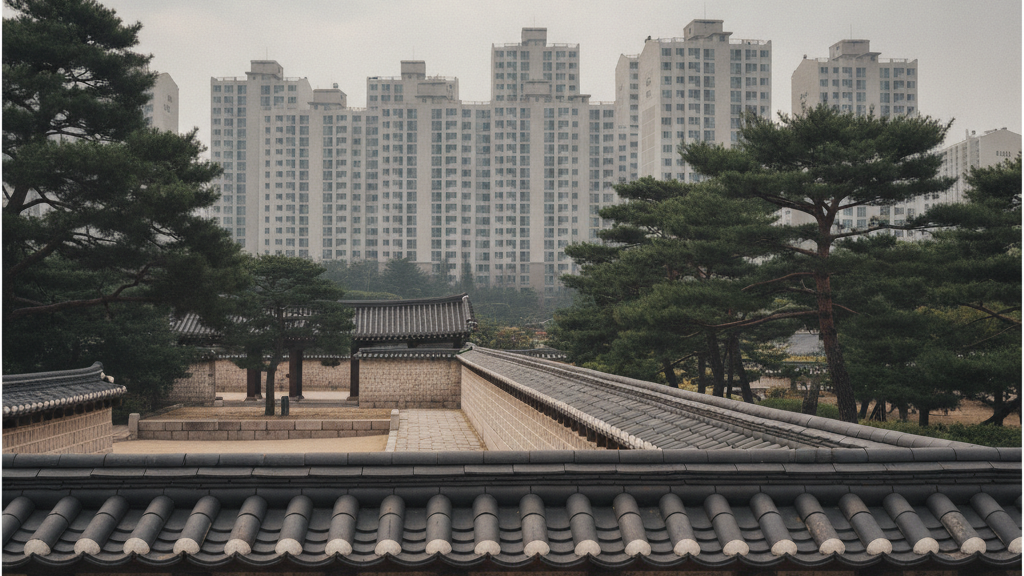
The Korea Heritage Service announced on March 10 that it had submitted an official letter last month asking that the Sewoon District 4 redevelopment project across from Jongmyo be placed on the agenda of the Administrative Consultation and Mediation Committee under the Prime Minister's Office. This is the second time the Korea Heritage Service has filed an item with the body, which consults on and mediates differences between central administrative agencies and local governments. A day later, on the 11th, the Seoul Metropolitan Government issued a statement in the name of spokesperson Lee Min-kyung expressing regret over the "request for mediation on the permit and approval procedures for the Sewoon District 4 redevelopment project." The two agencies differ even in the name they give to the same matter.
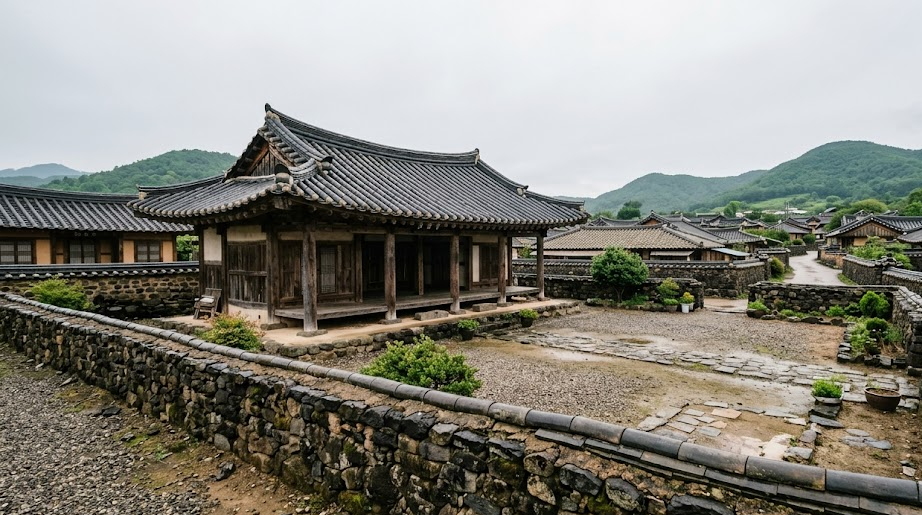
Step into the courtyard of Jongmyo's Jeongjeon hall and the sound changes. The dry sound underfoot of stepping on the flagstones, the colorless wooden pillars stripped of dancheong paintwork, the smell of damp earth and juniper after rain. What this space, built in 1395, has kept for more than 600 years includes the buildings and, along with them, the empty sky above them.
Across the way, the Sewoon Redevelopment Promotion District has gone through repeated changes to its plans since being designated an urban environment improvement zone in 2004. After a review by the Korea Heritage Service in 2018, building heights in Sewoon District 4 were agreed at 55m along Jongno and 71.9m along Cheonggyecheon. Last year the Seoul Metropolitan Government raised the height standard for the area to a maximum of 145m, or 141.9m when the elevation-angle rule is applied. The exact date and procedure of the decision to raise the limit have not been made public.
The two agencies' arguments run directly against each other. The Korea Heritage Service has urged that a heritage impact assessment be carried out first, citing obligations under international convention, while the Seoul Metropolitan Government counters that Sewoon District 4 lies outside the buffer zone of the Jongmyo World Heritage property, so there is no standard or basis for requiring an assessment. Seoul also points out that a related lawsuit is pending in court, arguing that the item falls outside the scope of review under the committee's operating rules and should therefore be dismissed.
The word dismissal carries a sense of déjà vu. In 2022, a first request was filed to delay move-ins at apartment buildings put up near Gimpo Jangneung without permission, but it was dismissed on the grounds that litigation was under way. The agency was called the Cultural Heritage Administration then, and it is the Korea Heritage Service now. The name has changed, but the point of collision has come back unchanged.
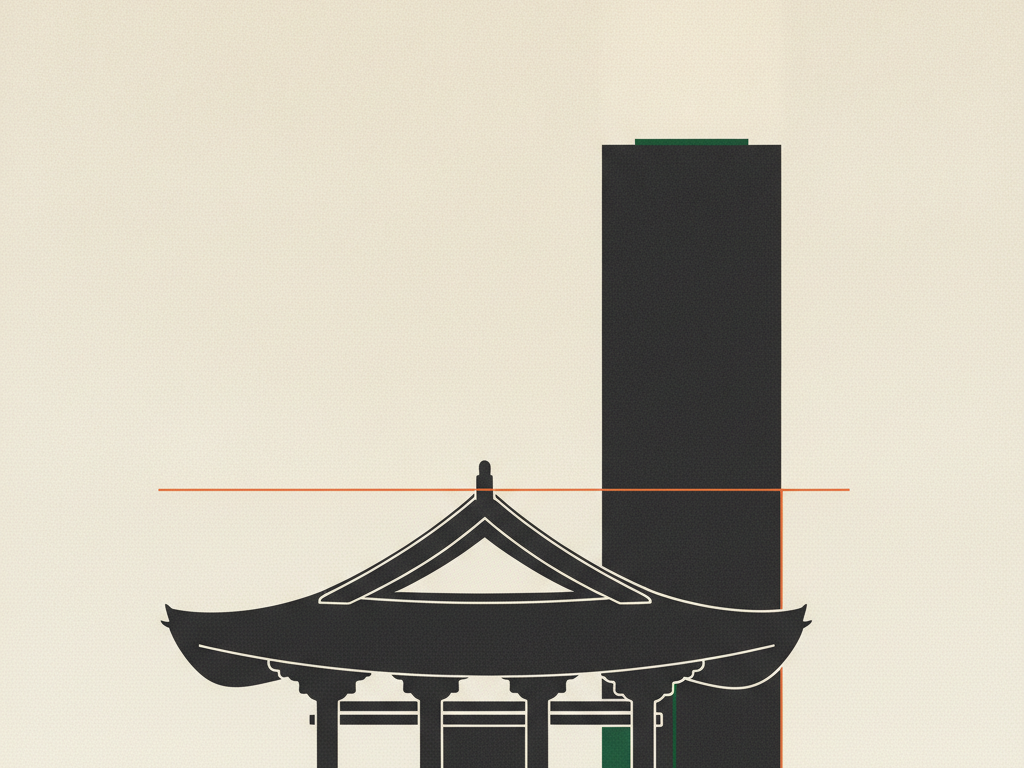
The committee is made up of no more than 13 members including its chair. Four civilian members commissioned by the Prime Minister take part, along with the Minister of Finance and Economy, the Minister of the Interior and Safety, the Minister of Planning and Budget, the Head of the Office for Government Policy Coordination and the Minister of Government Legislation, plus those designated by the chair from among the heads of central administrative agencies and the mayors and governors concerned with the item. Under the Local Autonomy Act and its enforcement decree, an item goes on the agenda even if only one party applies in writing, and a decision handed down by the committee carries an obligation to comply. But no procedure for appealing that decision or compelling compliance is set out in the rules.
Time is another variable. The term of the 12th class of civilian members ended in March last year and the next appointments are under way, so the item concerning the area in front of Jongmyo is expected to take some time before it actually comes up for review. In the meantime, the Korea Heritage Service replied last month to UNESCO's request, setting out the position stated by the Seoul Metropolitan Government, the course of the discussions and efforts to improve laws and institutions. Seoul has proposed as a solution the formation of a four-party consultative body seating residents, experts, the Korea Heritage Service and the city together.
Landowners and civic groups are also among those waiting. In November last year, landowners in Sewoon District 4 said they would pursue civil and criminal liability, including damages and abuse of authority, over the Korea Heritage Service's objections. On February 12, members of historical, religious, architectural and civil society groups gathered at Jongmyo and held a press conference calling for a full review of the high-rise redevelopment. On either side of the same wall, property rights and the skyline stand holding different timetables.
Jongmyo is open every day except Tuesdays. Stand on the terrace of the Jeongjeon hall facing south and the coordinates of the dispute can be read with the body. The sky begins where the roofline ends, and the two agencies are now arguing in writing over how far up that sky belongs to the heritage. Before an answer comes, taking a look at the sky as it is now is open to anyone.