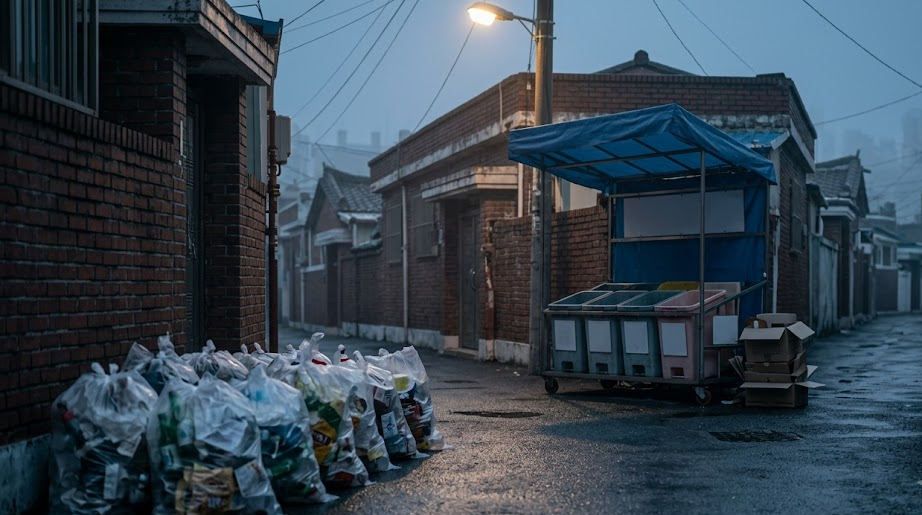
Seongdong District in Seoul put out 56,338 tons of household waste last year. That is 91 tons less than the annual target the district set for itself. Compared with 65,615 tons five years earlier, it is a drop of 9,277 tons, or 14.14 percent. With direct landfilling of household waste banned in the Seoul metropolitan area since January this year, this is the story of a record that actually cut discharge volumes.
The direct landfill ban was not a sudden measure. A four-year grace period was granted ahead of enforcement, and during that time local governments were asked to prepare for a shift to incineration and sorting. In 2030 the same rule will be extended nationwide. In other words, the timetable for the disappearance of bag-and-bury disposal in Korea was drawn up well in advance.
Seongdong's downward curve was not built in a single year. It was shaved a little each year, to 65,128 tons in 2021, 64,131 tons in 2022, 61,401 tons in 2023 and 58,641 tons in 2024. At the fingertips of that reduction are the 111 mobile collection points of the "Seongdong Purumi Recycling Station" program. This year's target is 54,460 tons, set one step lower again.
The other half of the preparation was securing disposal capacity. In anticipation of the direct landfill ban, the district signed three-year contracts with two private household waste treatment companies in Gyeonggi Province. The contract amounts and the dates they were signed fall outside what has been disclosed. It was a preparation that covered both axes, reduction and disposal capacity.
Yet there are voices that read the same two months in an entirely different way. The Korean Federation for Environmental Movements and its regional organizations across the country held a press conference in front of the presidential office on February 25 and delivered a policy statement. Their point was that because the system began before reduction policies and public treatment facilities were sufficiently in place, "long-distance disposal," in which volume-rate waste is hauled to private facilities outside the metropolitan area, is emerging. No official statistics showing the scale of these shipments have been released.
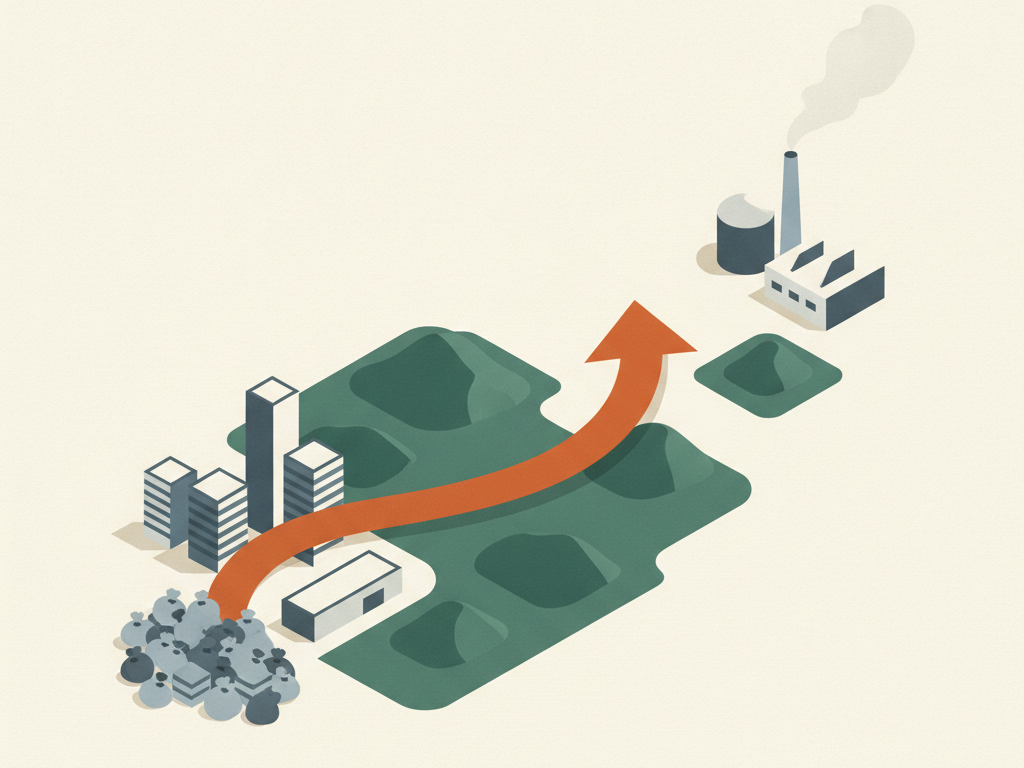
The pressure felt in the regions is more concrete. The South Chungcheong branch of the Korean Federation for Environmental Movements said that some 68,000 tons a year from seven districts in Seoul and four cities in Gyeonggi Province are set to come into South Chungcheong. An activist with the Seoul Federation for Environmental Movements said Seoul sends 500,000 tons a year out to other regions. Both figures were presented by the organizations, which did not also state how they were calculated or which year they were based on.
Sejong is in a similar situation. Short of its own incineration facilities, it relies on outside contractors to handle household waste, and now waste from other regions is coming in as well. The Sejong branch of the Korean Federation for Environmental Movements called on the government to regulate the inflow of waste from outside the city and to introduce a "cap on external waste."
The four demands in the statement issued by the Korean Federation for Environmental Movements point in the end toward one thing. Enforce the principle of disposal at the point of generation in practice, establish public treatment as the default, fix the loopholes in private contracting, and introduce reduction targets and a total volume management system. Cutting discharge and building treatment facilities cannot stand on either one alone. The circumstances in which Seongdong District had to sign contracts with Gyeonggi Province companies even after meeting its reduction target show that point.
Bags that have lost a place to be buried do not vanish; they are moved somewhere. The surest way to shorten the distance they travel is to make the bags themselves thinner. Rinsing food off delivery containers and putting them out for recycling, and separating paper cartons from ordinary paper, is enough on its own to reduce what goes into a volume-rate bag. The way Seongdong District shaved off 14 percent over five years was also an accumulation of such repetitions.