The Seoul Metropolitan Government and the Korea Heritage Service are in a head-on standoff over the Sewoon District 4 redevelopment of Sewoon Sangga that the city is pushing. The point of contention has moved away from floor area or sale prices and is focused on what will become visible beyond the walls of Jongmyo. On the 12th, academic bodies in history, religion and architecture held a joint press conference with civic groups in front of Jongmyo, and on the same day the Minister of Culture, Sports and Tourism spoke of the value of the original form at a separate meeting. The dispute has moved past the question of height on one site into a stage where the city chooses what to leave behind as memory.
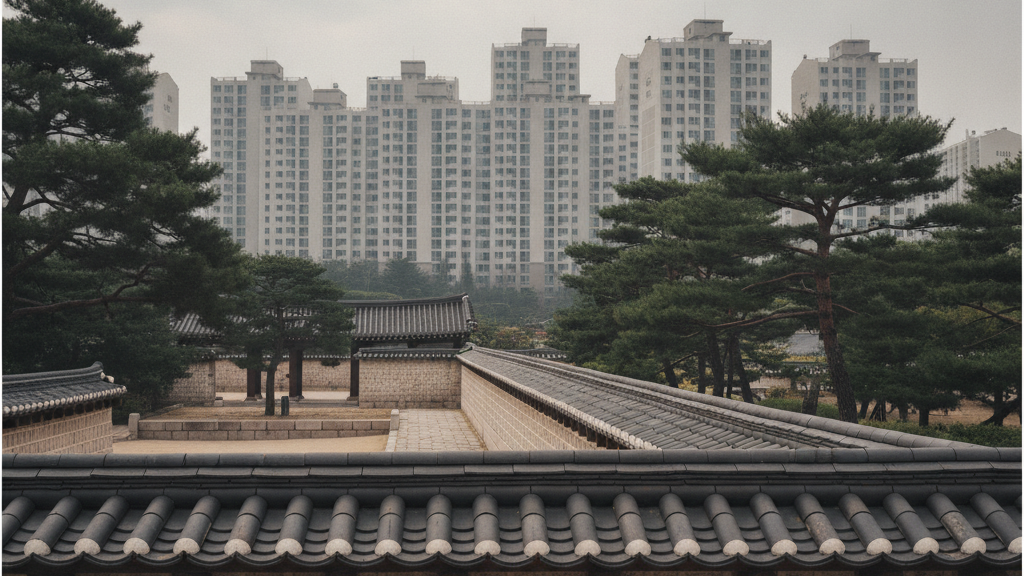
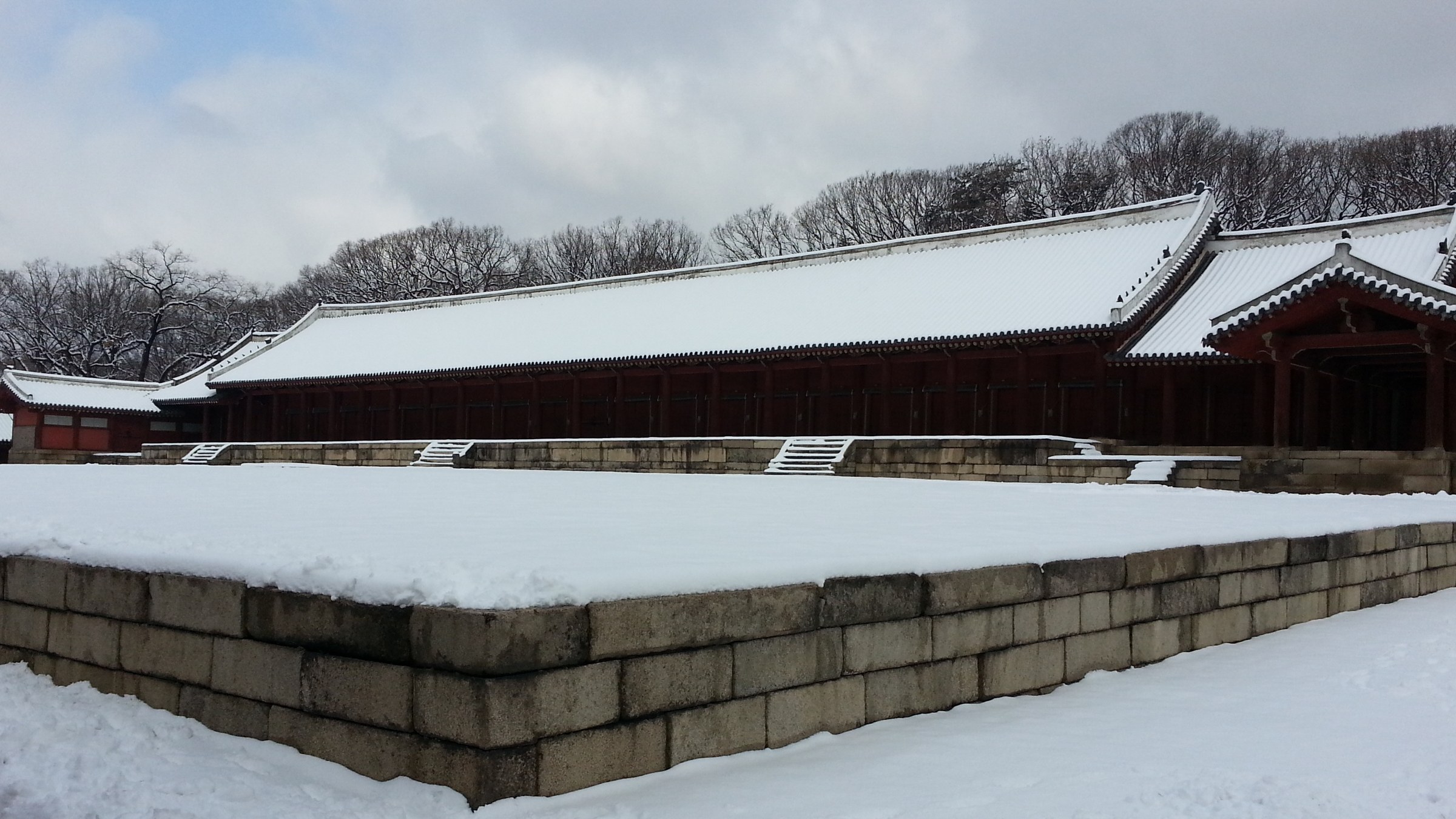
Jongmyo Jeongjeon does not pull the eye upward. The gray roof tiles run long and level, and the granite woldae throws footsteps back dully, as if absorbing them. In winter the smell of pine and dry earth settles low, and above it the empty sky works as part of the architecture. When a high-rise intervenes in this sky, beyond a single brick, the very stillness the space creates is damaged.
Scholars pointed to the same place. The Department of World Heritage at Konkuk University presented a landscape approach to urban heritage and put forward the view that high-rise buildings could harm the visual integrity of Jongmyo. The study identified as a problem that no buffer zone to protect the landscape was clearly set when the World Heritage nomination file was submitted in 1994. Value that passed the inscription review is not necessarily protected from development that follows.
The city chose a way of checking with the eye. From the midpoint of the upper woldae of Jongmyo Jeongjeon, it floated an advertising balloon at the same height as the building to be put up in Sewoon District 4, took a photograph, and made an image by laying a projected landscape rendering over it. The whole of this dispute is held in the scene of one balloon floating in the sky. The image was released through the People Power Party's Seoul city chapter.
The press conference on the 12th was arranged by the Jogye Order's Social Labor Committee (chair Ven. Jimong) together with academic bodies and civic groups. Ven. Sigyeong, vice chair of the committee, spoke, and the participating groups called for a Heritage Impact Assessment carried out to international standards. After the conference they said they had delivered a letter to UNESCO. Ven. Sigyeong said negative public opinion on high-rise development runs above 70 percent, and how that figure was surveyed has not been disclosed.
Voices from law and academia also took the podium. Attorney Seo Seong-min of the People's Livelihood Committee at Minbyun pointed out that the Sewoon District 4 project ran into opposition from the Cultural Heritage Committee and ICOMOS from its early stages. The conference also raised the problem that no provision has been put in place to replace Article 19, Paragraph 5 of the Seoul Metropolitan Government's cultural heritage protection ordinance since it was deleted. Kang In-uk, president of the Central Region Archaeological Society and professor of history at Kyung Hee University, cited 142m as the planned building height and named Gimpo Jangneung and Chuncheon Legoland as earlier failures.
The government's language came out that day as well. Minister of Culture, Sports and Tourism Choi Hwi-young said at a meeting held at Modu Art Theater in Chungjeongno that because Jongmyo became a World Cultural Heritage site for the value of its original form, any change made to that original form must go through assessment. The ministry has stated its opposition to the Sewoon Sangga redevelopment plan on the grounds of heritage preservation. Those at the conference see the city as pushing ahead with high-density development on land next to Jongmyo behind the justification of creating a green axis in the city center.
Preservation and use are forces trying to win out over each other. The Sewoon area has been run-down for a long time, and there too are people who have to live and money that has to move. Deciding what standard to measure by, in place of erasing this tension, is the task that remains, and it is also why the call for a Heritage Impact Assessment has been raised. The city's counterargument has not been publicly set out since the conference.
In the end the answer can only be checked with the eye. Stand on the woldae in front of Jongmyo Jeongjeon and look up once above the roofline, and anyone can measure the state that sky is in now. Between the cicadas of summer and the dry wind of winter, that empty space has been kept with nothing in it for close to 600 years. What the city puts up in that empty place becomes its answer to how it means to remember itself.