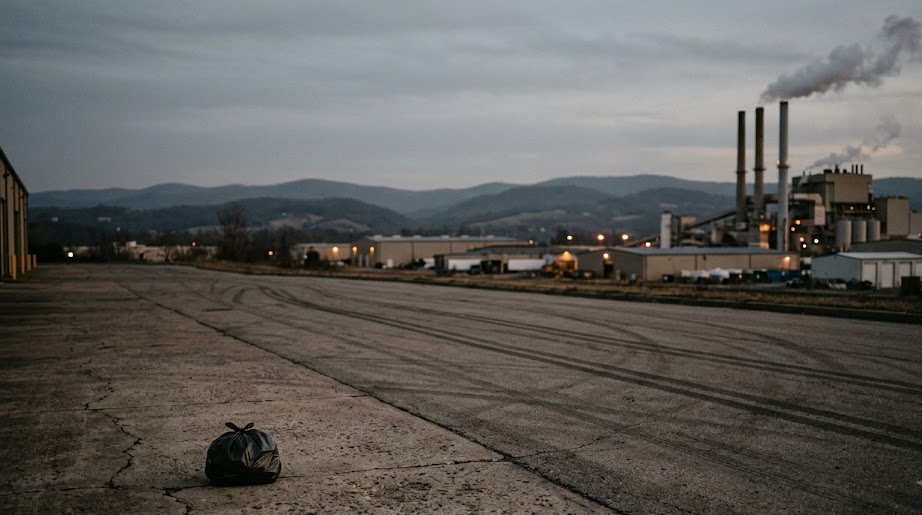
Not a single ton of the 126,682 tons of waste that the Seoul Metropolitan Government entrusted to private operators was burned inside Seoul. This volume shows where the waste that can no longer be buried has flowed since the ban on direct landfilling of household waste in the Seoul metropolitan area took effect in January this year. The Gyeonggi, Seoul and Incheon branches of the Korean Federation for Environmental Movements issued a statement on February 11 analyzing how the three metropolitan governments are handling their waste, and demanded a reversal of a flow tilted toward incineration and private operators.
The purpose of the measure was clear. It was to end the practice of burying household waste in landfills as it is and to lift the treatment system toward incineration or recycling. The principle is set to expand nationwide in 2030, so the metropolitan area's one month of experience is close to a preview that the rest of the country should read in advance.
The problem is that finding places to treat the waste has become more urgent than reducing the amount discharged. The volume-rate household waste that the three governments have entrusted to private facilities exceeds 530,000 tons. Of that, incineration accounts for 100% in Incheon, 73.2% in Gyeonggi Province and 54.4% in Seoul. As the share the public sector could not handle passed to the market, the right to choose the treatment method appears to have passed along with it.
When the volumes cross city boundaries, the burden moves with them. Gyeonggi Province and Incheon are sending part of their private incineration volume to South Chungcheong, North Chungcheong and Gangwon. Cooperation fees on waste brought into private incineration facilities are suspended, so the receiving regions have little leverage to demand compensation.

In the receiving regions, discussion began some time ago. The Jeungpyeong Resource Circulation Citizens Center (director Shin Geon-yeong) held a residents' forum on the 6th of this month that dealt with the impact of the metropolitan direct landfill ban on the region and with countermeasures. The forum was held in the meeting room of the Jeungpyeong-eup office and was sponsored by Jeungpyeong County. In Cheongju, an event denouncing the inflow of metropolitan waste and a forum on countermeasures were also held.
Reading this conflict only as a confrontation between the capital region and the provinces narrows the answers. The metropolitan local governments acted under conditions in which incineration capacity does not appear overnight, and residents of North Chungcheong are wary of their own region hardening into a treatment site rather than refusing the waste itself. Both sides are pointing to the same place. If the pace of adding places to burn outruns the pace of reducing waste, this route keeps getting longer.
The demands the Korean Federation for Environmental Movements set out in its statement are aimed at this. It said the authorities should establish a principle of public treatment of household waste to minimize dependence on private operators, have local governments prepare treatment plans within their own jurisdictions under the principle of treatment where waste is generated, and establish reduction and reuse policies before expanding incineration. It reads as a proposal to reverse the order.
Reduction is not the task of policy alone. A considerable share of what goes into volume-rate bags is recyclables and food waste that should have been outside the bag in the first place. If you open one bag you are putting out this week and see with your own eyes what has been mixed in by mistake, you can feel at your fingertips where the 530,000 tons begin. The choice not to create things to burn is always a step ahead of the discussion over where to send the things that will be burned.