On screen there is a garden. A woman plants flowers, and the children play in the water. But something else comes in through the ears. Gunshots, screams, trains, the mechanical sound of something burning, all of it unbroken.
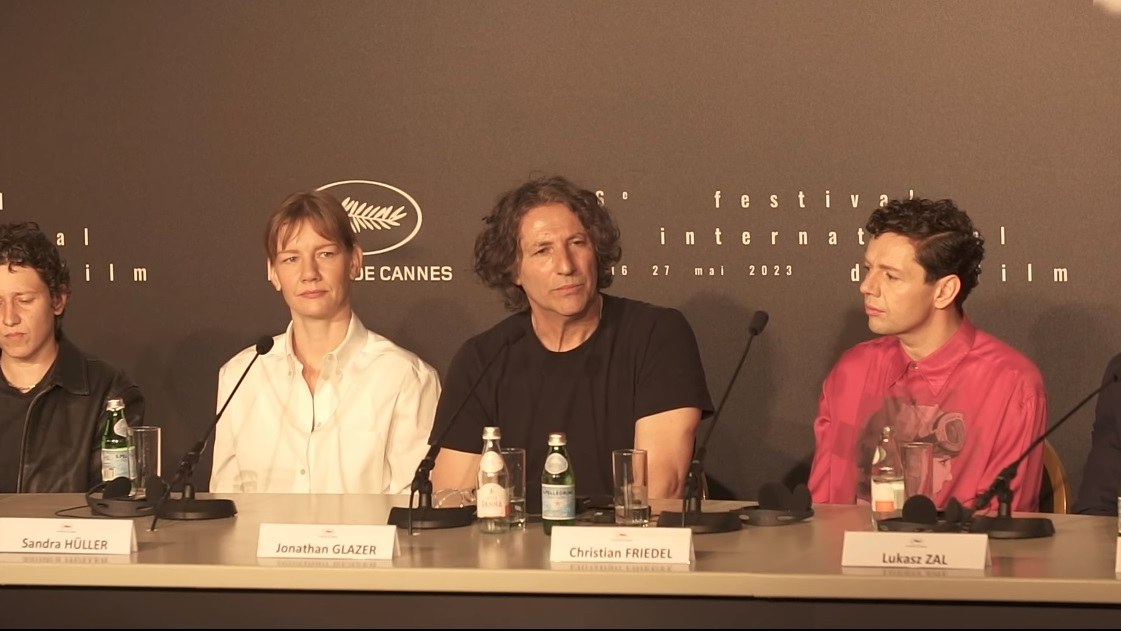
The Zone of Interest is a historical drama released in 2023. Jonathan Glazer wrote and directed it, starting from Martin Amis's novel of the same name. It follows the days of Rudolf Höss, commandant of Auschwitz in 1943, living in the house next to the camp with his wife Hedwig and their five children. It won the Grand Prix at the 76th Cannes Film Festival and the Academy Award for Best International Feature at the 96th Academy Awards.
The film does not put the killing on screen. It shows only what happens on this side of the wall. Höss swims and fishes with his children, and Hedwig tends the garden and boasts to her mother about the household she has built. The belongings of murdered people come into this house, and non-Jewish prisoners do the domestic work.
Glazer has said he would not portray the perpetrators as mythic evil, and instead of the novel's characters he researched the actual Höss family and put them on screen. Filming took place in the Auschwitz area in mid-2021. The choice to move the setting to the real place shows the film's attitude exactly.
There is a reason to watch this film again during the Month of Patriots and Veterans. Höss approves the design of a new crematorium, and he warns his subordinates that they broke off lilacs carelessly and injured the plants. Later he takes on, under his own name, the operation to transport 700,000 Hungarian Jews. To him all of this is work, a promotion, and the condition for living with his family again.
How far can a job take a person. This question is not locked in the last century. The film keeps asking how a pair of hands diligently handling its share of the work becomes part of some outcome, and how many walls stand in between.
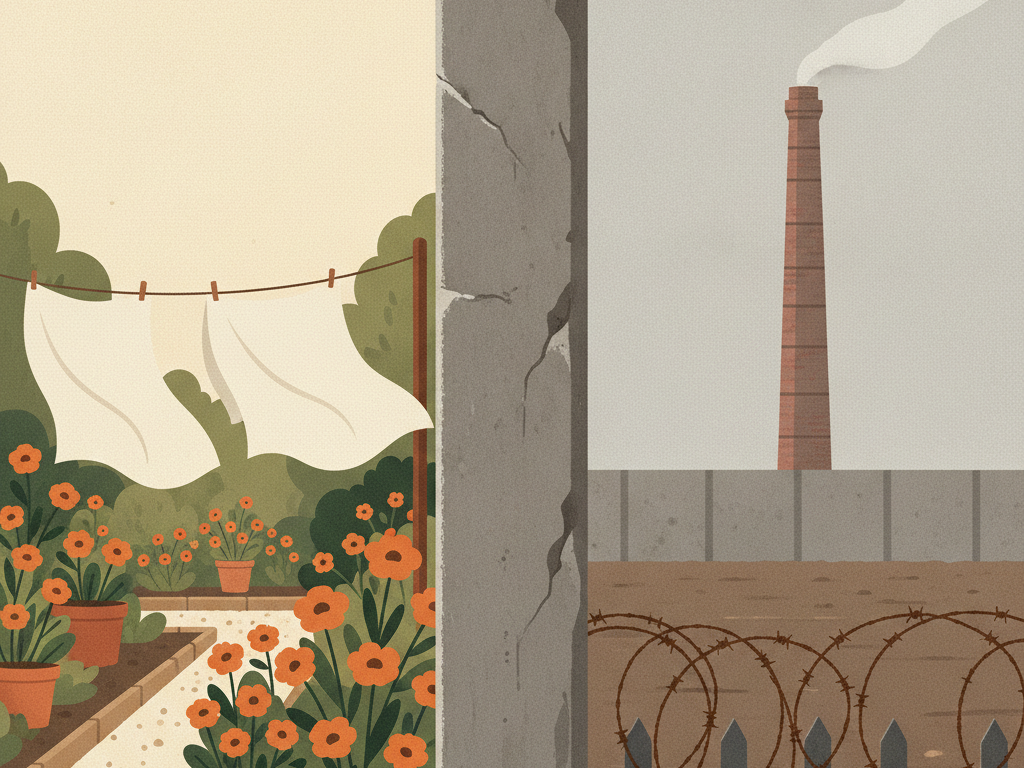
The core of the direction is sound. The camera keeps its distance, observing the house inside and out, and does not dig into the characters' faces. Instead the sound pushes the world outside the frame in without pause. The viewer comes to know what has not been shown, and notices that, knowing it, they are looking at a garden.
The characterization follows the same principle. Hedwig wants to stay in the house and persuades her husband, and the request is granted. The negotiation is carried out in the kind of speech that might pass in any household. That the operation of mass murder proceeds in the language of daily life is this film's chilliest achievement.
There is almost no channel through which the viewer can hold on emotionally. The scenes of a Polish girl who secretly hides food at night are the only ones with a different temperature. Restraint is pushed all the way, and the result is that you must endure nearly two hours of cold observation. This method will not work for everyone.
For the price of blocking off the emotional channels, the film keeps the viewer at a distance for a long time. Through nearly two hours of observation there is nowhere for the heart to settle, and some people will remain uncomfortable with that coldness. The screen's repetition of garden and wall comes close to tedium at times.
What remains at the end is sound. The things that pressed in from outside the frame stay in the ear after you leave the theater, bringing back the day that went on, unbothered, on this side of the wall.