The Korea Heritage Service held a briefing on world heritage impact assessment at the Government Complex Seoul on the 19th, and said it would carry out assessments quickly and efficiently by keeping administrative procedures to a minimum. Lee Yun-jeong, head of the World Heritage Policy Division, said that if the Seoul Metropolitan Government takes part, the agency would help the process finish within one year from the point of its participation. The same day the Seoul Metropolitan Government issued a statement in the name of spokesperson Lee Min-kyung, expressing regret that the Korea Heritage Service had refused dialogue and announced only its own position. The next day a second statement followed, calling on the agency to take part in a joint survey of Sewoon District 4.
It started last November. The UNESCO World Heritage Centre recommended that the impact of the Sewoon District 4 redevelopment on Jongmyo be assessed, and asked that approval of the project be halted until the review is finished. It also asked for the current situation to be laid out within one month, but no answer had come from the Seoul Metropolitan Government by the 19th, when the briefing was held. The two agencies sat down together twice in the meantime, and no common ground emerged.
A world heritage impact assessment is a system for examining in advance how development around a world heritage site affects the "outstanding universal value" that is the condition of inscription. ICOMOS, a UNESCO advisory body, first issued guidance in 2011, and in Korea the first case was the construction of the Second Geumgang Bridge in Gongju in 2019. The same procedure was later followed for the Hoguk Daejeon hall at Daeheungsa Temple in Haenam and the Geumeowon at Magoksa Temple in Gongju. Late last year the Korea Heritage Service re-announced for public comment an amendment to the enforcement decree of the World Heritage Act covering the projects subject to assessment, preliminary review procedures, and the preparation of assessment reports.
Heo Min, administrator of the Korea Heritage Service, explained that the system is not a device to block development or add regulation but a strategic coordination tool for development that benefits both sides. He also said that using preliminary review, so-called screening, projects confirmed to have no or minimal impact would be dropped from assessment. He added that for weighty matters such as Jongmyo, objectivity would be secured by working with international bodies including the World Heritage Centre. A promise to cut procedures and a promise to keep procedures came out together in one place.
What the Seoul Metropolitan Government puts forward is not figures but eye level. On the 9th, an advertising balloon floated at a height similar to the high-rise buildings of Sewoon District 4 was observed at the entrance to Jongmyo. The city said it had proposed a joint survey measuring the actual height of the buildings and had been refused, and criticized as an abuse of authority the fact that its request to photograph the balloon at the same height from Jongmyo's Jeongjeon was also denied. This account is known only from the city's explanation, and confirmation by the Korea Heritage Service has not been announced.
The Seoul Metropolitan Government has held to the position that Sewoon District 4 lies outside the 100-meter radius of Jongmyo's historic site boundary and is therefore not subject to assessment, and it called the re-amendment of the enforcement decree duplicative and excessive regulation. The statement also contained the phrase that the demand for assessment is an arbitrary restriction of citizens' property rights. It further argued that it had repeatedly requested consultation through a four-party body of residents, government, and political circles, with no response. The maximum building height in the plan for the Sewoon Redevelopment Promotion District is put at 170m.
What diverges most sharply is time. Between the one year the Korea Heritage Service speaks of and the 4-5 years the Seoul Metropolitan Government has taken as its grounds hangs the entire practical benefit of the redevelopment. Kim Chung-ho, a professor at the University of Seoul, said that in development around world heritage an impact assessment is not a choice but an obligation, and that while there are cases of delay, refusal or non-performance is almost unheard of apart from exceptions such as war and disaster. Kim Ji-hong, a professor at Hanyang University, pointed out that if Korea, the chair country, puts off carrying out the recommendation, the trust of the international community could be shaken.
The Korea Heritage Service signaled that if the Seoul Metropolitan Government does not respond in the end, it will apply pressure through domestic legal procedures once the re-amended enforcement decree is promulgated. Division head Lee Yun-jeong's description of non-compliance with the recommendation as a national disgrace comes in the same context. The fact that the World Heritage Committee will meet in Busan this July enters into both sides' calculations. The Ven. Jinwoo, head of the Jogye Order's administration, has expressed opposition to high-rise development in front of Jongmyo, and the Seoul Metropolitan Government said it agrees with that principle.
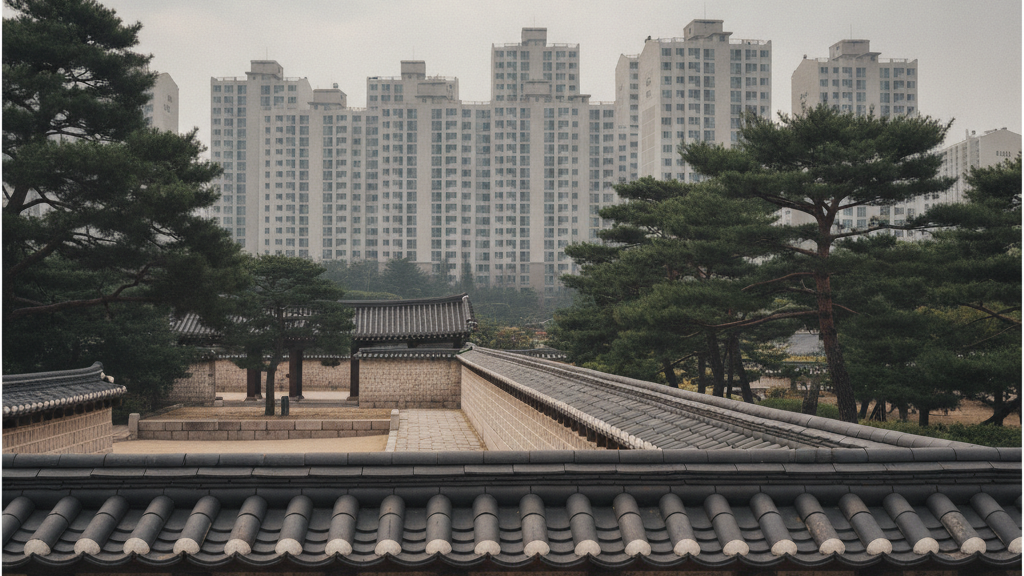
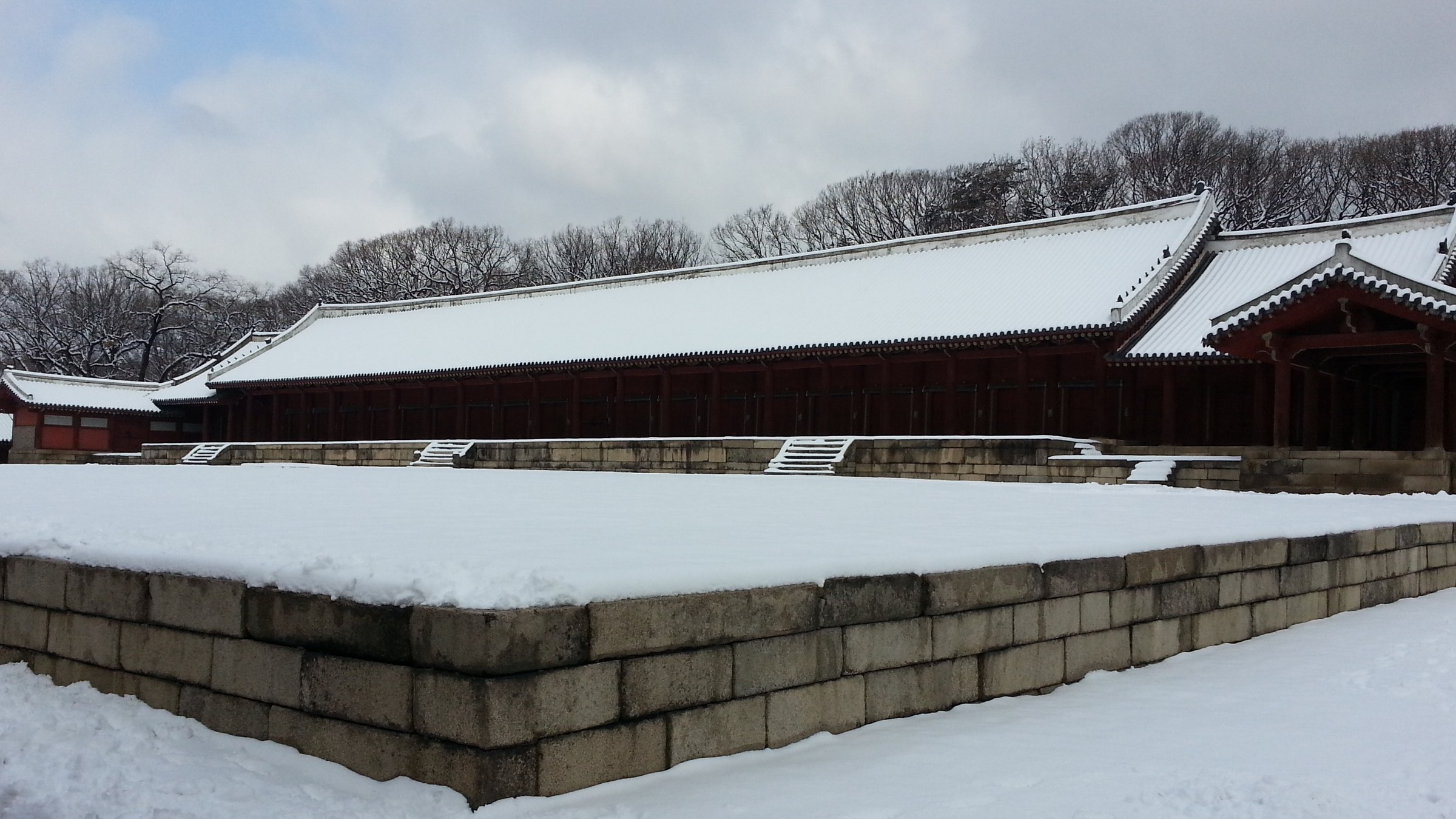
What is being fought over, in the end, is less the height of the buildings than the extent of what is visible when one stands in the courtyard of Jongmyo's Jeongjeon and looks up. The low, long line made by wooden pillars and roof tiles, and above it the gray winter sky with nothing caught in it, are a kind of value that does not carry over onto drawings. The Seoul Metropolitan Government demanded an official position on the balloon survey within this week, and the deadline for that demand is passing now. Jongmyo is open every day except Tuesday, so before an answer comes, standing once in the Jeongjeon courtyard and looking up at the sky yourself is more accurate than any document.