The ship is entering New York Harbor, and the Statue of Liberty is upside down. The overture of "The Brutalist" opens the film's entire ledger with this single shot. Is arrival a blessing or a debt? The film never collects on the answer it withholds in its first scene.
It is a 2024 period drama directed by Brady Corbet and co-written with Mona Fastvold. Adrien Brody plays László Tóth, a Hungarian Jewish architect who passes through the Buchenwald concentration camp and emigrates to the United States, alongside Felicity Jones, Guy Pearce, Joe Alwyn and Alessandro Nivola. A U.S.-British-Hungarian co-production, it was shot in VistaVision, a format developed in the 1950s. It is the first work to use the format since "One-Eyed Jacks" in 1961.
László reaches America alone, forcibly separated from his wife Erzsébet and his niece Zsófia. He is an architect trained at the Bauhaus, but what he gets in Philadelphia is a job at his cousin Attila's furniture store. He sleeps on a makeshift bed in the showroom storeroom and uses the service bathroom at the back of the building. His wife and niece are alive, but Erzsébet's failing health has stranded them in Europe.
The economics of this film are not written into any contract. The sleeping arrangements reveal them. The skill is attached to the migrant's body, and every channel connecting that skill to the market belongs to someone else.
The cousin, absorbed into American culture through marriage to a Catholic, is the first gate, and a wealthy patron is the next. Patronage is a supply of capital and at the same time a transfer of design authority.

The side with the skill has no capital, and the side with the capital demands the name on the finished work. In the January of year-ahead planning, this film asks something simple. Who builds, and in whose name is the finished thing recorded?
The direction pushes this theme through scale in place of dialogue. VistaVision's wide frame is a choice made to hold architecture, but what it emphasizes is the size of the person placed inside it. The revival of the intermission likewise shares the burden of time with the audience. This is why critics praised the direction, screenplay, performances, cinematography and score alike.
There are places where it is less persuasive. As it keeps tightening the relationship between patron and architect along an axis of domination and subordination, stretches appear where a character's choice shrinks into an illustration of the system. When individual calculation disappears from the screen, the film should have held onto the characters one more time.
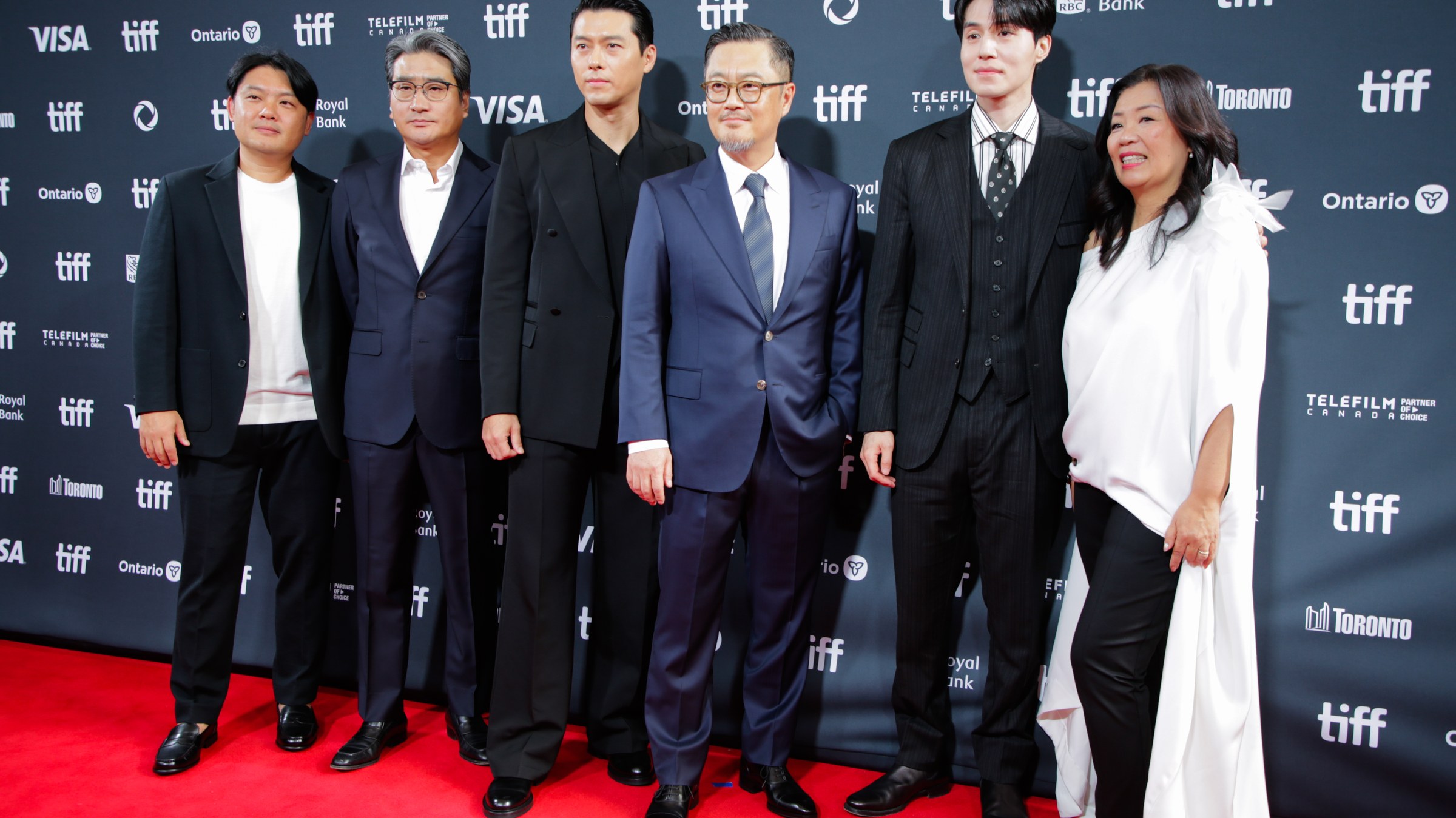
By the numbers it is a low-budget work. Production cost $9.6 million and box office takings exceeded that several times over. At the 97th Academy Awards it drew 10 nominations including Best Picture, Best Director, Best Actor, Best Supporting Actor and Best Actress, and at the 82nd Golden Globes it won three categories including Best Motion Picture, Drama. It premiered on Sept. 1, 2024 at the 81st Venice International Film Festival, where Corbet won the Silver Lion, and the American Film Institute named it one of the 10 best films of 2024.
In the year or so since its release, the argument over the line between patronage and creation has become a familiar sight outside the film as well. Seen again after passing through that stretch, the long running time of "The Brutalist" is closer to a device that actually reproduces the time it takes for a contract to encroach on a person than a device demanding endurance. The way one looks at who owns the building changes too. It reads as a film that traces back the moment when the blueprint passed into someone else's hands.