The day begins before dawn. Hirayama, who cleans public toilets in Tokyo's Shibuya, moves in the same order every day. He wipes, checks, and wipes again. "Perfect Days" is a film that shot that repetition as a craft rather than leaving it as tedious labor.
It is a 2023 drama directed by Wim Wenders, who wrote the screenplay with Takuma Takasaki. Japan and Germany produced it together, and it premiered on May 23, 2023, at the 76th Cannes Film Festival, where it competed for the Palme d'Or. For this film Koji Yakusho won Best Actor, and the film received the Prize of the Ecumenical Jury.
For Wenders it marks a return to the feature film six years after "Submergence" in 2017. It was also nominated for Best International Feature Film at the 96th Academy Awards. It is the first time a Japanese submission has been nominated with a film by a director who is not Japanese.
The story is simple. Hirayama belongs to the Tokyo Toilet Project and cleans public toilets around Shibuya. His home is an ordinary neighborhood east of the Sumida River, and his workplace is the busy district across the water. In the van to and from work he listens to cassette tapes, and before sleep he reads Faulkner, Highsmith, and Koda.
What the film holds on to for a long time is his fingertips. The care with which he checks even the angles no one else sees is captured on screen again and again. The camera does not look down on it with pity. It sees it with the precision of a person who has set the standard for his own work himself.
The city runs on labor that is hard to see, such as cleaning, care, and transport. The people who do that work mostly move in the early dawn or late at night, and by the time citizens begin their day they have left the place. "Perfect Days" puts that mismatched stretch of time in the middle of the screen.
The film's power comes from not explaining. In place of arguing for the value of labor through dialogue, it shows the work order and the tools as they are. The audience learns with their eyes what order it takes to clean a single stall. A conviction that showing labor is how you make labor understood holds up the entire direction.
This approach comes at a cost. The closer the camera stays to Hirayama's day, the further the conditions around him, such as his form of employment, his wages, and how the organization he belongs to is run, are pushed outside the frame. When repetition looks like a personal achievement, it becomes hard to ask who designed that repetition. As much as it restores one person's dignity, its power to aim at the framework that puts that dignity at risk grows weaker.
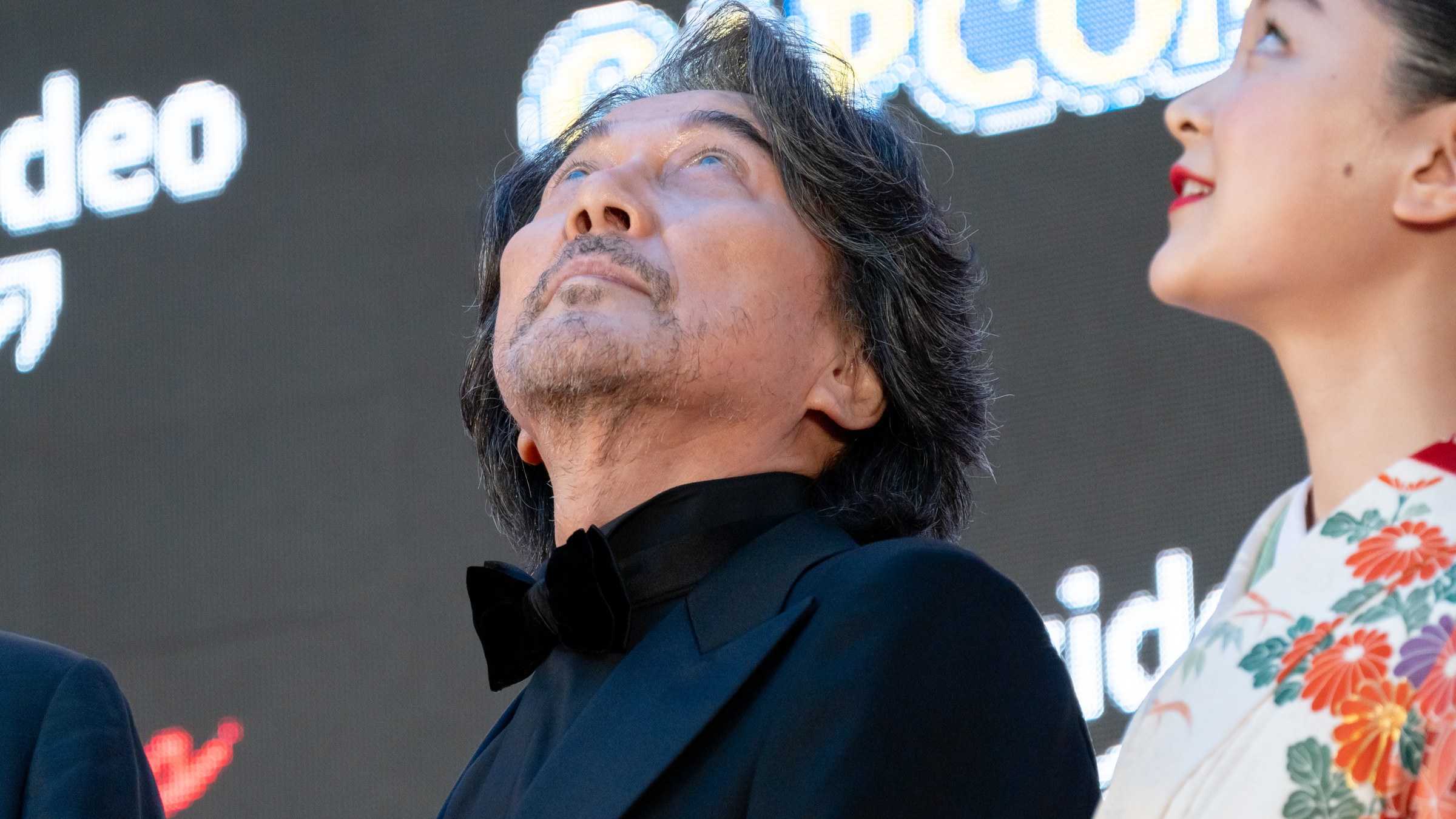
Even so, the position it stakes out is clear. Without using the grammar of tragedy so often brought in when essential labor is the subject, it conveys what that work means to a city. Koji Yakusho uses almost no dialogue and carries both the weight of the day and the satisfaction within it through expression and posture alone.
Since the release, discussion of essential labor has expanded into the language of working conditions and contracts, and the more that language grows, the differently Hirayama's silence on screen sounds. Past the period when the day he carries was read as a matter of personal attitude, what now looms larger is that the conditions holding up that day were left outside the frame. Watched again now, this film records the craft that makes a city start over each day, and at the same time becomes a screen left empty for the audience to fill in who has bound that craft to which conditions.