Hyundai Engineering has won the contract for the Gunsan AI data center project. The value is 870 billion won. It is a sign that Korea's AI data centers have moved past the paperwork stage into actual construction. The company said it will expand its scope of business from construction to operation and maintenance and investment participation.
The question of how to bring in power comes with it. Hyundai Engineering mentioned renewable energy, small modular reactors (SMR), and hydrogen as candidates to link with power procurement for the data center. It has not yet reached the stage of presenting capacity or target years.
Power demand itself keeps growing. Even as the power efficiency of AI chips improves, the electricity used by data centers as a whole is on the rise. Products in which a single server rack consumes 600 kilowatts (kW) of power are actually in operation. That is because better efficiency leads to stacking more.
So liquid cooling is coming in, and nuclear power and even fusion are being raised as responses on power and cooling.
Three cases abroad have produced different answers. Europe is running regulations that impose energy use reporting duties on data centers and cap total power. The items that must be reported are specific.
They include total energy consumption, water input, reused waste heat, and total renewable energy consumption. Instead of counting only the electricity used, the water drawn and the heat discarded also go on the books.
In the United States, the brakes are being applied. There are cases where data center permitting procedures are delayed as residents worry about power shortages. In New Mexico, a project known as "Project Jupiter" came to a halt. Some local governments are introducing regulations that increase the burden on the data center side.
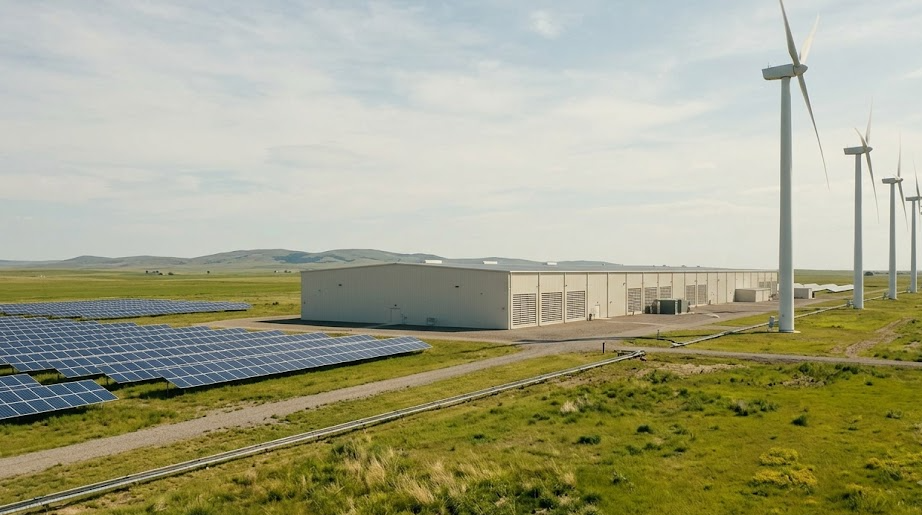
The city of Ishikari in Hokkaido, Japan, took a third path. A data center running on 100% renewable electricity is in operation in this city. The "RE" that Ishikari uses is short for Renewable Energy.
It is the concept of using renewable electricity generated in a region within that region first. A city official said the AI and data center market will keep growing and that decarbonization has to be carried along with it.
Comparing the three cases shows that the question of "AI or climate" has been framed wrongly. Europe tells them to record as much as they use, U.S. local communities ask why they should hand over their electricity, and Ishikari secured power first and then attracted centers. None of the three paths went in the direction of blocking data centers. They only put where and how power is procured into the terms of the business.
The Korean government aims to be one of the top three AI powers and plans to increase AI data centers across the country. The 870 billion won in Gunsan is construction that will be part of that first batch. The design being set now becomes the basic model for the centers to be built later. Whether they start by embracing regional renewable energy as Ishikari did, or go looking for power after everything is built, is decided here.
Gunsan is a region with offshore wind and solar resources. Whether the power procurement plan is released at the same time as the construction shows which path this center has chosen. When news of a data center coming to the area you live in reaches you, ask just one line about where the power will come from. Ishikari laid down renewable energy in advance because residents kept pressing about the source of the power.