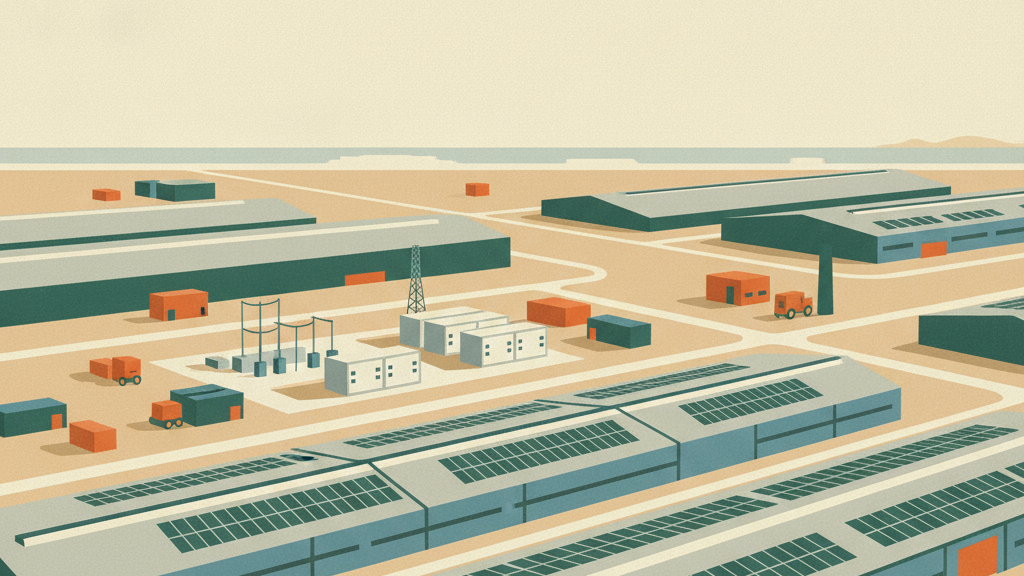
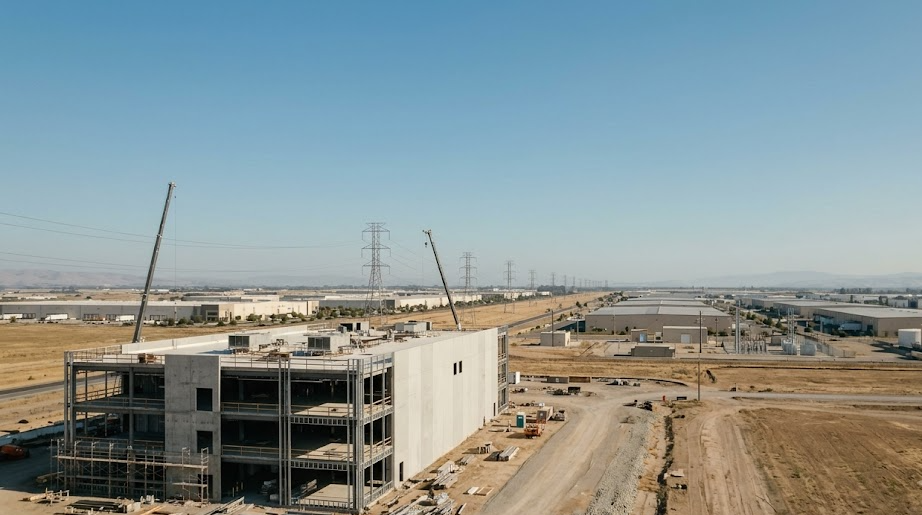
A 100MW AI data center under construction in Nam-gu, Ulsan, has passed 50% completion. With a plan for a global big tech company to invest in another 900MW also under discussion, demand of nearly 1000MW could converge on a single regional power grid.
The question of what rules should apply to a facility drawing this much electricity has spread to the National Assembly audit. Rep. Kim Gi-hyeon of the People Power Party (Ulsan Nam-gu B) submitted a written question to the comprehensive audit of the Ministry of Climate, Energy and Environment on October 26, raising the issue to the effect that the new power grid standard should not be applied to the data center going up in Nam-gu, Ulsan. On the same day, the National Assembly audited the relevant ministries and affiliated agencies in four standing committees, including the Climate, Energy, Environment and Labor Committee.
The new standard is a grid code dedicated to data centers. A grid code is a set of regulations spelling out the technical conditions that power plants and large electricity-consuming facilities must meet when connecting to the power grid. The Ministry of Climate, Energy and Environment has said it will introduce this standard 'within the year' to keep pace with growing demand from AI data centers. Two months remain this year.
The rules are looking toward the end of the year, and construction in Ulsan has passed 50%.
Those demanding the exclusion cite costs. Their argument is that if new technical requirements are attached when talks with big tech have progressed considerably, the equipment must be redesigned and investment costs will rise. For investors, the months spent revising blueprints translate directly into money, so the incentive to finish construction before the rules change grows. On the other hand, regions sharing the same power grid would be left to take on large facilities built outside the new standard as they are.
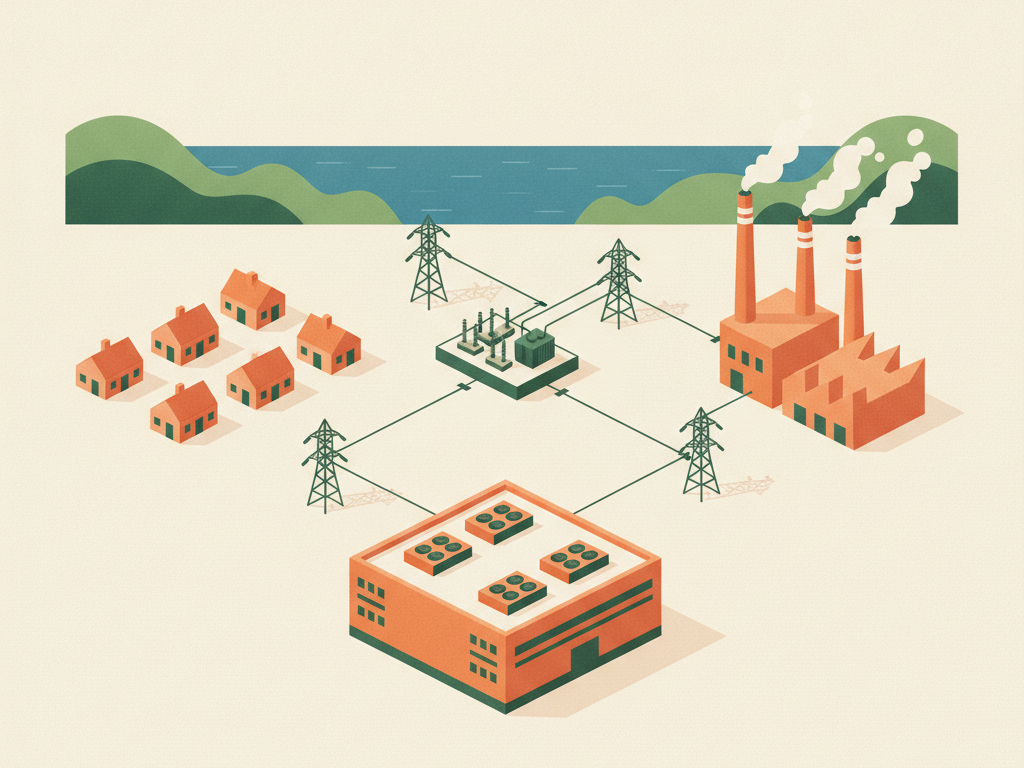
Some problems can be resolved only once the text of the standard is released. Whether to grant a grace period to facilities under construction, and from how many MW facilities will be covered, must be stated by the Ministry of Climate, Energy and Environment when it releases the grid code. If transitional provisions are included, Ulsan's demand will be resolved within the general principle, and if they are left out, disputes will continue over whether to grant an individual exception.
The law moved a step ahead of the rules. When the 'Special Act on the Promotion of Artificial Intelligence Data Centers' passed the National Assembly, civic groups criticized it for being processed without norms on climate and the power grid. They pointed out that the grounds for support were written into the law, while how to protect the power grid was pushed back.
Opposition has also emerged in Hongseong County, South Chungcheong Province. Local groups and the public interest legal center Nongbon (head Ha Seung-soo) publicly raised objections on the 27th to an AI data center planned in Hongseong County. If Ulsan is disputing when the rules should start to apply, in Hongseong the issue has become whether to accept the facility or not.
Public opinion leans toward not rushing. In a survey cited in a contributed article, 40% of respondents said AI data centers should be pushed through with 'swift implementation', while 60% said 'sufficient discussion' is needed. Because the timing and sample of the survey were not disclosed, it should be read only as a rough gauge of the trend.
The deadline promised by the Ministry of Climate, Energy and Environment is December of this year. Depending on whether the grid code due by the end of the year contains a provision on facilities under construction, the conditions for the equipment to be added to the transmission network in Nam-gu, Ulsan will differ.