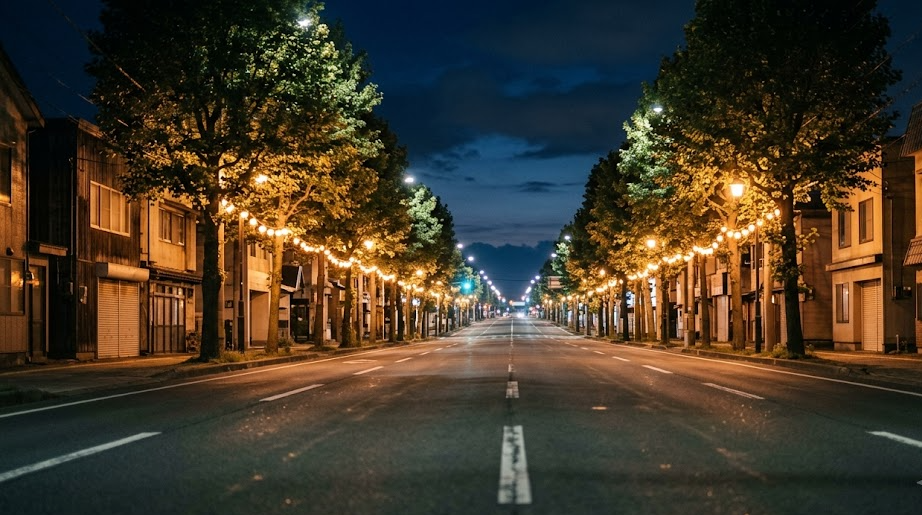
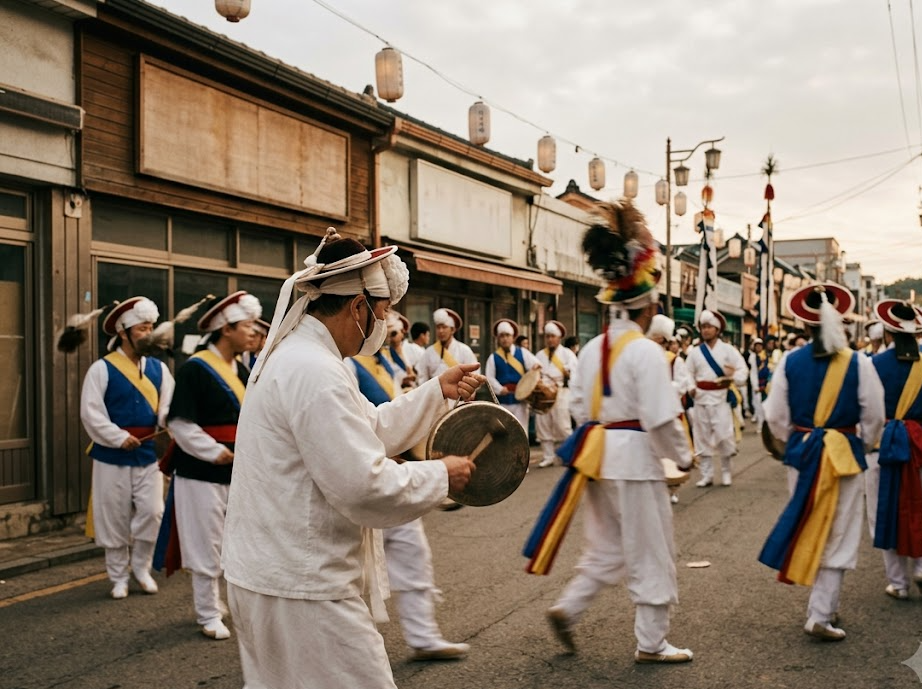
The Incheon Bupyeong Pungmul Festival Organizing Committee put a Bupyeong pungmul troupe on the ground at the Nebuta Matsuri held in Aomori, Japan. The sound of kkwaenggwari gongs and janggu drums rose in the middle of the night streets where the lantern procession passes. Along with the performance, the committee talked with Aomori officials about how the two festivals are run.
Nebuta are made by framing bamboo and wire and pasting layer after layer of Japanese paper over it. When a light is placed inside, the red and blue pigments spread as the color passes through the paper.
The Bupyeong troupe's sound has a different grain. The kkwaenggwari leads with the metallic clash of brass, and the janggu fills the gaps between. The white streamer on the sangmo hat caught the lantern light and broke and returned each time a body turned.
Both festivals are past their fortieth year.
Summer in Aomori has begun with Nebuta and ended with Nebuta, and the streets of Bupyeong in Incheon have closed the year with the sound of pungmul. Festivals that have run more than 40 years carry the same worry. The generation that first picked up the drumsticks is growing older, and where to find the young players who will take over those hands comes up every year. What the committee went to Aomori to see included matters beyond promoting K-culture.
A festival that survives long enough becomes a product. As visitors increase, the procession route is tidied up, and the alleys where residents once stood turn into viewing seats. Both Aomori and Bupyeong are living with the friction between the rhythms they have to keep and the spectacle they have to sell. Much of what was said in this exchange came down to how to carry that friction.
Bupyeong's pungmul is a sound that grew in the markets and alleys. Put it on a stage and it carries well, but it does its work when it walks past people. On the streets of Aomori, the Bupyeong troupe played while walking.
The Nebuta Matsuri is held in early August each year in downtown Aomori. To hear the rhythms of the Bupyeong troupe at home, go to the Bupyeong Pungmul Festival held in Bupyeong-gu, Incheon. The schedule and how to take part are announced by the Bupyeong Pungmul Festival Organizing Committee.
The lanterns are taken apart when the festival ends, and the paper is pasted again the following year. Bupyeong's kkwaenggwari also rests for a year and then rings again.
Event Information
Date: Early August every year
Venue: Downtown Aomori, Japan (Nebuta Matsuri)
Participants: Incheon Bupyeong Pungmul Festival Organizing Committee and the Bupyeong pungmul troupe
Domestic festival: Bupyeong Pungmul Festival, Bupyeong-gu, Incheon
Inquiries: Bupyeong Pungmul Festival Organizing Committee