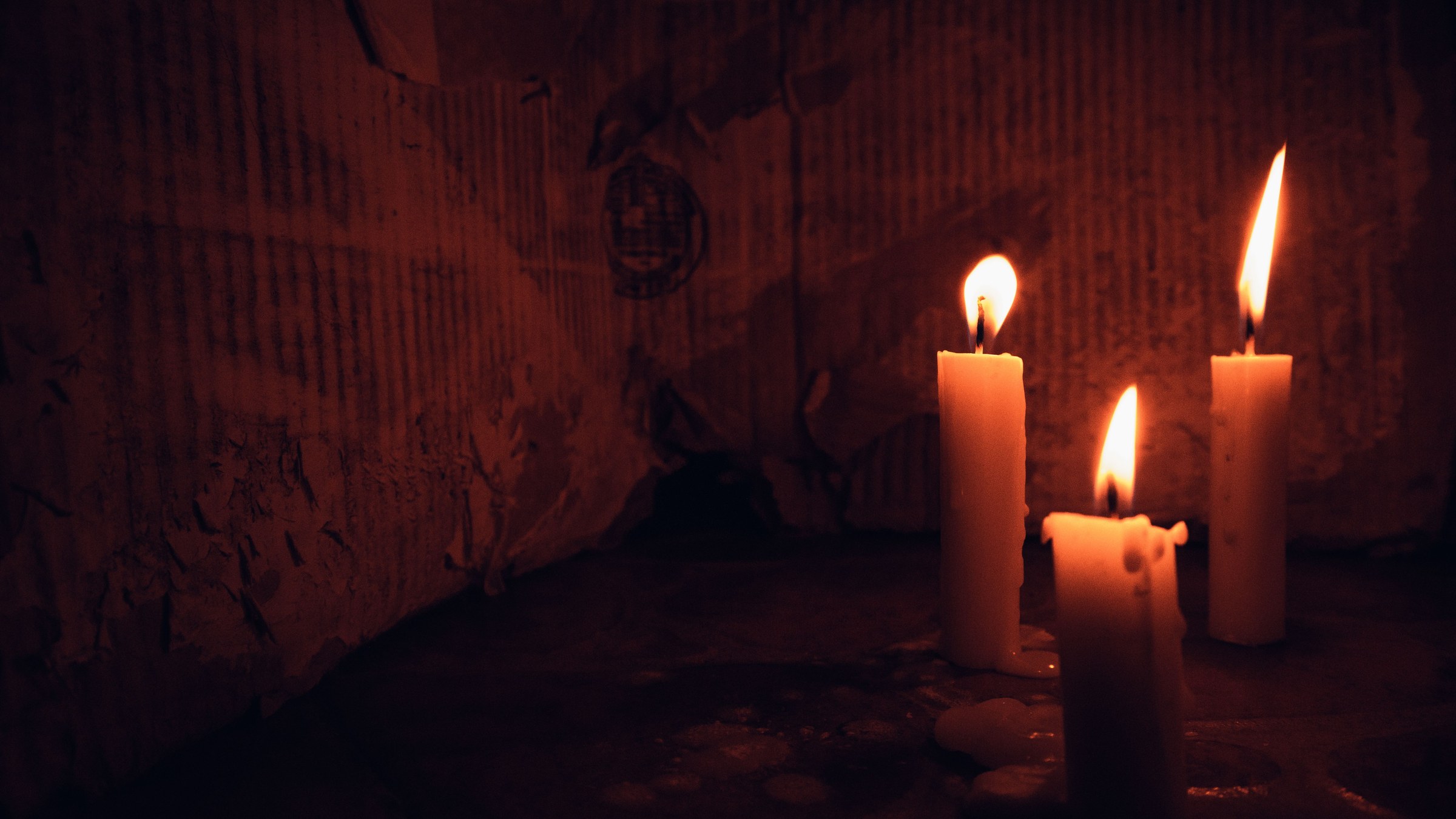
Three candles stand gathered on the right side of the frame. The two at the back are about the same height, and the one in the middle has half its body covered in dripped wax. The wall is papered with old newsprint, and the small type set in vertical lines can barely be read only at the orange edges.
The left half of the frame is black. On the floor, a dozen or so drops of hardened wax are scattered, catching the light. Nothing anywhere tells the time.
Under light like this, the eyes narrow their focus on their own. There is only one thing to look at. The shoulders curl quietly inward, the area around the jaw hardens, and the hands lose their place on the knees.
Only the soles of the feet stay flat on the floor. The breath grows short, then lengthens along with the flame when it tilts once, widely.
Restlessness usually grows at times like this. There is nothing in hand, there is one thing to look at, and time does not pass easily. That feeling is busier than the body.
It would be fine to pick just one flame and keep the eyes there. The middle candle, with the most wax run down it, will do. Three minutes is enough.
A flame never wavers into the same shape twice. Its tip stretches long to the left and comes back to a point, and the area around the wick shows a brief blue. Three minutes pass just from following those changes without counting them.
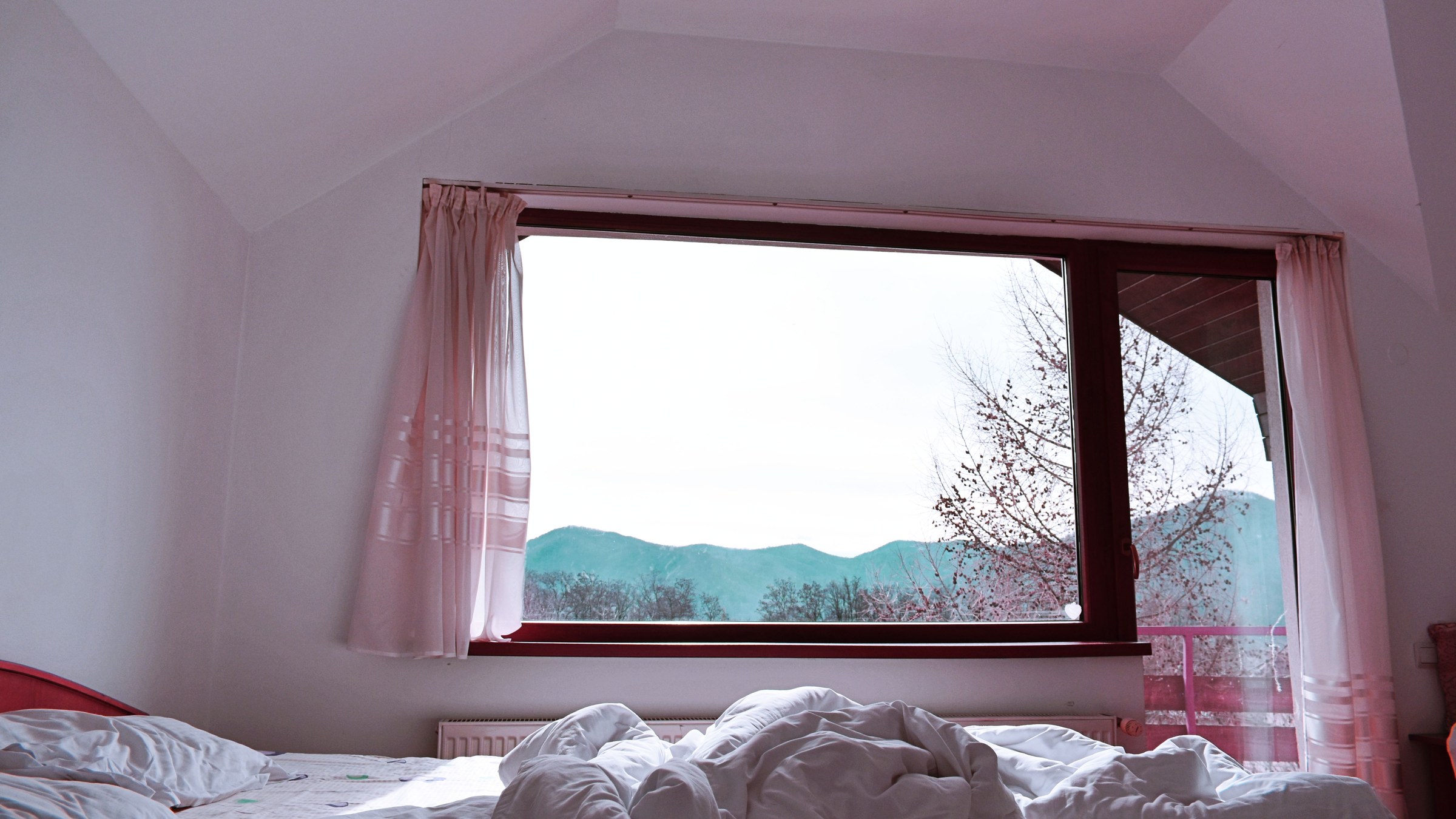
The same looking is possible at night. Before sleep, turn off the room's main light and leave only one lamp, then look for about three minutes at the round border its light draws on the ceiling. What to check then is the jaw. Just confirm whether the teeth are clenched or the molars are slightly apart, and if nothing has changed, leave it as it is and go to sleep.
The wax has hardened in the shape it ran down in, and the flame still wavers.