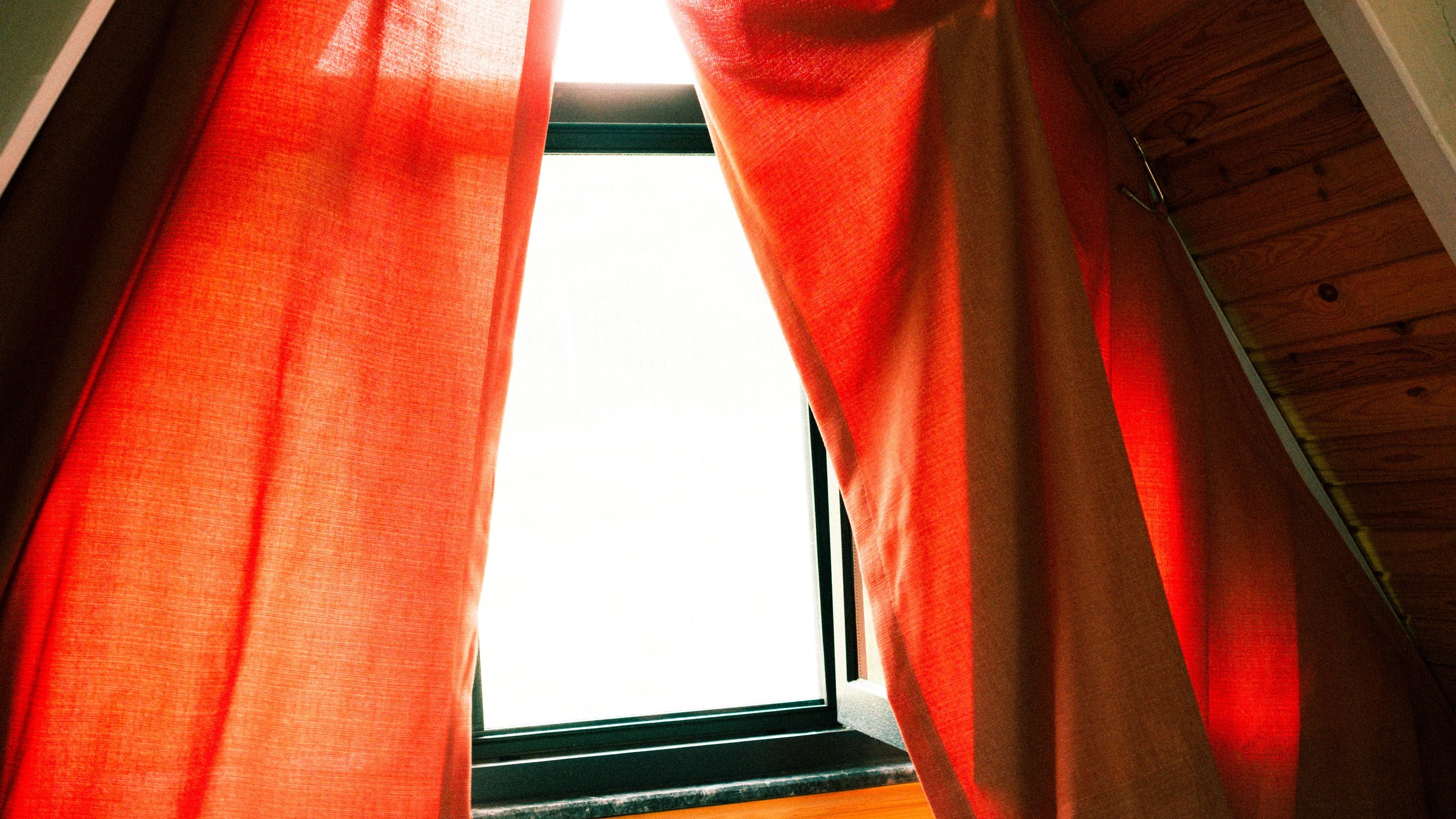
Two panels of orange curtain are drawn apart to either side, and between them a black window frame stands square. Inside the window it is bright enough to wash out to white. On the right the ceiling is slanted wooden rafters, and the floor below is pine board with a coarse grain.
As the light passes through the loose weave of the curtain, the whole cloth glows scarlet. It looks like a time not long after sunrise.
Facing light like this, the eyes react first. An attempt to look straight at the white window fails, and the focus slides on its own toward the folds of the left curtain. Only then do you notice that your eyelids had been tense. If you are barefoot, the coolness of the pine board will rise into the middle of your soles.
A body just woken from sleep is usually impatient.
Rest your palm on the stone ledge below the window frame and push the window open just a hand's width. As wide as the gap where the curtains parted is enough. Draw the incoming air in through the nose on a count of three, and let it out counting from four to six.
Three times and it is done. During that time, do not look straight at the white window, and keep a loose gaze on the spot where the light has fallen on the pine floorboards.
The same three breaths can be moved to the end of the washing up. While you count your breaths with the tap turned off and your hands left wet, check once whether your shoulders had risen toward your ears. All you need to watch is how far that height comes down as you exhale.
It does not matter if there is no change. Just remember what you saw.
By afternoon the curtain loses its color again, and the burning scarlet lasts only a brief while each day.