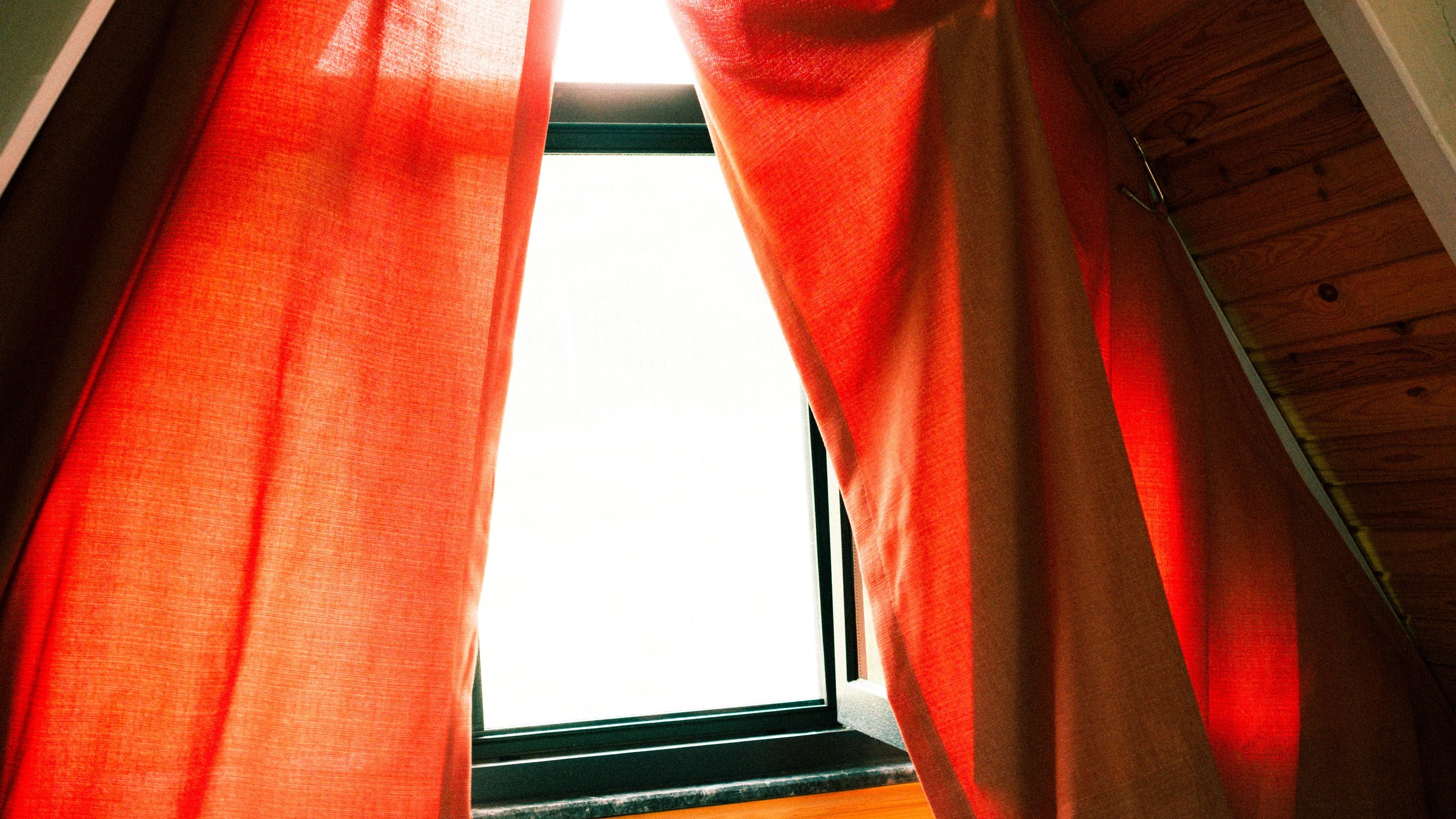
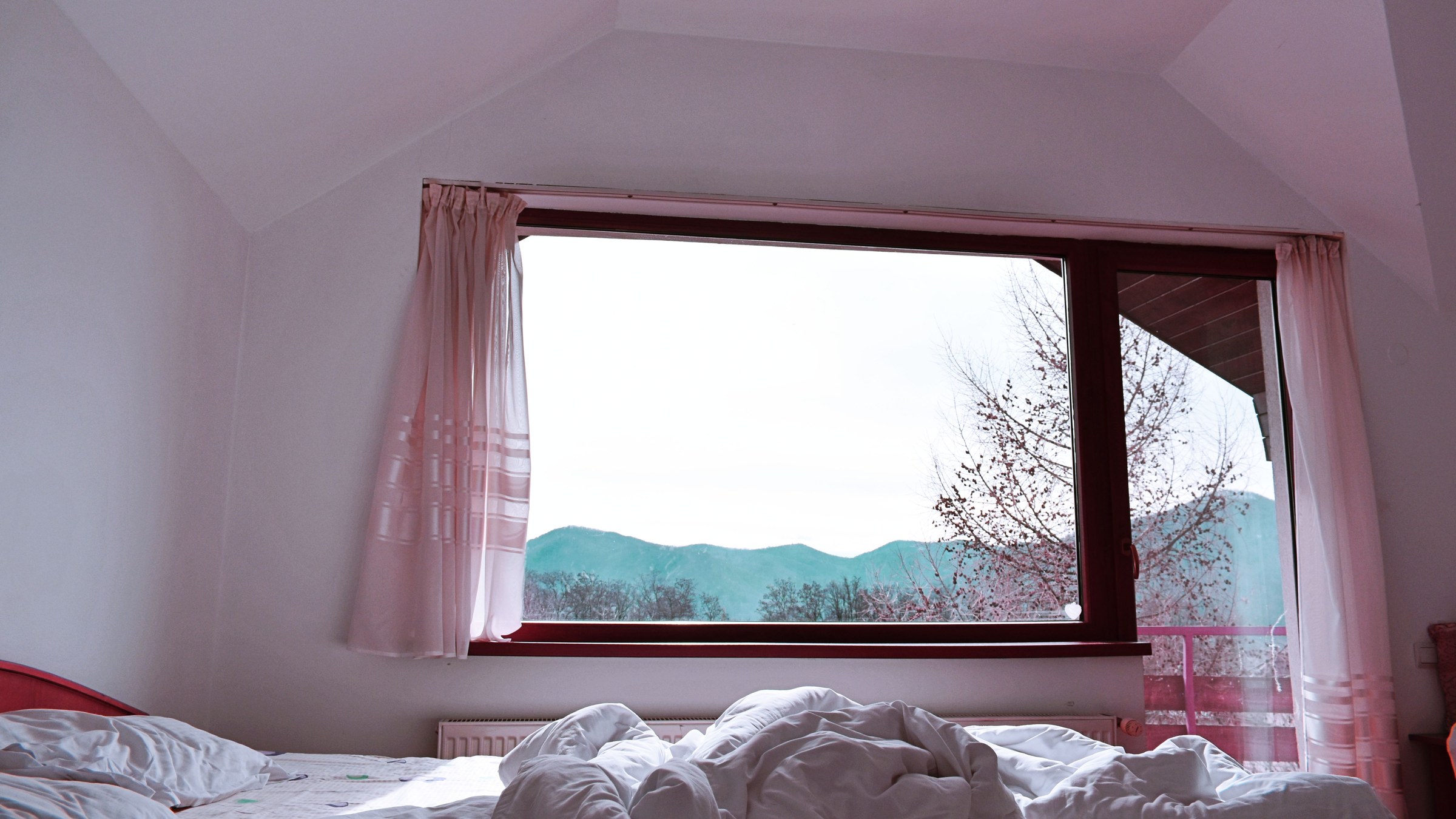
An attic room under a sloping ceiling, a window with a red wooden frame half open. Outside, a pale blue-green ridge lies low, and bare branches brush the glass. The white curtain, pushed to one side, swells faintly, and the blanket on the bed is folded just as a night of turning left it. The light is white, the light of an early hour, before it has taken on any color.
Watching a scene like this, your breath grows shallow and long on its own. Your shoulders sink a little further toward the pillow, and the back of your hand touches the cool side of the blanket and the side your body has warmed at the same time. Your toes feel along the edge of the blanket and stop. Your eyes, too, rest loosely somewhere on the window frame.
The sense that there is no need to hurry arrives as strangely as something long forgotten. That is because so much time has passed in the belief that you must get up the moment you wake.
Instead of rising the moment you open your eyes, you might stay lying down, stretch your arms above your head and draw yourself out once, all the way to your toes. Thirty seconds is enough, and it is better not to hold your breath. What if you did it while the blanket's warmth is still on your body?
The same stretch is worth working in at the end of the evening dishes. Turn off the water, rub your wet hands on a towel, and standing there at the sink, reach your arms up and draw yourself out once, down to your heels. That is the moment to look at where your eyes are resting. Whether they catch on the kitchen light reflected in the windowpane and then loosen toward the darkened ridge, or stay held on the water in the sink, that much is enough to take in.
The ridge outside the window is there in the same posture as yesterday, and the blanket is still unmade.