243 to 13. That is the number of local governments across the country that have a separate department in charge of climate response. The remaining 94.6% have climate work handled on the side by divisions that deal with waste or sanitation, or by organizations far removed from the environment such as administrative welfare bureaus or urban construction bureaus. This is what is contained in the report "Proposals for Reorganizing Regional Climate Governance in the 9th Popularly Elected Term," released by the Green Transition Institute (녹색전환연구소) on the 6th.
As it happens, it is the same week. On the 8th the Ministry of Climate, Energy and Environment called the vice heads of the country's metropolitan governments to Yeongdeungpo-gu, Seoul, and put out an "Implementation Strategy for Achieving Carbon Neutrality in Local Communities." Minister Kim Sung-hwan led the meeting himself.
The phrase put forward as the vision is "Region-led 2050 Carbon Neutrality." It fixed local governments as the core actors carrying out carbon neutrality, and did not place them as bodies that receive policy and execute it.
In the space of a week the declaration came out and the reality was laid bare at the same time.
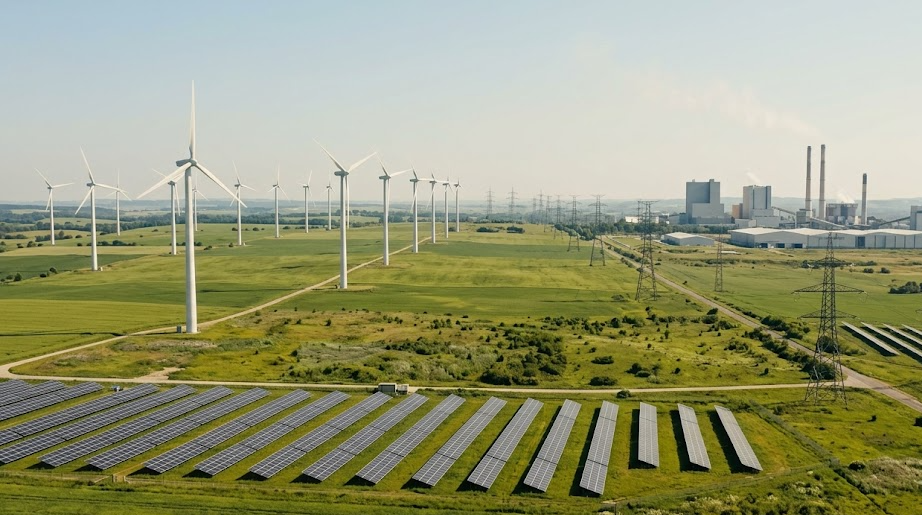
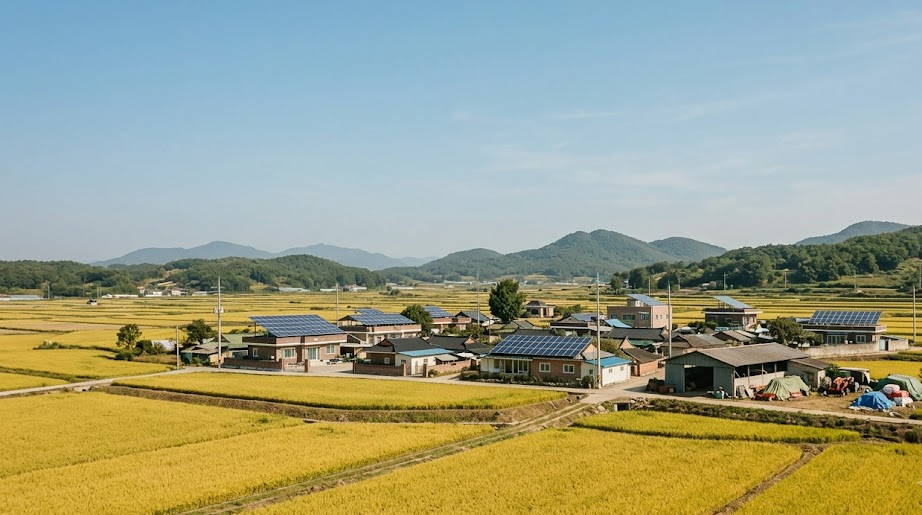
The implementation strategy is put together around reworking the region-led implementation system, building implementation models for each region centered on seven major green infrastructure areas, and redesigning the support base that supplies information, finance and capacity. The seven strands of green infrastructure are energy, waste, transport and housing and buildings, with carbon sinks, climate adaptation and green jobs added. In energy, the picture is to increase the number of villages that earn income from sunlight and wind, lay solar panels on the roofs and balconies of houses and apartments, and turn island areas into "RE100 islands" that come off the grid and run on renewable energy alone.
The picture is fairly detailed in the other areas as well. In line with the full ban on direct landfilling of household waste in 2030, incineration facilities will be increased and aging public sewage treatment plants repaired, and facilities that turn livestock manure into energy will also be expanded. In areas where buses rarely come in, local governments will take the lead in putting in on-demand electric buses and electric taxis, and the central government will supply electric vehicle subsidies and charging infrastructure. Climate insurance for outdoor workers and farmers and fishers exposed to heat waves and cold waves was also newly presented.
The organizational side was not left out either. The Climate Ministry said it would reorganize the "Carbon Neutral Local Government Action Alliance" and lead local governments to set up dedicated bodies reporting directly to the head of the local government. It will tie the River Basin Environmental Offices (유역환경청) together with carbon neutrality support centers to look into implementation in each region, and help improve tasks whose progress is slow. A design was also attached to reflect places with good reduction results in the joint evaluation of local governments and give them incentives.
The institute proposed making it a legal obligation for every local government to have a dedicated climate department, but the government strategy stopped at the level of expanding and encouraging. A good many of the financial support measures also hang on the words review and support. The specific scale of funding and the changes to laws and institutions will be decided in follow-up measures.
The case that shows what changes when the organization is in place is Nowon-gu in Seoul. It started in 2023 as a carbon neutrality task force, and when a revision of the law in 2024 made it possible to have a bureau-level body, it grew into a Carbon Neutrality Bureau in 2025. Under the Carbon Neutral City Division beneath it, an energy management team, a bicycle city team and a green building support center have been placed by reduction sector. On the other side is Mapo-gu, where there is no separate climate crisis response committee and the existing environment committee does that work instead, and even that committee meets once or twice a year.
Of the 226 basic local governments, 42 have a carbon neutrality support center, and the annual operating budget averages around 200 million won. The Climate Ministry said it would strengthen the functions of the metropolitan and basic centers. A system that discloses greenhouse gas emissions by region in detail, and the introduction of a local greenhouse gas reduction-aware budget system, were also put on the list of things to push.
A channel on the citizens' side opened along with it. The Presidential National Committee on Climate Crisis Response announced on the 7th that it had held a plenary meeting of the Climate Citizens' Assembly in Cheongju on the 4th and settled on three agenda items for this year. They are promoting corporate greenhouse gas reductions, strengthening resource circulation to reduce single-use items, and boosting education and participation that raise climate citizens' awareness.
Based on the Framework Act on Carbon Neutrality and Green Growth, 200 people selected with region, gender and age taken into account will write and submit policy recommendations by the end of the year. Once the climate response committee deliberates on and approves them, they are conveyed to the ministries and local governments in charge, and a check on the state of implementation follows.
Right now local governments' climate projects lean heavily on central government competitions and state subsidies. If the money is above and the people and organizations to do the work are not below, the phrase region-led survives only on paper. Conversely, if authority and budget and organization go down together, there is no reason for cases like Nowon-gu to stop at thirteen.
While the Climate Citizens' Assembly recommendations are being drawn up by the end of the year, it is worth opening the organization chart on each local government's website once. One minute is enough to check which division handles climate work in your own neighborhood, whether it is the sanitation division or the urban construction bureau. Once you know that one line, you have something to ask candidates in the next local election.