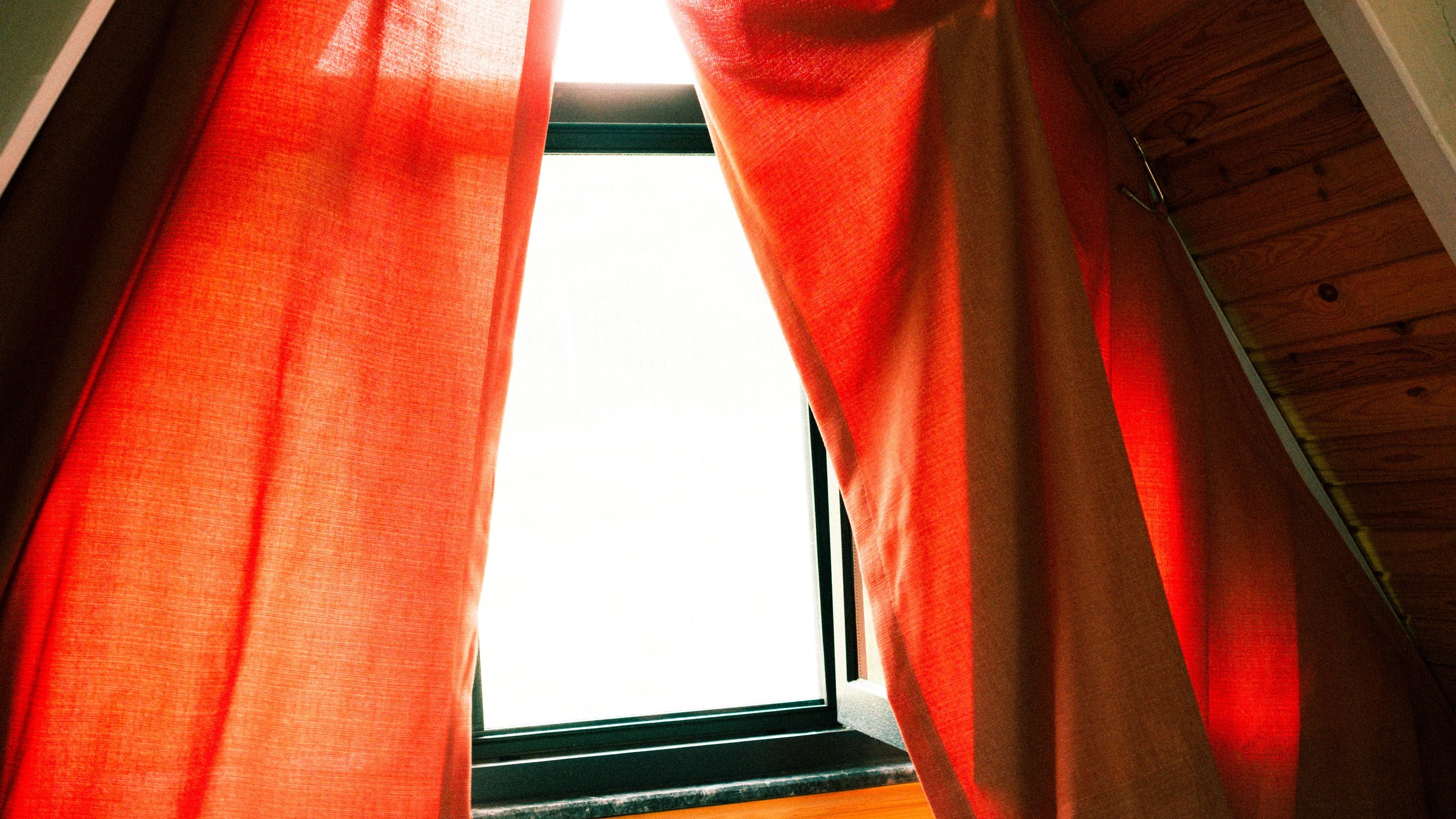
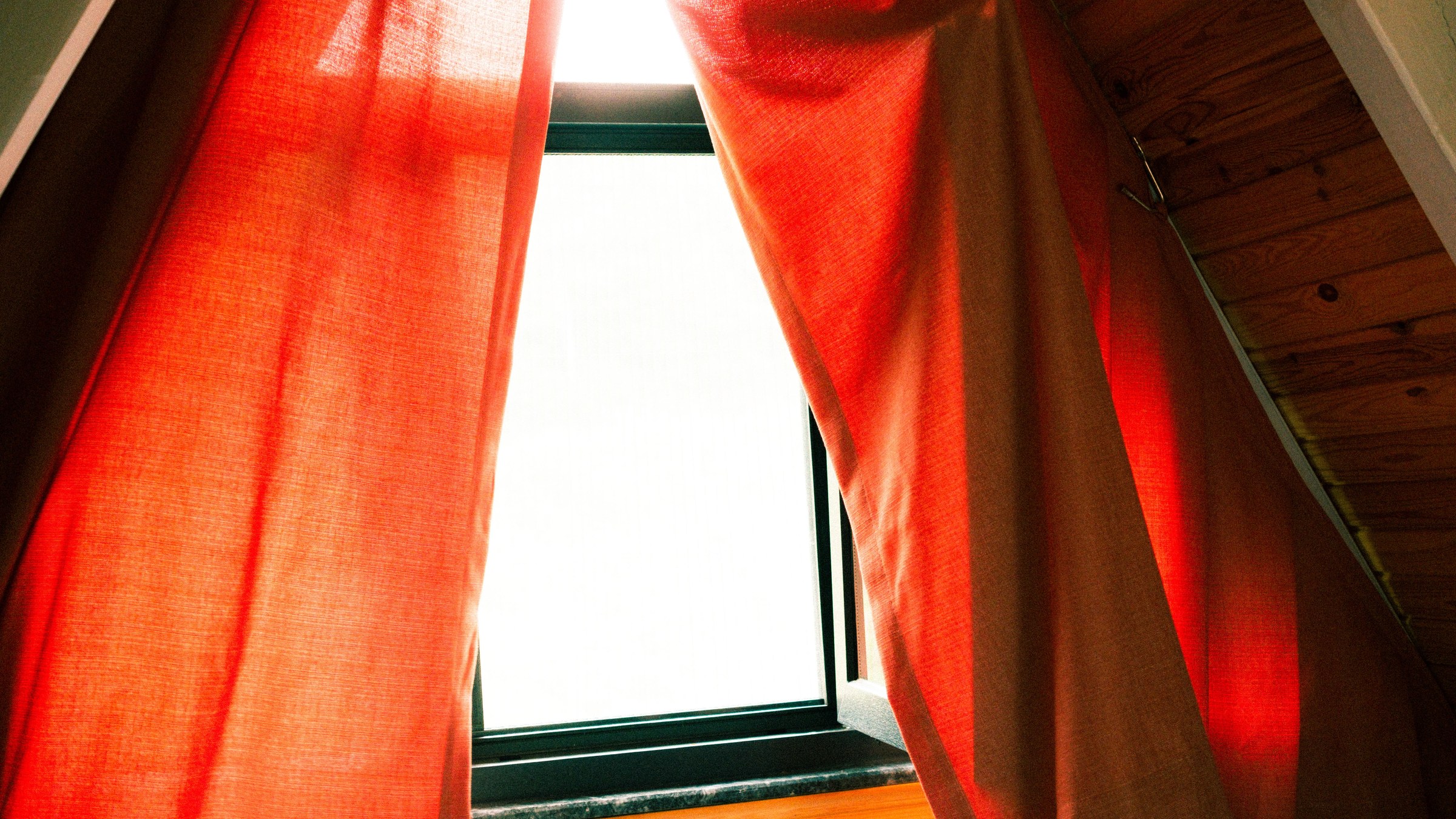
Two panels of orange curtain part to either side, leaving a narrow window. The loosely woven cloth lets half the light through, and a pale apricot spreads to the far wall of the room. Outside the window it is bright enough to wash white and erase all shape.
From the upper right a wooden rafter slants down, and on the floorboards below the sill a piece of sunlight lies stretched out. The lower hem of the curtain takes in less light and settles into a brick tone.
Standing at a window like this, the eyes lose focus on their own. It is because there is nothing far to look at. The shoulders come down a hand's width from the ears, and the bare soles read the cool grain of the floor one line at a time.
The hands find nothing in particular to do and hang at the sides. Only much later do you notice that the breath drawn in has grown longer than usual.
The sense that there is no need to hurry stops by the body for a moment and leaves.
Push the window frame and open a gap two finger-joints wide. When the outside air comes in thin as thread, it is worth taking three breaths in and out along that grain. While counting, you may follow with your eyes the hem of the curtain swelling a little and settling.
There is no need to try to breathe well, only to count to three without letting the end trail off. It takes less than three minutes.
The same three breaths can be slipped into the middle of the dishes. Rinse one bowl, shut off the tap, and count the breaths while the water left on your wrists cools. Then look at the force gone into the jaw.
Whether the back teeth are pressed together, whether the tongue is pushed against the roof of the mouth. It is hard to say what will change, and watching whether it changes is enough.
The curtain is still orange, and the light will soon cross the room and move to the opposite wall.