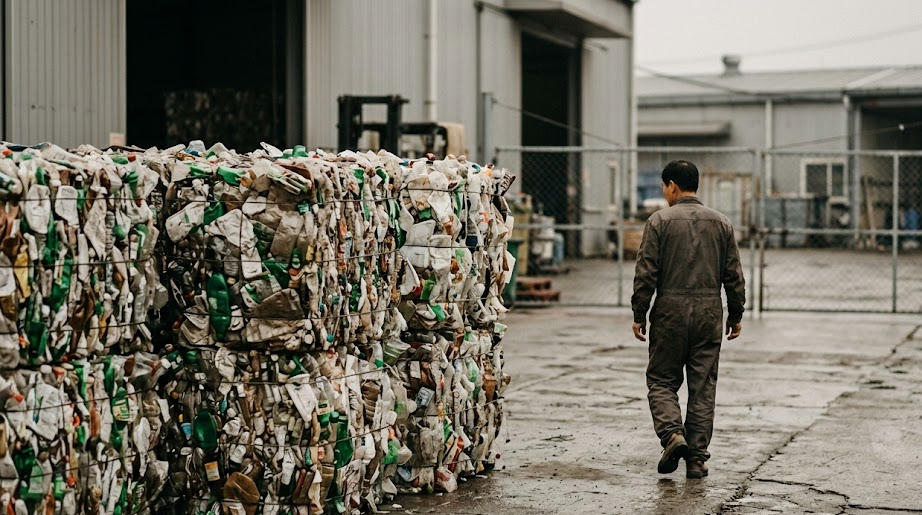
Plastic particles were found in the blood of more than eight out of ten patients brought in with heart attacks. The finding comes from a study by Dr. Pasquale Paolisso and Professor Emanuele Barbato of Sant'Andrea University Hospital at Sapienza University of Rome, Italy, which examined 61 people who underwent invasive coronary angiography, divided into three groups. Micro- and nanoplastics were detected in 84% of the 19 heart attack patients, compared with 40% of patients with chronic coronary syndrome and 32% of the control group with normal coronary arteries.
The polymers detected averaged three types per patient. Of those, 97% were polyethylene. Blood drawn from the arm and blood drawn from the heart contained the same types, and concentrations came out higher on the heart side. Patients with more particles also showed higher levels of interleukin-6 and tumor necrosis factor-alpha, both inflammation markers.
Professor Barbato, the corresponding author, made clear that the results do not amount to evidence that microplastics cause heart attacks. It is also difficult to generalize directly from a small study that looked at 61 people once. When multiple variables were weighed together, the one factor that independently separated detection from non-detection was smoking history, and smokers' detection risk was six times that of non-smokers. Particles were found in every person who smoked while living in an environment where ultrafine dust concentrations exceeded 15㎍/㎥, while the figure stayed at 12.5% among those in neither category.
The routes of entry lie outside the body. In Korea, there have been reports that microplastics were identified in indoor and outdoor air at residential complexes. The sources pointed to were fibers shed from clothing, construction materials, and dust generated as tires wear down.
When the measuring methods differ, one river becomes two rivers.
Two days ago, from two to six in the afternoon, some twenty people gathered in Jung-gu, Seoul. It was a research meeting arranged by the National Institute of Environmental Research under the Ministry of Climate, Energy and Environment, together with the National Institute of Fisheries Science and a microplastics expert consultative body. Because the analytical methods used on land and those used at sea had hardened separately, it was awkward to directly compare values obtained from rivers with those obtained from the sea. The two institutions have exchanged research and analytical technology since signing a memorandum of understanding in June 2024.
The agenda was thoroughly practical. The institutions laid out for each other how far they had come and what cases they had actually applied their analytical technology to, and covered the interference factors that arise with each type of sample along with quality control (QA/QC) methods. Past four in the afternoon, a general discussion followed on why recovery rates diverge between institutions, what conditions to set for density separation, and where in the sequence to place pyrolysis pretreatment.
The development status of the International Organization for Standardization's standard analytical method for microplastics (ISO/TC147 16094-4), which Korea and Japan are driving together, was also shared. Kim Kyung-hyun, head of the Water Environment Research Department at the National Institute of Environmental Research, said building an analytical system that allows comparison is important, and stated that the institute would use the technical cooperation measures that emerged here as a foundation to establish an analytical base.
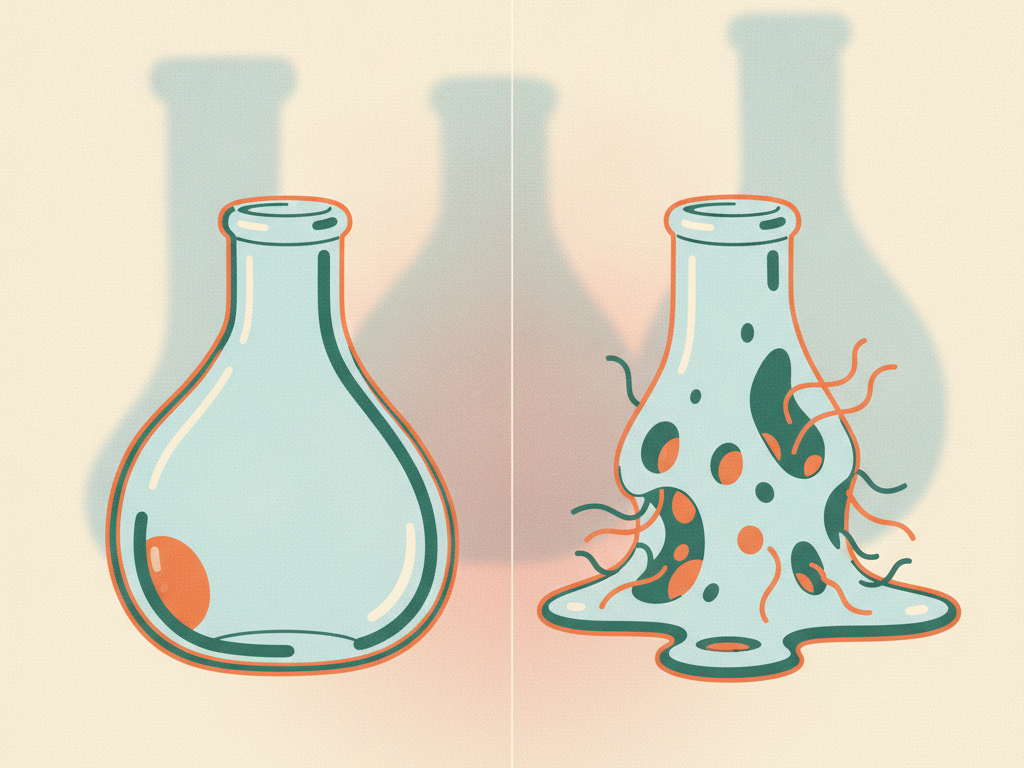
A "living plastic" containing spores of Bacillus subtilis has been developed and was introduced on the 16th. It held firm during use, and when a nutrient solution at 50 degrees Celsius touched it, the dormant spores awoke and broke the material down in six days. A version made in the form of a wearable device lost its shape in two weeks.
The 50-degree nutrient solution is an environment the laboratory created. Whether the spores do the same work in landfills or the sea is for the next experiment to answer, and waste piles up while that answer is coming. Even so, the idea of something intact in use that collapses when needed sidesteps the long-standing dilemma of having to trade durability against degradability.
Reducing exposure does not end with a single technology. Reducing the amounts leaking from sources, measuring where and how much is present by the same yardstick, and reducing the time people are in contact have to move together.
It will take years before a standard analytical method is established and a new material reaches factory lines. In the meantime, the factor that widened detection risk sixfold was one thing, tobacco, and the sources named for indoor air were clothing and tire dust.