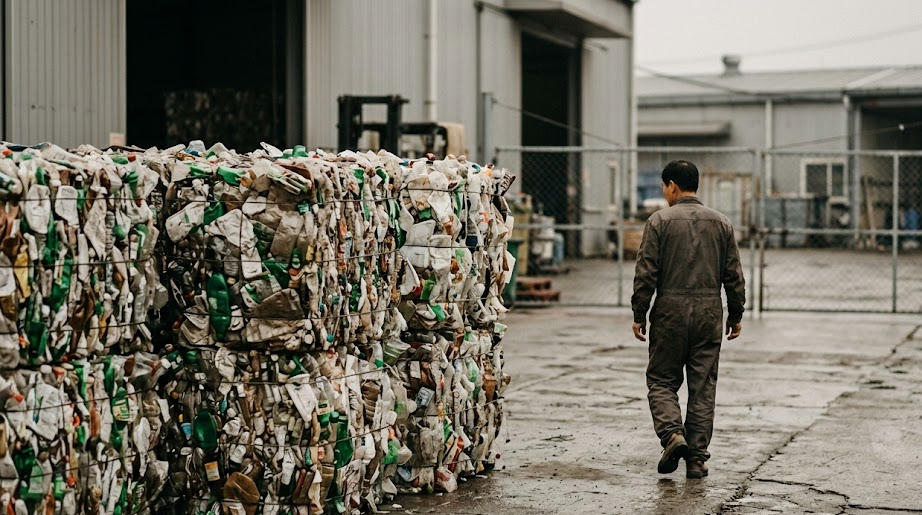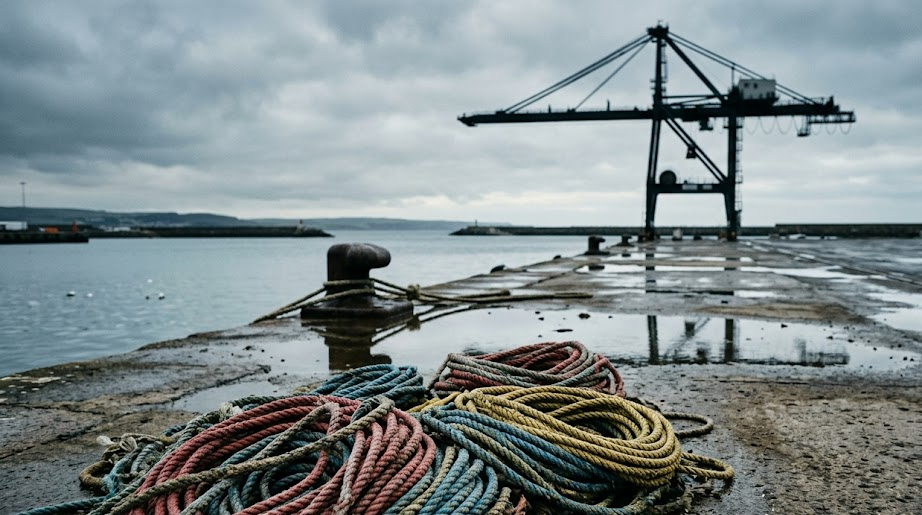
The Korea Marine Environment Management Corporation and Dongyang Steel Rope, a company based in Busan, have signed a memorandum of understanding to build a circular economy for marine plastics. It is a project that pulls up waste ropes that snapped underwater and drifted about, and turns them back into raw material. The details of the agreement have not yet been made public. What stands out is that a pairing has been formed in which a public institution handles collection and a private company handles recycling.
Around the same time, attempts to change packaging are coming one after another in the food industry. CJ CheilJedang has signed a contract to supply PHA, a biodegradable material, to Consperse, an Indian bioplastics company. Consperse plans to use the material to make disposable cutlery such as forks and knives.
PHA is a biodegradable plastic produced through microbial fermentation. What sets it apart from other biodegradable materials is that it breaks down in soil and in the sea alike.
PHA is already in a range of everyday products. It is used in straws at Paul Bassett stores, in biodegradable sanitary dishcloths released together with Yuhan-Kimberly, and in Olive Young delivery packaging. In Jung-gu, Seoul, 350,000 volume-rate trash bags made with PHA were donated, and they are said to keep strength similar to existing products while being 1.8 times more elastic. Application to cosmetics containers is also under way.
Results are also accumulating on the recycled-material side. Lotte Chilsung Beverage reworked its packaging last year and cut plastic use by about 3,000 tons. That came from applying lighter caps to all of its bottled water products and making container preforms thinner. After releasing Chilsung Cider 500㎖ made with 100% mechanically recycled PET material, the first of its kind in Korea, it widened the application to Pepsi Zero Sugar Lime, Icis and Saero.
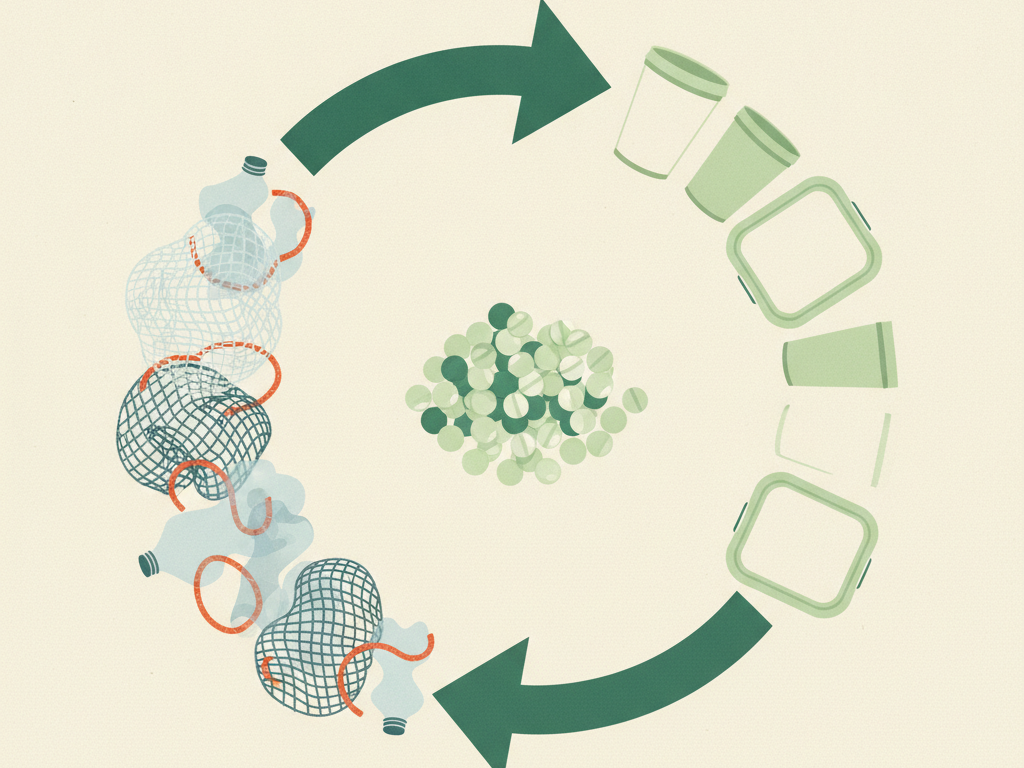
Dongwon F&B fixed leakage problems in its tuna extract and cooking oil containers and prepared a new container that can cut plastic by 14 tons a year and carbon emissions by more than 40 tons a year. In terms of scale alone, it is small. But when improvements like this pile up item by item, the industry's overall total moves.
Behind this lies the EU's Packaging and Packaging Waste Regulation. For companies selling goods in Europe, packaging design has moved out of the optional category, and investment by Korean food companies in eco-friendly packaging is speeding up accordingly. There are also forecasts that the global bioplastics market will grow from 12.3 billion dollars in 2026 to 94.9 billion dollars in 2034.
The technology reaches further back as well. Chemical recycling that breaks down waste PET bottles with enzymes to recover high-quality raw material, development of fishing nets and gear that decompose in the sea, and research on extracting nylon raw material from corn and potato starch byproducts are each under way. These are attempts to switch the raw material of substances that used to rely on petroleum to agricultural byproducts and waste.
For the loop to close, one last step remains. Only transparent PET bottles put out properly sorted can become food containers again, and the system for turning PET bottles collected in national parks back into bottles rests on that premise. The disposal stage, in which labels are removed from water bottles and caps are closed before they are put out separately, determines recycling quality.