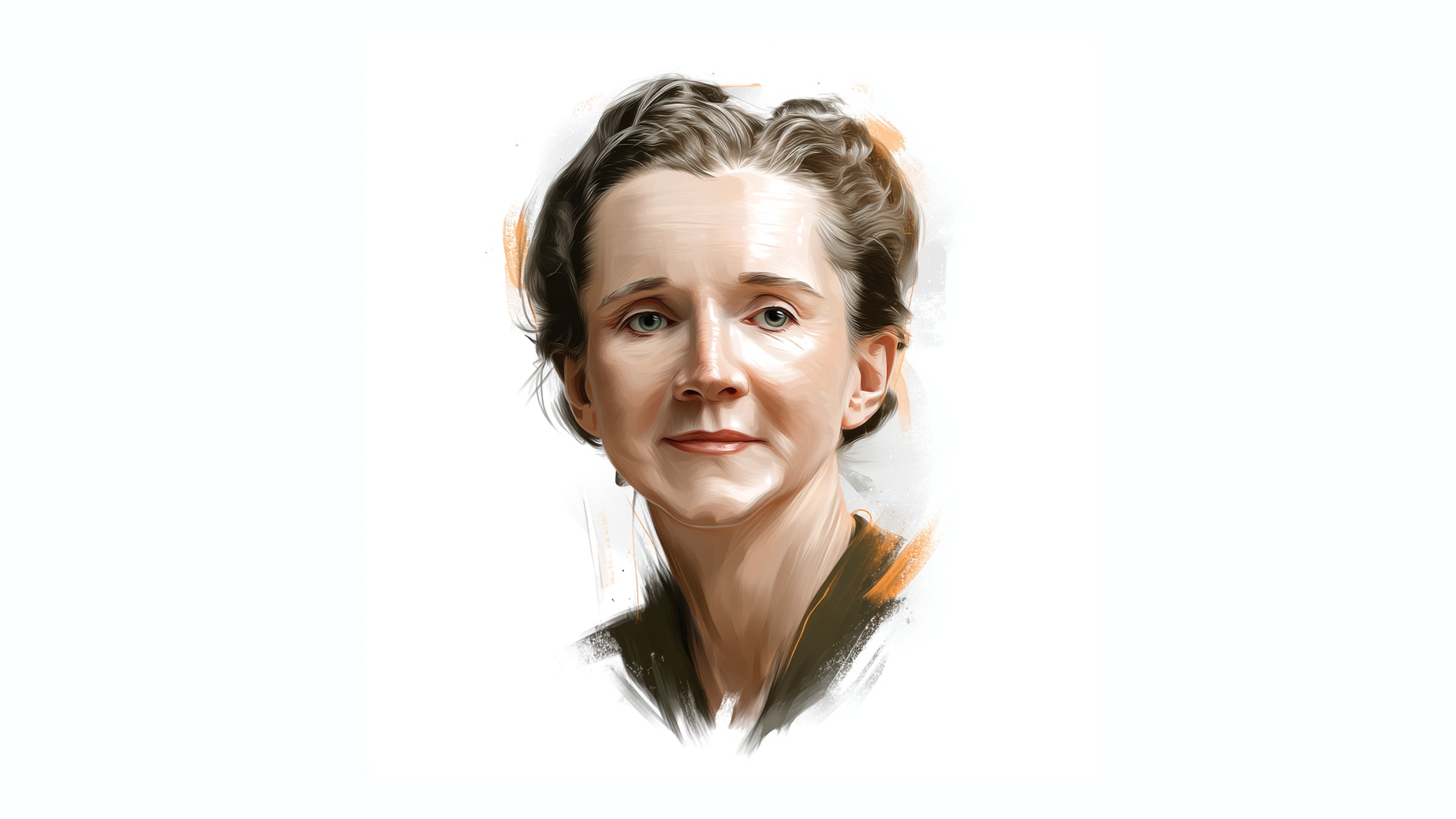
There was a child who had spinal tuberculosis at the age of four. Her back was curved and she could not run like other children, and she was embarrassed even to walk beside her father in his Sunday clothes. That child grew up and kept the door of an old mansion in Chicago open, receiving two thousand people a week. This is the story of Jane Addams.
She was born in 1860 in Cedarville, Illinois, the youngest of eight children. She graduated from Rockford College in 1881, and in 1889 she founded Hull House in Chicago with Ellen Gates Starr. In 1915 she was elected president of the Women's International League for Peace and Freedom, and in 1920 she took part in co-founding the American Civil Liberties Union. In 1931 she became the first American woman to receive the Nobel Peace Prize, together with Nicholas Murray Butler, and when she died in 1935 she was the most widely known woman public figure in the United States.
Q1. As a child you dreamed of becoming a doctor. You said it meant you wanted to live beside poor people. When did you give up that path?
It was when my health broke down. Around the time I was being treated to straighten my back and was advised to rest instead of study, I came to the conclusion that a medical license was not necessarily required in order to live beside poor people.
Those few years were the most useless period of my life. I lived exactly the life expected of a daughter of a well-off family. I would write long letters to Ellen Gates Starr, whom I had befriended at Rockford, and pour out my despair.
At the end of that period I traveled through Europe and saw the attempts of people living together in the slums of cities. On the way back, what I would do was already settled.
Q2. Hull House had a night school, a kindergarten, an art gallery, a gymnasium, a swimming pool, a bookbindery and even a theater company. A relief institution needs only a dining hall and beds, so why were a swimming pool and a theater company necessary?
I did not accept the idea that a hungry person needs only bread. The immigrant working families who lived around Hull House had neither the money to go to the theater nor a day to go to a gallery. If you set that aside as a rich man's hobby, poverty hardens from a matter of property into a matter of what a person is.
The night school was for adults who had worked in factories during the day. The kindergarten and the children's clubs were places to keep children while their mothers went out to work. A library, a music school, a café, a charity dining hall and a workshop were all in one building.
What mattered was the fact that we lived inside that neighborhood. People who visit and go home see only half of a neighbor's situation. When you drink the same water and smell the same smells in the same alley, you learn on your own why garbage collection and the water supply are political questions.
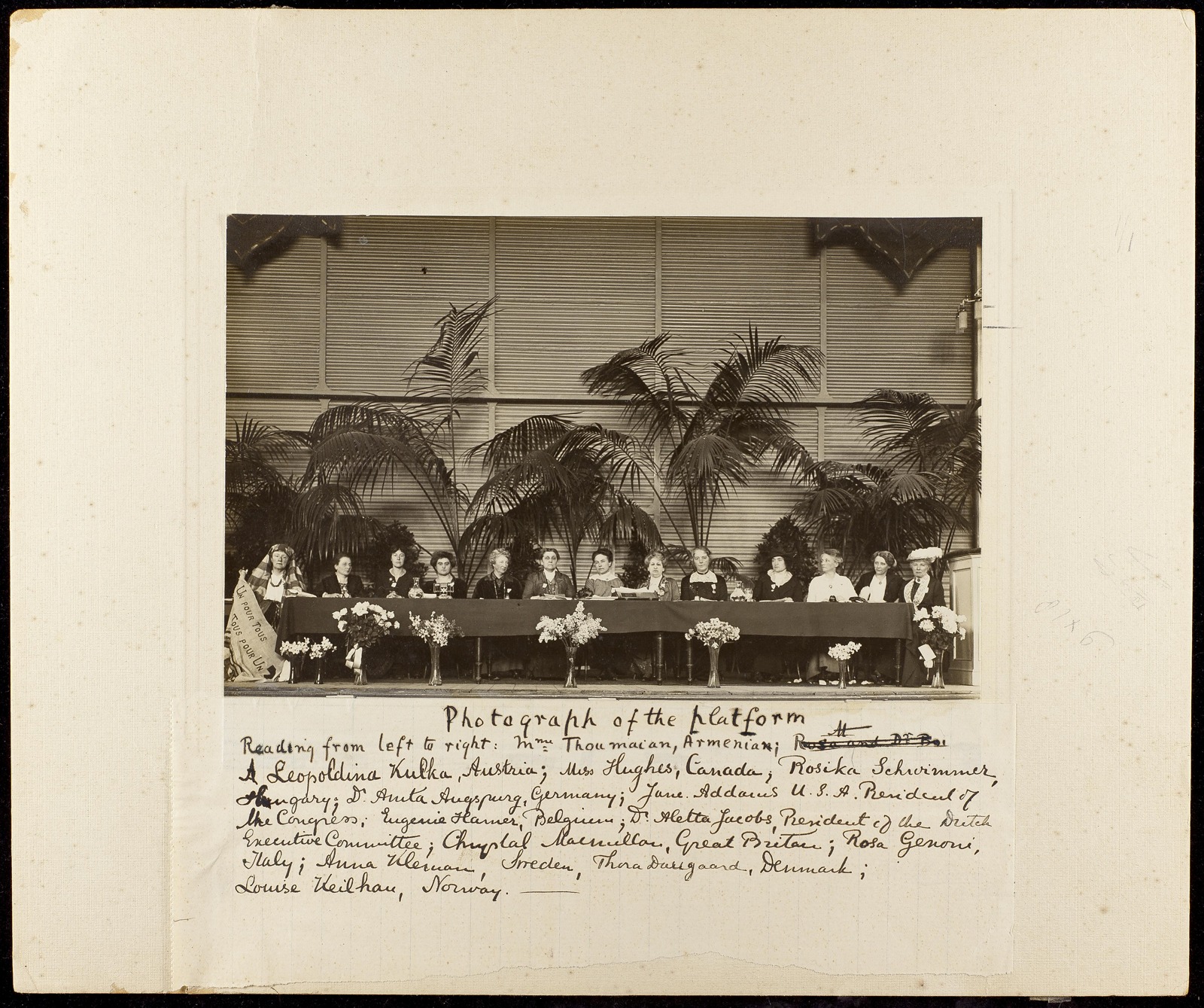
Q3. During the First World War you led the antiwar peace movement. A respected name was suddenly placed on the opposing side. How did you endure that period?
Until the war I was a person welcomed everywhere. Once the war began, audiences turned their backs even though I was saying the same things. I heard for a long time that I had abandoned patriotism.
I will not say I was without fault. I underestimated the size of the fear people were living through. I did not sufficiently consider that to a mother who had sent her son away, a call to stop the war could not be a comfort, and that it might even sound like an insult.
Still, I could not step back. I took on the presidency of the Women's International League for Peace and Freedom in 1915, at the height of that criticism. When the news of the Nobel Peace Prize came in 1931, what I felt was less joy than a sense that many years had passed.
Q4. Childhood illness left you with a limp and you suffered from poor health for a long time. Did that weakness leave any mark on the work of Hull House?
I grew up thinking I was ugly. I know in my body what it is for a child not to be able to run like others. So among the children who came to Hull House, the child who could not join the others' games always caught my eye.
Several years around the age of twenty remain a failure. I could not continue on the path of medicine, and I carried that sorrow for a long time. Without that period I would not have known how the sense of being useless eats away at a person.
Recovery did not come by resolve. It came when there was work to do and someone beside me to do it with. Without Starr I could not have opened the door of 1889 on my own.
Q5. In your essay on the role of women in city administration you wrote that departments such as sanitation and schools originally came out of work done inside the home. How does this reasoning connect to the argument for women's suffrage?
Modern administration is the city taking over the work mothers used to do at home. Feeding children, putting them to bed and teaching them, clearing away filth and managing water are such work. If that work has moved to city hall while the people who have been doing it have no vote, it does not add up.
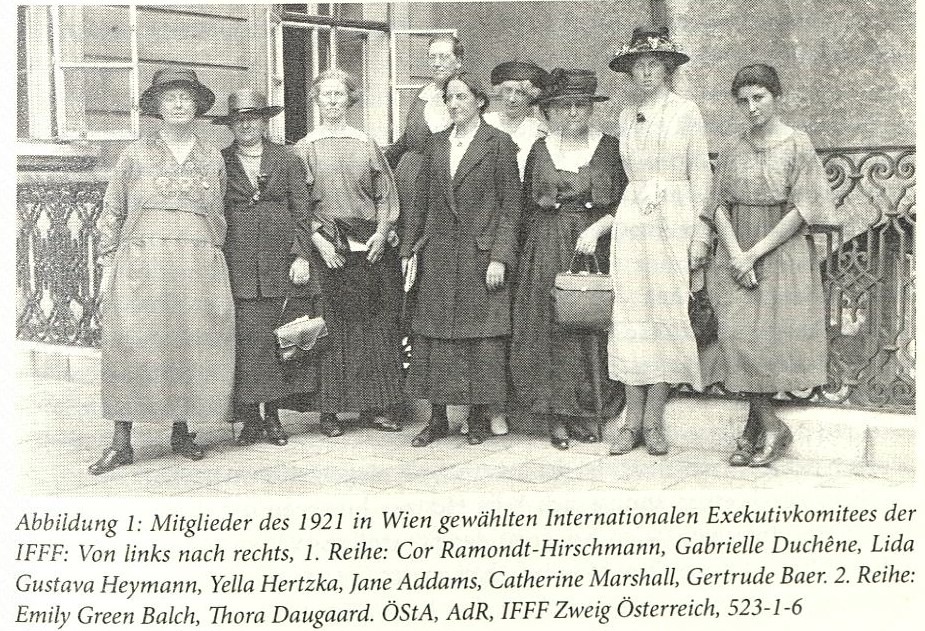
I have never wished for women to become the same as men. What I spoke of was an equal right to think and act for oneself.
The vote is the opposite of charity. Instead of asking someone to bestow something on you, it is becoming a person who takes part in making the decision.
Q6. In 2026 urban poverty and the questions around migrants remain the same. Today's welfare is delivered through application forms and screening windows. Do you think the settlement house method of 1889 still holds?
It is a good thing that the system has widened. Considering how Hull House struggled to handle two thousand people a week, it is far better for the state to take on that work. I never claimed that the settlement house was a permanent answer.
If the person receiving the application and the person submitting it do not live in the same neighborhood, no one learns the circumstances that are not written on the form. People who cannot fill out documents, people whose speech is halting, people with no time to get to the window do not enter the statistics.
So what I would recommend is one habit. That the people who make policy sit at the same table once a week with the people who receive it. The real facility that made Hull House Hull House was not the swimming pool. It was that table.
Q7. You stayed in Chicago for nearly half a century, until your death in 1935. If there is one scene you would like to leave to those who come after, what is it?
A winter evening, the hour when the lamps in the night school classroom are lit. Hands that worked during the day move clumsily as they hold a pencil.
Those hands folded a ballot a few years later. What had been changing was the posture of those hands.
This piece is not an actual interview. It is an imagined interview reconstructed by Breath Journal on the basis of Jane Addams's life, writings and surviving records. The questions were written by the reporter and the answers were drawn from the writings and actions she left behind.